

US-Iran Tensions Escalate After Drone Strike on Cargo Ship in Strait of Hormuz
• From trending topic: US Launches Military Strikes on Iran After Drone Attack in Strait of Hormuz
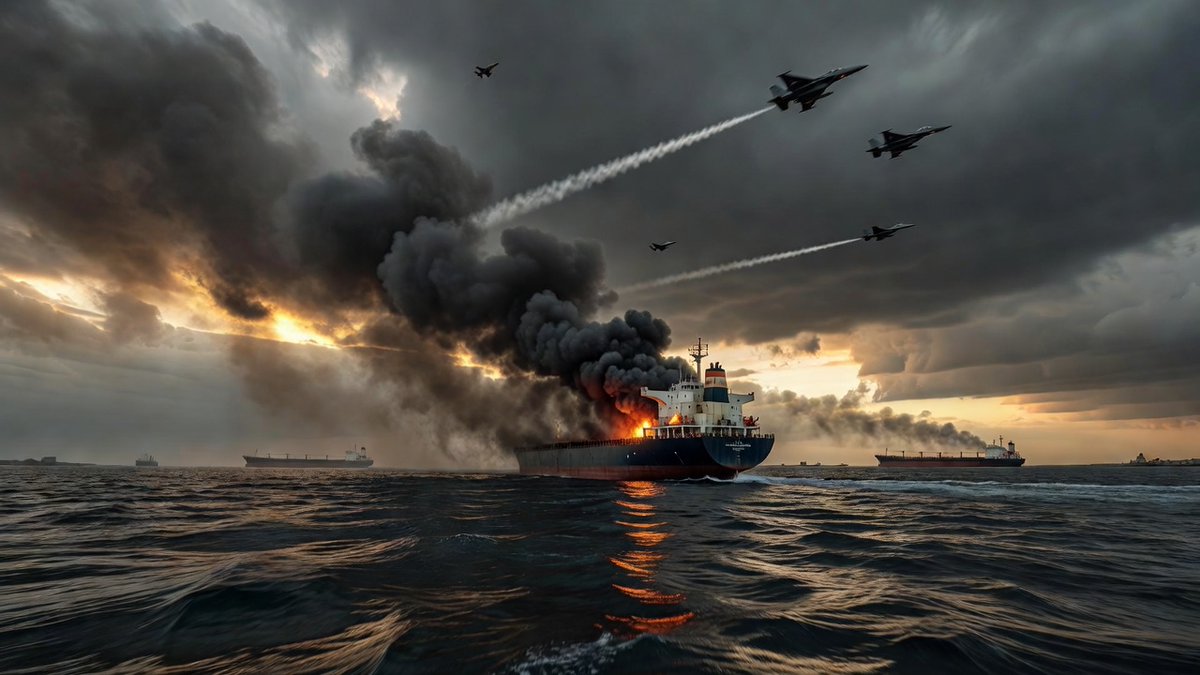
Summary
Right now, the topic is trending because multiple reports on social media and news outlets are circulating claims that the United States has launched limited airstrikes on Iranian missile, drone, and radar sites. The trigger cited in these posts is an alleged Iranian drone attack on a Singaporean cargo vessel transiting the Strait of Hormuz, with four drones reportedly used and one striking the ship. Discussions on X (formerly Twitter) from June 27, 2026, highlight this as a fresh escalation in the Gulf, with some accounts referencing explosions in Iranian locations like Taheruyeh, Sirik, based on unconfirmed sources. The rapid spread of these unverified reports across platforms is what has made “US Launches Military Strikes on Iran After Drone Attack in Strait of Hormuz” a top-trending phrase today.
Common Perspectives
Strategic Deterrence Necessary
Many observers argue that any U.S. military response is a calculated move to protect vital shipping lanes. With roughly one-fifth of global oil trade passing through the Strait of Hormuz, they see swift action as essential to prevent further disruptions that could spike energy prices worldwide.
Risk of Wider Regional Conflict
Others worry that even limited strikes could spiral into broader hostilities. Analysts point out that Iran possesses a wide array of asymmetric capabilities—mines, fast-attack boats, and ballistic missiles—that could turn a contained exchange into a sustained confrontation affecting neighboring states.
Questions Over Attribution and Evidence
A third viewpoint focuses on the need for transparent proof linking Iran to the drone attack. Commenters note that initial reports rely heavily on unnamed sources and unconfirmed social-media posts, urging caution before accepting the narrative that Tehran directly ordered the strike on the Singaporean vessel.
Impact on Global Energy Markets
Traders and economists are closely watching tanker traffic through the Strait. Even the rumor of U.S. strikes has already nudged oil futures higher, prompting speculation about how sustained tensions might affect gasoline prices and inflation in import-dependent countries.
A Different View
Instead of framing the episode solely as another chapter in the long-standing U.S.-Iran rivalry, consider the Strait of Hormuz itself as a living, digital ecosystem. Commercial vessels, naval patrols, and civilian drones now generate terabytes of real-time data every hour. The current chatter may be less about missiles and more about who controls, interprets, and disseminates that data first—shaping global perceptions before any official confirmation emerges from either Washington or Tehran.
Conclusion
Whether the reported strikes prove limited or expand, the immediate story is the speed at which fragmented information has traveled from the Gulf to global timelines, turning a single, still-unverified incident into a worldwide trending event within hours.
Sources and discussion
These public posts were collected while researching this story. They provide context and reactions, but may not independently verify every claim.
View the original topic on X0xzx
@0xzxcom
🌍 WORLD NEWS DIGEST 📅 June 27, 2026 · 00:00–12:00 UTC 🔥 BREAKING: US-Iran Conflict Escalates • The United States launched military strikes against Iranian targets after Iran attacked a Singaporean cargo ship in the Strait of Hormuz with four drones. One drone struck the
Jun 27, 2026Ashok Dadhwal
@ashokdadhwal196
The reports indicate a fresh escalation in the Gulf. According to multiple news outlets, the U.S. carried out limited airstrikes on Iranian missile, drone and radar sites after blaming Iran for a drone attack on a commercial cargo ship in the Strait of Hormuz. Iran's
Jun 27, 2026URA Observer
@URA_Observer
Greg Krasovsky's post on the 3rd anniversary of PMC Wagner - Evgeny Prigozhin's march on Moscow on June 26, 2023. Facebook June 27, 2026 --- Here we are three years later on June 27, 2026. The "Special Military Operation" (war) in Ukraine is
Jun 27, 20261 repostsURA Observer
@URA_Observer
Greg Krasovsky's post on the 3rd anniversary of PMC Wagner - Evgeny Prigozhin's march on Moscow on June 26, 2023. Facebook June 27, 2026 --- Here we are three years later on June 27, 2026. The "Special Military Operation" (war) in Ukraine is
Jun 27, 2026Syndicate Global News
@SyndicateGLNews
📢 ALERT: 🇮🇷⚡️ — BREAKING: Explosion in Taheruyeh, Sirik. Source unconfirmed, per IRIB News. 💡 For more → #china #military #newsupdate #global #sanctions #politics
Jun 26, 2026