
World
European Officials Condemn Russia's Duma Elections
•From: EU Condemns Russia's September 2026 Elections as Kremlin-Controlled Sham


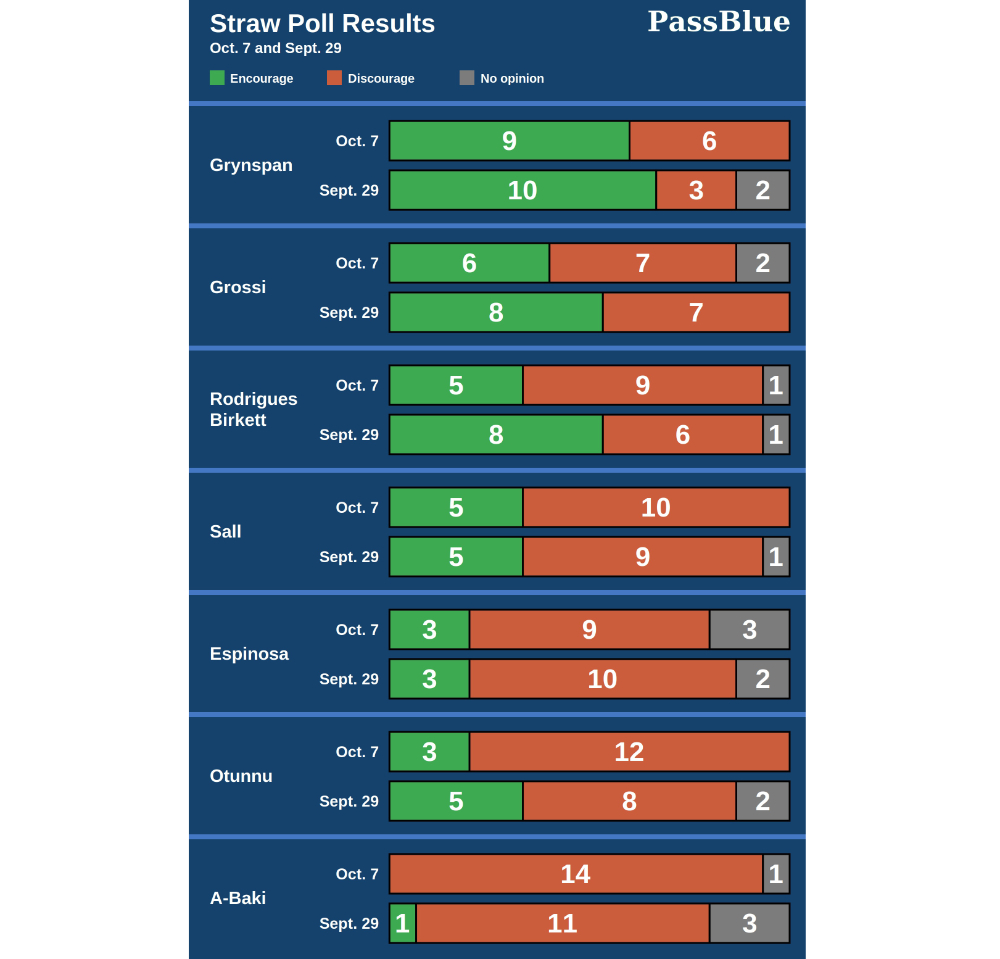
Rebeca Grynspan led the reported October 7 UN Security Council straw-poll tally for the next secretary-general. Colum Lynch reported nine ‘encourage’ votes, six ‘discourage’ votes and zero ‘no opinion’ votes for Grynspan. His post listed Rafael Grossi at 6–7–2 and Carolyn Rodrigues-Birkett at 5–9–1, in the same order of responses. PassBlue also shared charts of the latest results. These are reported straw-poll figures. They describe a stage in the selection process, with a final appointment still to follow. The tally gives Grynspan a lead in encouragement while also showing six discouraging responses.

An application has been filed in India’s Supreme Court seeking recall of its September 23 split verdict concerning the 2023 law governing appointment of the Chief Election Commissioner and Election Commissioners, according to Bar and Bench. Live Law reported that Chief Justice Surya Kant said he would examine the application. Live Law also reported that senior advocate Gopal S mentioned the application before the Court. The reported development is the filing of the plea and the Chief Justice’s stated intention to examine it. The next procedural decision remains to be established through a court order or further reporting.
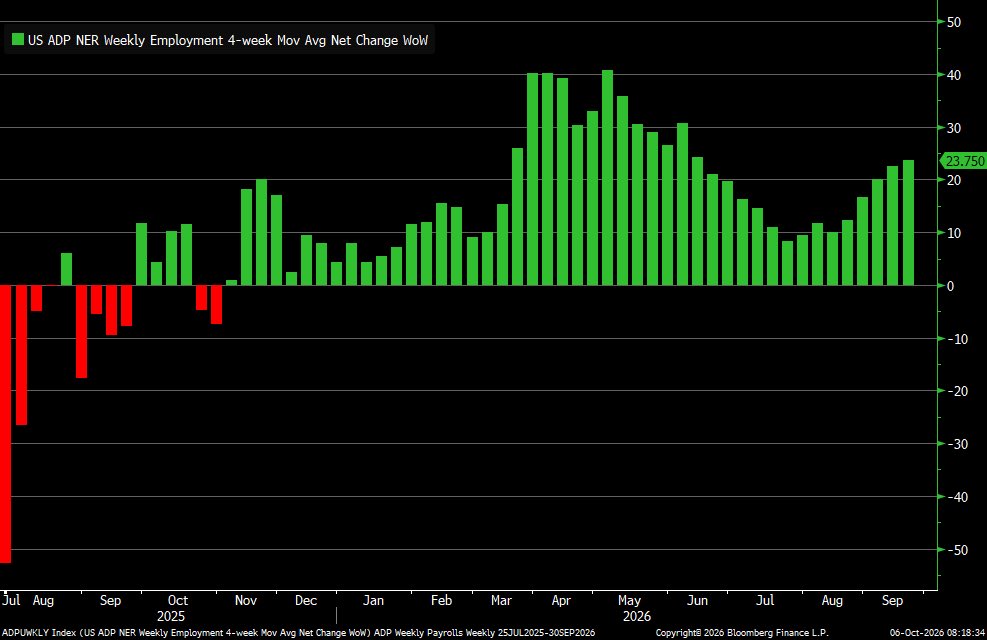
U.S. private employment increased by an average of 23,750 jobs per week over the four weeks ending September 19, according to ADP figures reported by Walter Bloomberg and other financial accounts. FinancialJuice and Wall Street Engine listed the previous reading as 20,000. Liz Ann Sonders described the release as a fifth consecutive week of gains. The 23,750 figure is a weekly average across a four-week period. The reported increase from the previous reading is 3,750 jobs per week. The retained posts give the headline measure without an industry breakdown or information about wages and hours.

Citrix has released security updates for an actively exploited NetScaler vulnerability tracked as CVE-2026-88779, according to The Hacker News and Cyber Security News. The Hacker News reported that the flaw affects certain deployments configured for Security Assertion Markup Language (SAML), a technology used in authentication, and can cause denial of service. It described targeted attacks and said repeated triggering could leave services unavailable. The reports establish a patch release and active exploitation. Administrators should consult Citrix’s current advisory to confirm affected products, configurations and fixed versions before applying the relevant update.
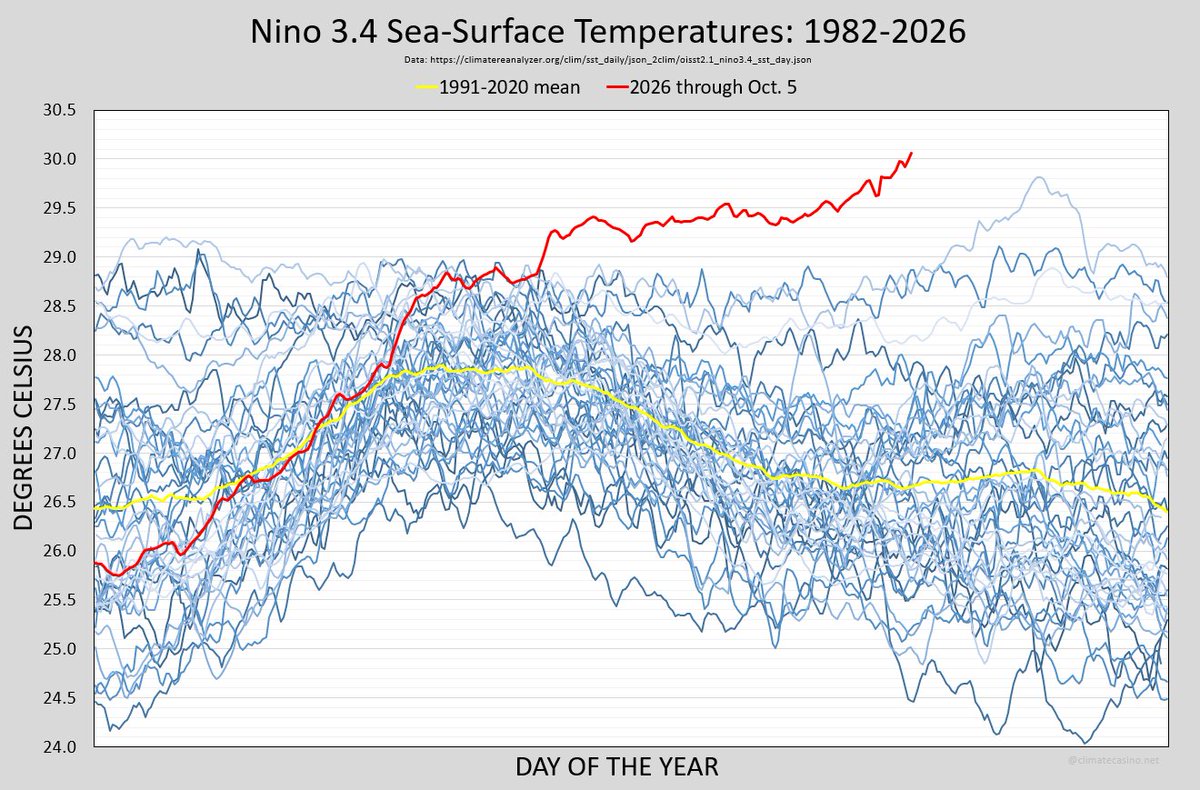
Eliot Jacobson reported a preliminary sea-surface temperature of 30.06°C for the Niño 3.4 region on October 5, with an anomaly of 3.41°C above the 1991–2020 baseline. Leon Simons separately described the reading as the first above 30°C in the NOAA sea-surface-temperature dataset for the main El Niño monitoring region. These claims concern a defined region of the equatorial Pacific, and the numerical reading remains preliminary. Separate posts discussed seasonal forecasts. Daniel Swain described unusually high predictive confidence in a very wet California winter in the October 1 European Centre for Medium-Range Weather Forecasts guidance. Ben Noll reported forecasts of a peak anomaly above 4°C in December and possible influence extending into 2027. Those projections concern future conditions and remain subject to forecast uncertainty.

Chicago was voted Best Big City in the U.S. by Condé Nast Traveler readers for the tenth consecutive year, according to Choose Chicago. The Obama Foundation also announced the result, identifying it as part of the publication’s 39th annual Readers’ Choice Awards. Choose Chicago promoted the result as a ‘perfect 10’ and invited people to share the news. The award records the preference expressed in a travel publication’s readers’ poll. The retained announcements provide the outcome while leaving the sample size and detailed scoring methodology unspecified.

The Television Academy and Prime Video announced a six-year agreement establishing Prime Video as the exclusive global home of the Emmy Awards. Pop Base and DiscussingFilm reported that the move begins in 2027. The official announcements confirm the partnership’s duration and exclusivity. Pop Base also reported that the awards would be free to watch on the platform. The retained official announcements provide no detailed access conditions, so account requirements, regional availability and other viewing arrangements still need confirmation from the organizers.

Anahat Singh won silver in women’s singles squash at the Asian Games, becoming the first Indian woman to reach that final. DD News, India’s Ministry of Information and Broadcasting and the Department of Sports reported the milestone. Moneycontrol described Singh as 18 and reported that this was her first singles appearance at the Games. It quoted her describing the experience as ‘amazing.’ The result and the first final appearance for an Indian woman are the central facts established by these accounts.

India’s Supreme Court has ordered fresh elections in 50 municipal wards in Punjab, with the process to be completed within six weeks, according to reporting by Divya Goyal and an account by praffulgarg97. Goyal reported that the previous polls were quashed following allegations of rigging and intimidation involving the ruling Aam Aadmi Party. Those allegations require attribution to the reporting. The ward breakdown in praffulgarg97’s post is 28 in Patiala Municipal Corporation, all 15 in Baghapurana Municipal Council and seven in Dharamkot Municipal Council. These total 50 wards and are consistent with Goyal’s account of 28 in Patiala and 22 across Baghapurana and Dharamkot. The retained posts support the fresh-election order and six-week deadline; the full judgment would be needed to establish its detailed reasoning and implementation requirements.