

Rubio and Jaishankar Meet in New York as India Flags Sanctions Concerns
• From trending topic: Rubio and Jaishankar Reaffirm US-India Ties Amid Energy Sanctions Talk
Summary
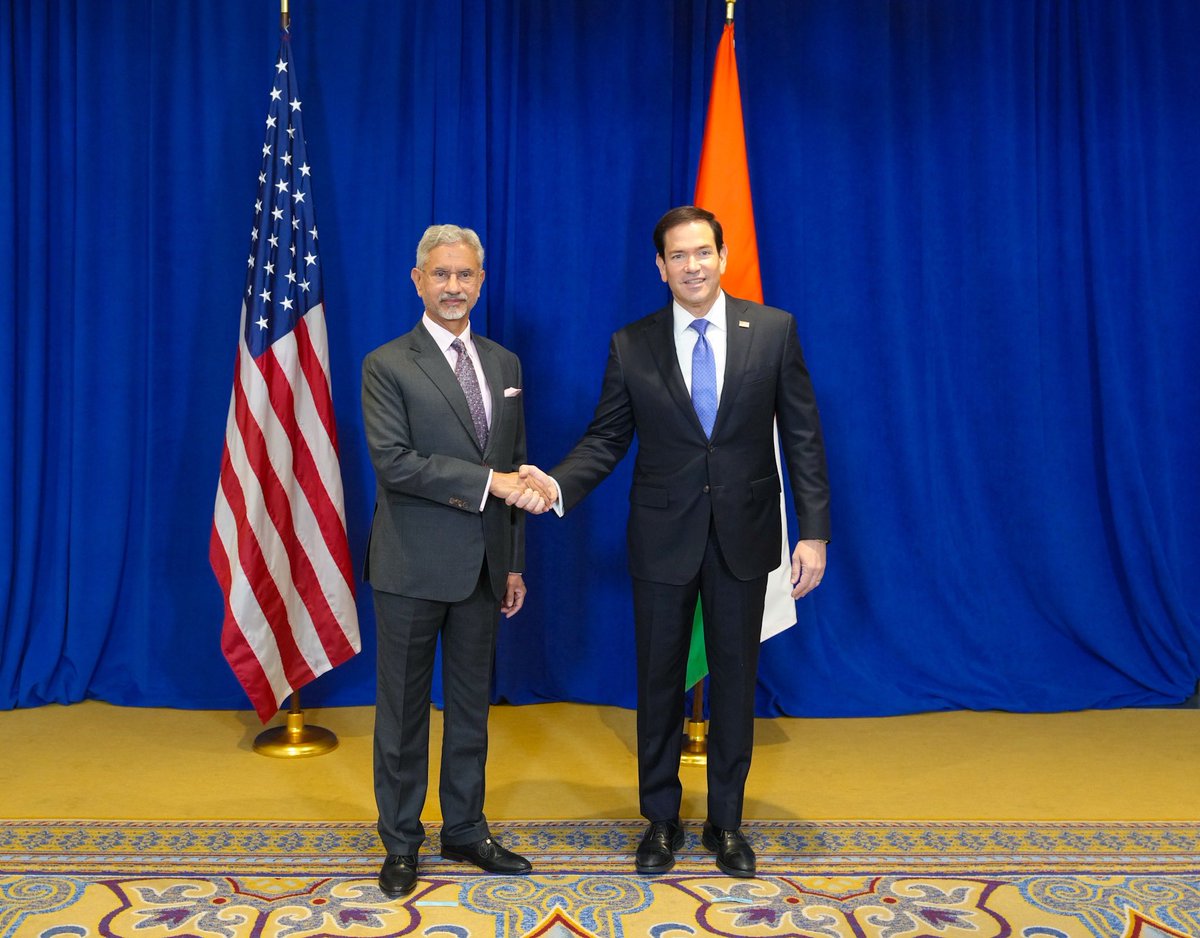
U.S. Secretary of State Rubio and Indian External Affairs Minister Jaishankar met in New York during UN High-Level Week. In a post afterward, Rubio said the two were building on the U.S.-India strategic partnership and coordinating on key regional priorities and upcoming multilateral efforts. Jaishankar, in his own post, said he had reiterated India’s interests and concerns with regard to the Sanctioning Russia and Iran Act (SRIA) and that they had also discussed the Gulf and Ukraine situations.
The public accounts are brief and do not describe any agreed outcome on the legislation. They establish that the meeting happened, that partnership language was used, and that India chose to put its objections to SRIA on the record in that setting. Broader claims about energy policy, legislative status, or private concessions are not supported by the available statements.
Common Perspectives
The partnership can absorb the friction
Officials and commentators who treat the U.S.-India relationship as a long-term strategic asset tend to read the meeting as evidence that disagreements will be managed, not allowed to define the relationship. Rubio’s emphasis on partnership and multilateral coordination fits this view. It appeals to those who see value in continued cooperation on regional issues. The assumption is that dialogue at this level is itself a stabilizer; the trade-off is that it can postpone hard choices if the legislation and India’s objections remain unresolved.
India is drawing a public line
Indian officials and analysts who stress strategic autonomy often treat Jaishankar’s explicit mention of SRIA as the central fact: New Delhi will not treat U.S. sanctions legislation as automatically binding. Publicly noting “interests and concerns” during a high-profile New York meeting is, in this reading, a signal of limits. It appeals to those who want India to keep independent options on Russia, Iran, and related trade. The assumption is that Washington will weigh the relationship heavily enough to listen; the risk is that the same publicity hardens positions in the United States.
Sanctions policy needs partners who actually align
Some U.S. voices focused on pressure against Russia and Iran see India’s raised concerns as a warning that a major partner may seek exceptions or delay. For them, the meeting is useful only insofar as it produces closer Indian alignment, not merely polite language about partnership. This view appeals to those who regard sanctions as weaker if large economies remain outside them. The trade-off is obvious: pressing India harder could damage a relationship the same policymakers also describe as important.
The rest of the agenda may matter more
Readers who take both posts at face value note that Gulf and Ukraine were named alongside SRIA. Those following conflict diplomacy or Middle East stability may treat the sanctions exchange as one item among several, and Rubio’s reference to multilateral efforts as the operational core. This perspective assumes the partnership phrasing is standard diplomatic covering language. Its limitation is that it can underweight a dispute India chose to highlight in public.
A Different View
The more neglected feature is the split messaging itself. There is no joint statement. Rubio’s post foregrounds partnership and upcoming multilateral work; Jaishankar’s foregrounds India’s objections to a specific U.S. act. High-level meetings during UN week are well suited to producing parallel public records for different audiences. That format can satisfy a need to show engagement without closing the gap on legislation that, by its nature, sits with Congress as much as with the State Department. The conversation may therefore have been less a resolution of energy or sanctions policy than a managed airing of a disagreement both sides needed on the record.
Conclusion
The next useful signals will be whether either government adds detail on SRIA or on the Gulf and Ukraine discussions they named, and whether the “upcoming multilateral efforts” Rubio cited produce visible coordination. Until then, the public record shows a meeting, a partnership claim, and an Indian objection—not a settlement.
Sources and discussion
These public posts were collected while researching this story. They provide context and reactions, but may not independently verify every claim.
View the original topic on XSecretary Marco Rubio
@SecRubio
Great to meet with Indian External Affairs Minister @DrSJaishankar in New York today. Together, we are building on the U.S.-India strategic partnership and coordinating on key regional priorities and upcoming multilateral efforts.
Sep 23, 20264.1K likes533 repostsDr. S. Jaishankar
@DrSJaishankar
Good to meet @SecRubio of the US #UNHighLevelWeek Reiterated India’s interests and concerns with regard to SRIA. Also discussed the Gulf and Ukraine situations. 🇮🇳 🇺🇸
Sep 23, 20261.9K likes231 reposts