

UN Report Sparks Global Debate Over Allegations of Deliberate Targeting of Palestinian Children
• From trending topic: UN Report Accuses Israel of Deliberately Targeting Palestinian Children
Summary
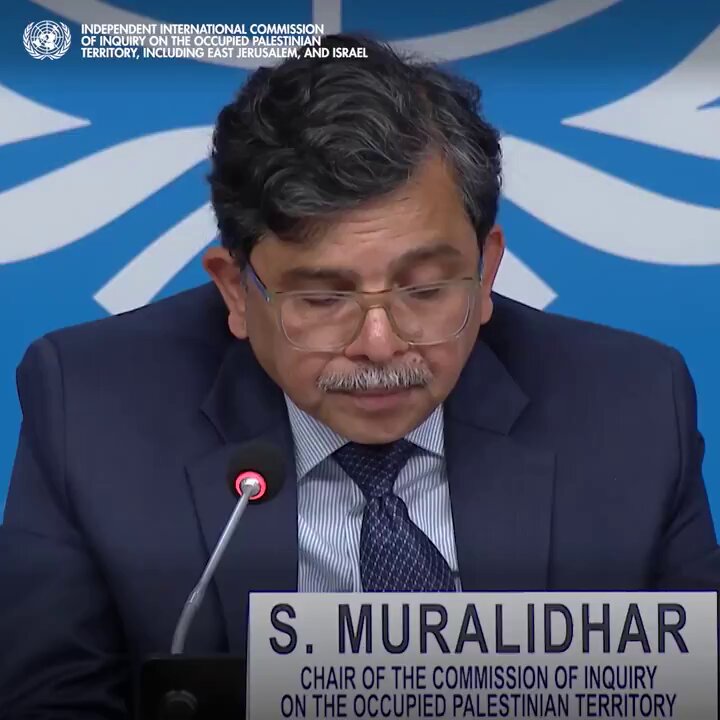
A newly released independent investigation by the United Nations Commission of Inquiry has triggered intense online discussion after concluding there are reasonable grounds to believe Israeli security forces have deliberately targeted Palestinian children using advanced weaponry, snipers, and drones. The report, described by one commissioner as “absolutely heartbreaking,” has been widely shared on social media, with prominent voices including children’s advocate Ms. Rachel publicly endorsing its findings. Israel has responded sharply, labeling the document a “political blood libel” and arguing that it fails to account for Hamas’s documented practice of embedding military assets within civilian areas. The report’s release has coincided with renewed attention to casualty figures in Gaza, with some social media users citing earlier UN and Dutch assessments that thousands of children have been killed. The immediate catalyst for the current trend is the Commission’s specific finding on the alleged deliberate targeting of minors, combined with the visibility of high-profile endorsements and Israel’s swift rebuttal, which has driven a wave of commentary, debate, and amplification across platforms.
Common Perspectives
The Report Represents Credible Evidence of Systematic Harm
Supporters of the UN findings argue that the Commission’s use of advanced weaponry, sniper fire, and drone strikes against children indicates a pattern that goes beyond collateral damage. They point to statements from commissioners describing the destruction of childhood itself and emphasize that the investigation was conducted independently, lending weight to calls for accountability and protective measures for Palestinian minors.
The Investigation Lacks Balance and Ignores Hamas’s Role
Critics contend that the report places disproportionate scrutiny on Israeli actions while giving insufficient attention to Hamas’s strategy of operating from within densely populated civilian zones. They argue that this framing omits critical context about how militant groups deliberately place military infrastructure near schools and homes, potentially skewing the Commission’s conclusions and undermining the report’s perceived neutrality.
Israel’s Response Highlights Procedural Concerns
Israeli officials and supporters have focused on what they describe as procedural shortcomings, including limited time to respond to the lengthy document and questions about whether the investigation met basic standards of fairness. This perspective frames the report as part of a broader pattern of international bodies issuing findings without adequate engagement from the affected state, raising doubts about the process rather than solely the substance.
Social Media Amplification Reflects Polarized Narratives
Observers note that the report’s visibility has been significantly shaped by online discourse, with some influencers and accounts outside the immediate region—particularly in India—giving the story more prominence than many Israeli voices. This view suggests that the trend is partly driven by algorithmic amplification and geopolitical alignments rather than solely by the report’s content or Israel’s rebuttal.
A Different View
Rather than viewing the report solely through the lens of accusation or defense, some analysts suggest examining how the Commission’s methodology intersects with evolving technologies of warfare. The use of drones and precision munitions documented in the findings raises broader questions about how modern surveillance and targeting systems, when deployed in densely populated areas, reshape the relationship between military objectives and civilian harm. This angle shifts attention from binary judgments toward the technical and ethical challenges that arise when advanced weaponry meets urban conflict environments.
Conclusion
The current surge in attention around the UN report stems directly from its specific allegations of deliberate targeting, the visibility of high-profile endorsements, and Israel’s immediate and vocal rejection. As the debate continues online and in diplomatic circles, the discussion reflects not only differing interpretations of the evidence but also deeper tensions about how international investigations, social media, and the realities of asymmetric warfare interact in shaping public understanding of the conflict.
Sources and discussion
These public posts were collected while researching this story. They provide context and reactions, but may not independently verify every claim.
View the original topic on XQamar 🇵🇰 🇵🇸
@QamarNadeem20
@ABO_Watan9 🚨 UN Report: "The essence of childhood has been destroyed"A devastating independent UN investigation led by Justice Srinivasan Muralidhar finds that Israeli security forces have been deliberately targeting & shooting Palestinian children with advanced weaponry, snipers & drones.
Jun 27, 2026nomoa pokoa
@nomoapokoa1
Ms Rachel backs UN report on Israel targeting Palestinian children via @AJEnglish
Jun 27, 20261 likesNafay Farooq
@_NafayFarooq
Israel slams UN report as 'political blood libel' for alleging deliberate targeting of Palestinian children Israel reacted angrily over a new United Nations’ Commission of Inquiry report alleging the Jewish state had engaged in the "deliberate targeting of Palestinian children."
Jun 27, 2026Robert Myers 🇺🇸🇮🇱 🏴☠️🟦
@Rondo2
The recent UN report that accused the IDF of selectively targeting the children of Gaza and causing mass deaths is utter bullsh&t -the report cites zero actual evidence-but, even more ridiculously, according to the UN itself, the most precise and lethal military in the region
Jun 27, 20261 likesFreeman Adam
@FreemanAdam01
@VividProwess Israel killed 21000 kids, how many more do you want? Just read the last report by the Dutch and the UN on killing children by the genocidal regime u defend (of course not for free $)
Jun 27, 2026Amr
@Amr2077057
@AssalRad It hurts to say this, but @MSF and @SaveChildren keep seeing Gaza torn apart. @btselem and @PHRI report the same on the ground. UN reports warn of genocide and war crimes. The proof keeps piling up.
Jun 27, 20264 likes1 reposts