

Israel Cuts Defense Exports and Support to Qatar
• From trending topic: Israel Halts All Defense Exports to Qatar Over Adversary Stance
Summary
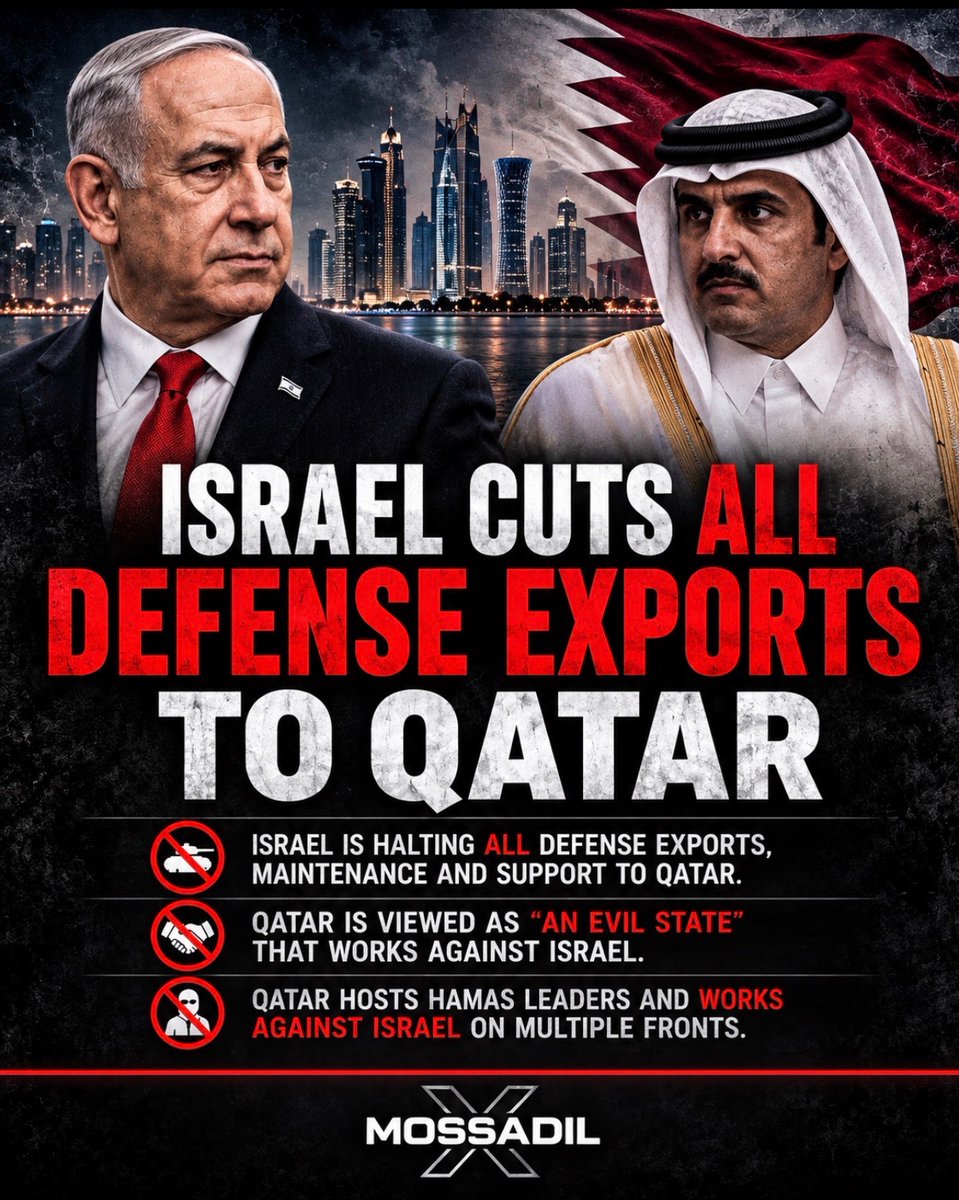
Israel has halted all defense exports to Qatar and ended maintenance and support for existing contracts, treating the Gulf state as an adversary rather than a useful if imperfect channel. Reports circulating on August 19, including references to an Israeli broadcast, describe a comprehensive cutoff of future sales and ongoing service. Some accounts quote Israeli sources calling Qatar “an evil state that works against Israel,” citing its long-standing ties to Hamas, including hosting the group’s political leadership, even while Doha has mediated talks. The reports do not specify the volume or types of equipment involved, nor do they include a formal government communique. Qatar has for years hosted Hamas officials and facilitated communications with Israel, a role that continued through periods of intense fighting. The shift, if confirmed in full, marks a break from that pragmatic arrangement.
Common Perspectives
Overdue Security Measure
Israeli officials and security-focused commentators see the halt as consistent with treating Hamas as an enemy. Selling or servicing systems to a country that hosts and has financially supported the group, they argue, creates unacceptable risk of leakage or dual use. This view appeals to those who regard Qatar’s mediation as a form of political cover rather than genuine neutrality. The assumption is that any Israeli-origin technology in Qatari hands could eventually harm Israel; the trade-off is reduced access to a diplomatic backchannel that has, at times, produced hostage releases or temporary pauses in fighting.
Damage to Remaining Talks
Diplomats, some hostage-family advocates, and analysts who have followed the mediation track worry that the move will freeze one of the few remaining lines to Hamas leadership. Qatar’s role has been imperfect and self-interested, yet it has been one of the few parties able to deliver messages both ways. This perspective is held by those who prioritize any remaining chance of de-escalation. It assumes Qatar’s intermediation cannot easily be replaced by Egypt or others and accepts the cost of appearing to reward a state that has not severed its Hamas ties.
Limited Practical Effect
Regional and defense-industry observers note that public details remain thin—social-media summaries of a broadcast rather than published contracts or official tallies—and that formal Israel-Qatar defense trade has never been large given the absence of diplomatic relations. The announcement may therefore be more political signaling than a major material blow. This reading appeals to those skeptical of dramatic policy reversals announced through unofficial channels. The risk is underestimating covert or third-party transfers that the cutoff is now meant to close.
Arms Sales as Political Instrument
Some defense-policy analysts view the decision as Israel more openly using export and sustainment controls as a foreign-policy tool. It may reassure partners who want Israel to draw sharper lines, yet it also raises questions about the reliability of Israeli systems if political relations sour later. Industry voices and certain foreign governments tend to hold this view. The underlying assumption is that consistency in after-sales support builds long-term trust; the trade-off is greater short-term political flexibility at the expense of that reputation.
A Different View
The maintenance cutoff itself is the more revealing detail. It implies that some Israeli-origin or compatible systems were already in Qatari service, however they arrived. Ending support therefore does more than block future sales: it forces Doha either to mothball that equipment or to seek alternative sustainment, potentially from Turkey, China, or European suppliers. That shift could quietly alter the mix of technology in the Gulf without any new Israeli export ever taking place, an outcome the current discussion of “halting sales” largely overlooks.
Conclusion
Official statements from Jerusalem and Doha, any U.S. reaction given the American presence at Al Udeid, and whether mediation channels actually freeze will show whether this is a tactical signal or a lasting rupture.
Sources and discussion
These public posts were collected while researching this story. They provide context and reactions, but may not independently verify every claim.
View the original topic on XThe Cradle
@TheCradleMedia
Israel halts all defense exports to Qatar in abrupt policy shift —— Israel has instituted a sweeping suspension of all defense exports to Qatar, moving to cut off future military sales and terminate ongoing maintenance or support for past contracts. According to a broadcast by
Aug 19, 2026375 likes170 repostsMossad Commentary
@MOSSADil
ISRAEL CUTS ALL DEFENSE EXPORTS TO QATAR 🇮🇱🚫🇶🇦 Israel is halting all defense exports, maintenance and support to Qatar, reportedly viewing it as “an evil state that works against Israel.” The decision comes amid Qatar’s long-standing ties to Hamas and its role as a mediator
Aug 17, 20266K likes1.4K repostsDavid Daoud
@DavidADaoud
Report: Israel halting all defense exports to Qatar, views it as 'an evil state'
Aug 17, 2026189 likes29 reposts