

Eight Nations Condemn Israel's Rejection of UN-Backed Gaza Roadmap
• From trending topic: Eight Nations Condemn Israel's Rejection of Gaza Roadmap
Summary
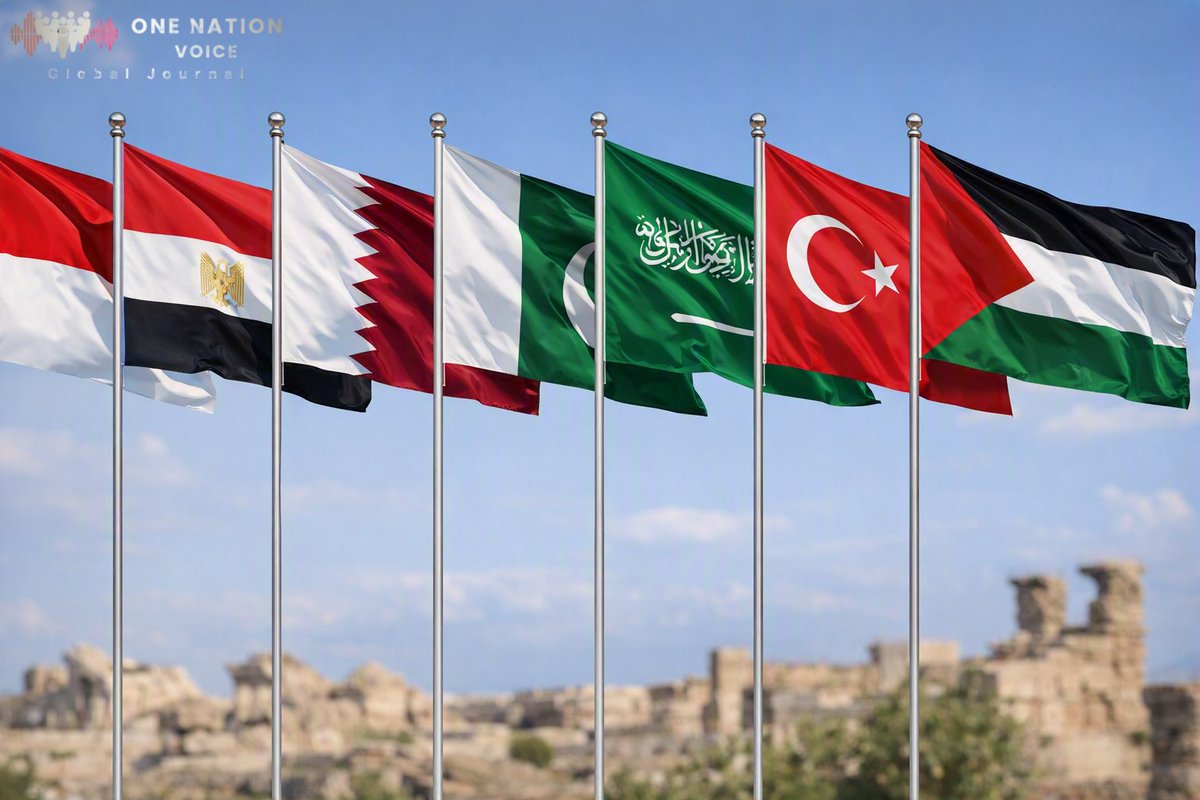
Foreign ministers from Indonesia, Egypt, Jordan, Pakistan, Qatar, Saudi Arabia, Türkiye and the United Arab Emirates have jointly condemned Israel's rejection of a Gaza peace roadmap. Circulating accounts of their statement describe the plan as the "Road Map for completing the implementation of US President Trump’s Comprehensive Plan to End the Gaza Conflict," endorsed by UN Security Council Resolution 2803 and accepted by Palestinian factions.
Reported elements of the roadmap include decommissioning of weapons, Israeli withdrawal, and an international force. Some accounts refer to an associated 15-point framework. Israeli Prime Minister Benjamin Netanyahu has rejected the document, according to reports of his position, while the Israel Defense Forces have indicated that no withdrawal will occur until Hamas is genuinely disarmed.
The condemnation underscores a gap between a UN-endorsed sequence of steps that Palestinian groups have accepted and Israel's insistence on completed disarmament as a precondition.
Common Perspectives
International Consensus Should Bind Israel
The eight governments and supporters of multilateral diplomacy treat the rejection as a defiance of a rare point of agreement. This view appeals to officials who need to show they are advancing an end to the war and to publics that have demanded stronger action on Gaza. It assumes the roadmap's provisions, including an international force, can be made to work in practice and that Palestinian acceptance will translate into compliance. The trade-off is that it can sideline Israel's stated security requirements and the difficulty of verifying that Hamas's military capacity is actually gone.
Disarmament Must Come First
Israeli officials and those who prioritize Israel's security after previous withdrawals argue that accepting the document would leave Hamas able to rearm. Netanyahu's rejection and the IDF condition reflect the judgment that only after Hamas is stripped of weapons can other steps proceed. This resonates with Israelis who saw the 2005 Gaza disengagement produce rocket fire and Hamas rule. It assumes Israel can maintain military and political pressure long enough to achieve that outcome. The cost is prolonged fighting, delayed reconstruction, and friction even with states that have peace treaties or growing ties with Israel.
Statements Without Leverage
Regional analysts and skeptics in Israel and the West often read the joint condemnation as largely symbolic. Several of the eight countries maintain security coordination or economic links with Israel and have limited tools to compel a change in policy. The statement lets them address domestic and regional opinion on Palestine. This perspective appeals to those who watch the distance between official rhetoric and actual policy. It assumes words matter less than reconstruction money, pressure on Hamas, or changes on the ground; the risk is further cynicism about diplomatic processes.
Rejection as Proof of Broader Intent
Palestinian advocates and parts of the public in the eight countries interpret Israel's stance as evidence that it does not intend to permit a viable Palestinian arrangement in Gaza and is using Hamas as a standing pretext for continued military control. This view centers the humanitarian and political costs to Gazans and treats the roadmap, if implemented, as a possible path to self-rule. It can underweight Hamas's past governance and the practical obstacles to any force that would have to operate between Israeli security demands and Palestinian factions.
A Different View
The public argument is framed as acceptance versus rejection, but the more durable problem is sequencing. The roadmap, as described, links weapons decommissioning, withdrawal, and an international presence. Israel, drawing on earlier withdrawals, insists the first of those must be finished and verified before the others begin. That order-of-operations dispute, more than any single communique, has undone previous frameworks. Without an agreed verification mechanism that both sides trust, additional foreign-minister statements are unlikely to close the gap, and the eight nations' own later choices—whether they would contribute troops, money, or political cover—remain untested.
Conclusion
Watch whether mediators produce a revised sequence that Israel considers survivable and that the Palestinian factions and the eight governments can still support, and whether the United States comments on the fate of a plan associated with its president.
Sources and discussion
These public posts were collected while researching this story. They provide context and reactions, but may not independently verify every claim.
View the original topic on XOne Nation Voice
@OneNationVoicee
🌐 Foreign Ministers of 8 nations (Indonesia, Egypt, Jordan, Pakistan, Qatar, Saudi Arabia, Türkiye, UAE) jointly condemn Israel’s rejection of the Gaza Peace Road Map endorsed by UNSC Resolution 2803. Accepted by Palestinian factions, the Road Map includes: 🔹 Simultaneous
Aug 18, 2026MoFA Indonesia
@Kemlu_RI
The Foreign Ministers of Indonesia, Egypt, Jordan, Pakistan, Qatar, Saudi Arabia, Turkiye and United Arab Emirates condemn the declared Israeli rejection of the Road Map for completing the implementation of US President Trump’s Comprehensive Plan to End the Gaza Conflict, as
Aug 18, 202653 likes26 repostsSouth Asia Times
@_southasiatimes
Israeli Prime Minister Benjamin Netanyahu has rejected the proposed 15-point Gaza framework, stating that Israel will not accept the document. The IDF has also indicated that no withdrawal will take place until Hamas is genuinely disarmed. Indonesia, Egypt, Jordan, Pakistan,
Aug 18, 2026