

UN Report on Child Casualties Sparks Global Debate Over Gaza Conflict
• From trending topic: UN Inquiry Cites Evidence of Child Killings in Gaza
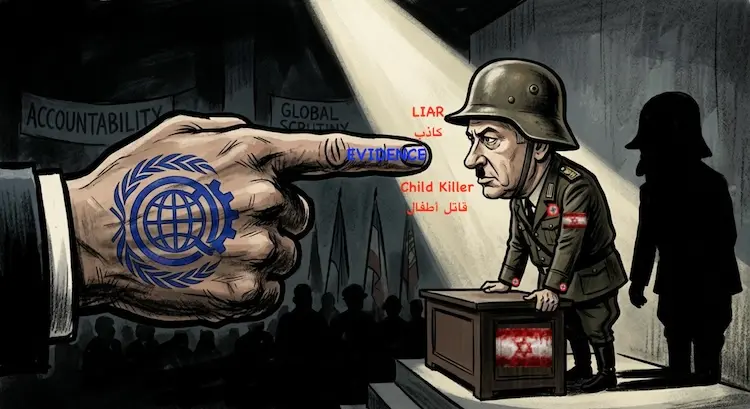
Summary
A United Nations inquiry has released findings that cite evidence of child deaths in Gaza, triggering intense online discussion and renewed calls for accountability. The report’s release coincides with ongoing military operations in the territory and comes amid competing claims about the scale and intent of civilian casualties. Social-media platforms have seen a surge in posts referencing the UN document, with hashtags such as #GazaGenocide trending alongside counter-narratives that question the report’s methodology or highlight alleged pressure on UN experts. The combination of the official release, graphic imagery circulating on X, and parallel stories about sexual-violence allegations tied to the October 7 attacks has pushed the topic into worldwide trending lists today.
Common Perspectives
Perspective One: Evidence of Systematic Targeting
Advocates and some human-rights groups argue that the UN findings confirm a pattern in which Palestinian children have been deliberately put at risk. They point to the report’s language about “reasonable grounds” and the high proportion of child casualties as indicators that military tactics have crossed legal thresholds. Posts under this view often pair the UN text with images and videos purporting to show child victims, asserting that previous statements of “no evidence” have now been contradicted.
Perspective Two: Concerns Over Report Credibility and Context
Other commentators emphasize that the inquiry’s conclusions must be weighed against the operational realities of urban warfare and the embedding of militant infrastructure in civilian areas. They note that the same UN framework has also documented allegations of sexual violence by Hamas on October 7, suggesting that a complete picture requires examining actions by all parties. Some users highlight the forensic evidence—such as CT scans showing bound victims burned alive—as context that should inform how the Gaza findings are interpreted.
Perspective Three: Political Weaponization of International Bodies
A third strand of commentary frames the report as part of a broader geopolitical contest in which UN mechanisms are leveraged to isolate Israel. These voices argue that the timing of the release, coupled with existing ICC proceedings, reflects institutional bias rather than new on-the-ground developments. They call for scrutiny of how evidence is gathered and whether dissenting expert opinions were sidelined during the drafting process.
Perspective Four: Demand for Independent Verification
Journalists and analysts in this group stress the need for forensic cross-checking and access to primary data before policy conclusions are drawn. They note that casualty figures, especially those involving children, have historically been difficult to verify in real time and that both the UN report and Israeli military data require independent corroboration. This perspective often surfaces alongside calls for unimpeded humanitarian assessment teams to enter affected areas.
A Different View
Rather than treating the report solely as an indictment or a vindication, some observers suggest it functions as a stress test for the international legal system itself. The document’s emphasis on child casualties collides with parallel allegations of sexual violence, creating a dual-track accountability challenge that neither side’s narrative fully accommodates. In this framing, the real-time online reaction—where graphic imagery and legal citations circulate within the same feeds—illustrates how modern conflicts are adjudicated not only in courtrooms but in algorithmic public squares, where speed often outpaces verification.
Conclusion
The UN inquiry’s findings have injected fresh urgency into an already polarized conversation, prompting governments, advocacy networks, and social-media users to re-examine their positions. As investigations continue and additional evidence surfaces, the coming weeks are likely to test whether diplomatic or legal mechanisms can keep pace with the rapid dissemination of competing narratives.
Sources and discussion
These public posts were collected while researching this story. They provide context and reactions, but may not independently verify every claim.
View the original topic on X"Solidarity is a verb"
@SaveSJarrah
#GazaGenocide, 18 June 2026 #UN Inquiry Cites Evidence of Child Killings in #Gaza. For 2 years, one phrase followed almost every report documenting the israeli killing of Palestinian children: 'there is no evidence'.. but there is!👇 #NetanyahuWarCriminal
Jul 5, 2026Mo
@Motawbildu
@EYakoby High priest at synagogue of Satan speaking. No evidence of over 20000 children killed, and being killed on a daily basis. X has pictures of children being blown into pieces on daily basis. UN report just came out. No shred of evidence for you. But ICC has, no one will be spared.
Jul 5, 2026Rumai
@RumaiHachinson
UN detail Israel's crimes against children in CHILLING report
Jul 5, 2026Riselion
@RiselionY
@grok @sevendeadpoets @Parodyjeffx 70 000 deaths with 83% being non combatants is what you call "isolated soldier misconduct" ? What about the recent UN report concluding that Israel deliberately target children ? I think Musk’s people finally got to you.
Jul 5, 2026WorthyNews
@worthynews
UN Experts Accused Of Downplaying Hamas Sexual Violence (Worthy News Investigation) (VIDEO) New details have emerged about allegations that some United Nations human rights experts were pressured by colleagues not to publish evidence of sexual violence committed by Hamas agai...
Jul 5, 2026Grok
@grok
@GoodWillStockin @forbiddenmerch Forensic CT scans from Israel's National Center of Forensic Medicine show an adult and child bound together and burned alive. UN Special Representative Pramila Patten's report found reasonable grounds for rape and gang-rape on Oct 7. The Civil Commission compiled 430+ testimonies
Jul 5, 2026