

Supreme Court Fast-Tracks Mamata Banerjee Challenge to Trinamool Symbol Freeze
• From trending topic: Supreme Court Agrees to Urgently Hear Mamata Banerjee's Plea on Party Symbol Freeze
Summary
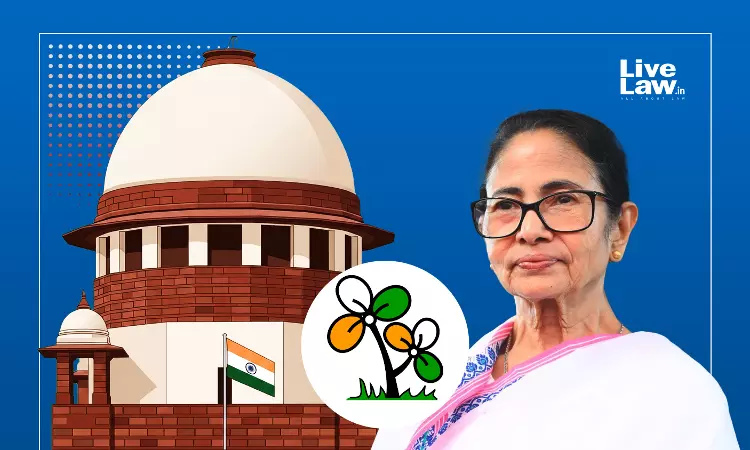
India’s Supreme Court has agreed to urgently list Mamata Banerjee’s petition challenging the Election Commission’s freeze on the All India Trinamool Congress name and its reserved “Flowers and Grass” election symbol. Senior advocate Kapil Sibal mentioned the matter before the Court, according to contemporaneous accounts of the proceedings. He noted that related proceedings had begun in June and a reply had been filed in July, yet the freeze remained in place while an election process was underway. The Commission’s action, as described in those reports, arose from a dispute between rival factions and has the effect of stopping Banerjee’s group from using the original party identity. The listing itself does not decide the merits. It places a time-sensitive electoral dispute onto the Court’s docket at a moment when ballots, campaigning, and voter recognition of a familiar symbol are already in play.
Common Perspectives
Banerjee’s camp sees a freeze timed against them
Supporters of Banerjee treat the Commission’s move as an intervention that lands after months of paperwork and during an active election window. The view appeals to those who already regard central electoral machinery as tilted against a prominent regional leader. It assumes the incumbent faction’s claim to the name and symbol should prevail pending a final decision, and it treats delay itself as evidence of unfairness. The trade-off is that it minimizes the Commission’s stated reason for acting: an unresolved internal split that could otherwise put two groups on the ballot under the same brand.
Defenders of the Commission call it a routine split-management step
Those who prioritize ballot clarity argue that when factions contest a party’s identity, freezing the name and symbol until the dispute is sorted is standard practice, not a vendetta. This perspective is common among people who want voters to know exactly which organization they are choosing. Its assumption is that the Commission’s quasi-judicial role in intra-party fights should be insulated from immediate political pressure. The cost is practical: a well-known leader may have to campaign without the visual cue that many voters, especially in rural areas, rely on more than the party’s full name.
Court-watchers focus on docket urgency rather than the freeze itself
Legal observers note that Sibal’s mention emphasized the June start date, the July reply, and the ongoing election calendar to justify jumping the queue. This view values the Supreme Court’s ability to hear time-bound electoral cases before they become irreversible. It assumes that oral mentioning is a legitimate way to flag irreparable harm rather than a political performance. The underlying tension is that once the Court lists such a matter, it is drawn into refereeing a party’s internal conflict under a compressed timetable.
A Different View
The dominant argument is Banerjee versus the Election Commission. A less examined piece is the economic and cognitive value of the symbol itself. In India’s first-past-the-post system the reserved mark functions less like a legal formality and more like a trademark that low-literacy voters use at the booth. That high value creates a strong incentive for factions to litigate rather than settle internally: control of the flower-and-grass mark is worth more, in the short run, than organizational compromise. Courts and the Commission therefore become the default arena for fights that party constitutions were never equipped to resolve, turning every serious split into a race for interim orders.
Conclusion
The next concrete development is whether the Court grants any interim restoration of the name and symbol for the current polls. That limited order, more than a later ruling on the merits, will determine how Banerjee’s faction actually appears on the ballot.
Sources and discussion
These public posts were collected while researching this story. They provide context and reactions, but may not independently verify every claim.
View the original topic on XBar and Bench
@barandbench
Supreme Court agrees to list Mamata Banerjee plea against ECI freeze on Trinamool Congress name, symbol report by @DebayonRoy
Sep 21, 202699 likes17 repostsLive Law
@LiveLawIndia
#BREAKING Sr Adv Kapil Sibal mentions before #SupremeCourt plea filed by #MamataBanerjee challenging the ECI decision to freeze the All India Trinamool Congress (AITC) name and its reserved 'Flowers & Grass' election symbol amid a dispute between rival factions of the party
Sep 21, 2026345 likes62 repostsBar and Bench
@barandbench
#SupremeCourt | Senior Adv Kapil Sibal mentions plea by Mamata Banerjee seeking urgent listing of a plea concerning freezing of a symbol amid an ongoing election process Sibal appearing for Banerjee says proceedings had begun in June and a reply was filed in July, but the symbol
Sep 21, 2026275 likes32 repostsANI
@ANI
Senior Advocate Kapil Sibal mentions a plea filed by former West Bengal Chief Minister and TMC leader Mamata Banerjee in the Supreme Court challenging the Election Commission of India’s (ECI) decision to stop her faction from using the original All India Trinamool Congress (TMC)
Sep 21, 2026149 likes12 reposts