

Ethiopian Armed Groups Announce Coalition Aimed at Ousting Abiy Ahmed
• From trending topic: Ethiopian Armed Groups Form Coalition Against Abiy Ahmed Amid Tigray Airstrikes
Summary
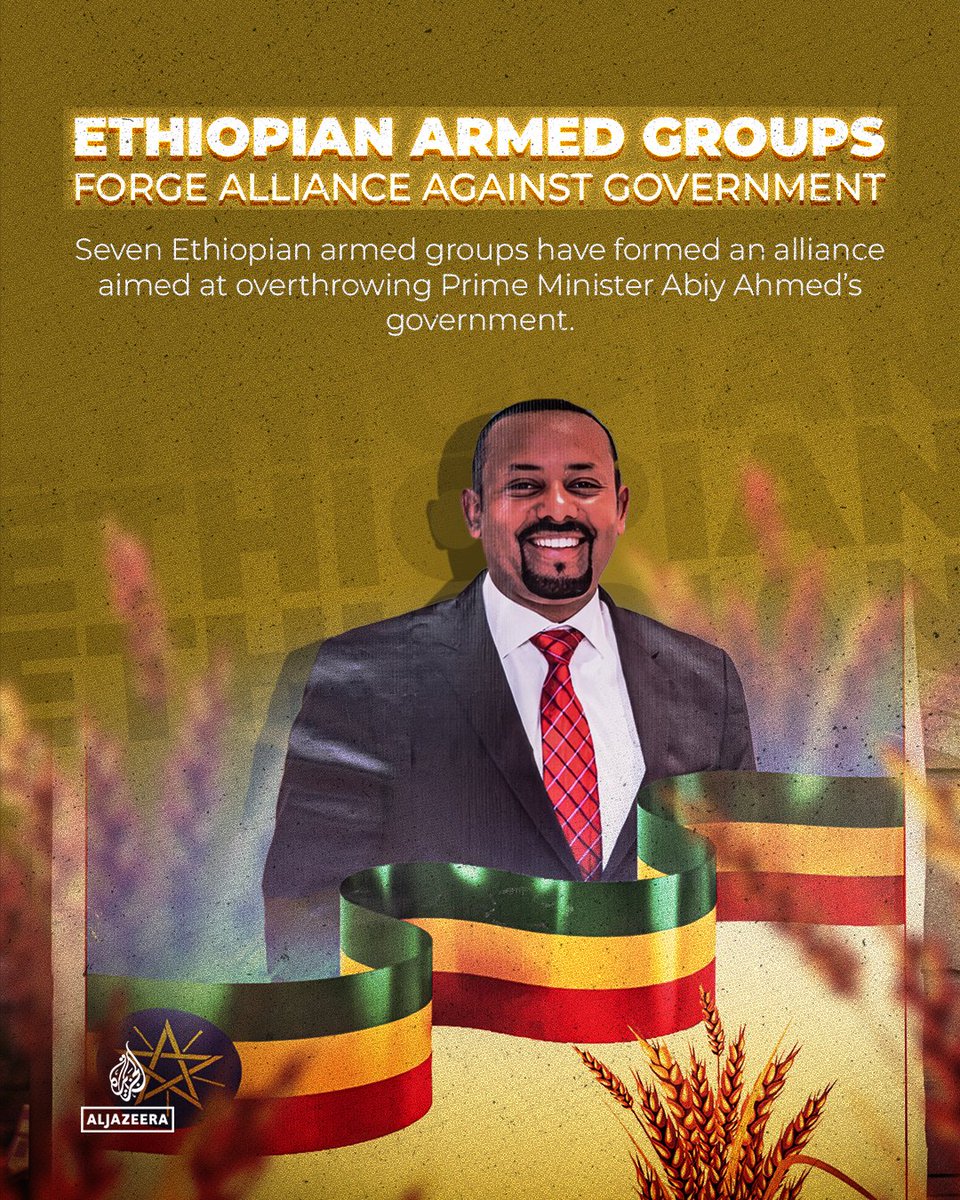
Seven Ethiopian armed groups, including the Tigray People’s Liberation Front (TPLF), the Amhara Fano National Movement and the Oromo Liberation Army, have announced an alliance to overthrow Prime Minister Abiy Ahmed and install what they describe as an inclusive transitional government. Accounts of the Sunday announcement spread quickly on X, alongside reporting that the move comes as airstrikes continue in Tigray.
The named factions are ethno-nationalist armed movements whose fights with Addis Ababa have been geographically separate and, at times, mutually hostile. A formal coalition therefore stands out less as a new list of grievances than as an attempt to treat Abiy’s government as a single, shared target. Independent confirmation of how tightly the groups will actually coordinate—command, intelligence, or operations—has not been established in the material circulating around the announcement. What is clear is the political claim: they say they will work together to replace the federal government rather than bargain with it from their own regions.
Abiy, in power since 2018, has already fought a devastating war in Tigray that ended in a 2022 ceasefire, then faced sustained insurgency in Amhara after moves against regional forces, and a long-running Oromo insurgency. The coalition’s language of a “transitional government” is meant to sound civic. The membership is still defined by ethnic armed projects.
Common Perspectives
A necessary united front
Supporters of the armed groups, much of the activist diaspora, and Ethiopians who argue that Abiy has centralized power and failed to end the wars in Amhara and Oromia treat the alliance as overdue. Separate rebellions, in this view, could not force a political settlement; only a common front might. The appeal is straightforward: the prime minister is the obstacle, so the obstacle should be removed. The assumption is that a shared enemy can paper over incompatible claims to land, security forces, and who would actually staff any transition. The trade-off is endorsing organizations with records of violence and little history of governing together.
Defense of the federal government
Abiy’s allies, Prosperity Party loyalists, and many who remember TPLF dominance before 2018 cast the coalition as an illegitimate grab for the state. They tend to describe the groups as rebels or terrorists whose victory would mean ethnic partition or a return of the old ruling party in new clothes. The view appeals because it frames the current government as the last barrier to disintegration and credits Abiy with breaking the previous order. The assumption is that the federal military can still prevail, or that talks are only useful from a position of strength. The cost is that dismissing Amhara and Oromo armed opposition as mere criminality can widen recruitment and make a negotiated exit harder.
Regional and humanitarian alarm
Neighboring governments, some African Union and diplomatic voices, and humanitarian organizations tend to read the announcement as a warning of multi-front war rather than as a constitutional program. The last Tigray conflict produced mass displacement and acute food insecurity; a coalition that links Tigrayan, Amhara and Oromo fighting raises the prospect of simultaneous crises. This perspective appeals to anyone whose first metric is civilian harm and Horn of Africa spillover. It often assumes another ceasefire or external mediation can still freeze the map. That can sideline the question of who inside Ethiopia actually commands local legitimacy.
Skepticism that the pact will hold
Analysts who follow Ethiopia’s conflicts closely often note that Tigrayan, Amhara and Oromo movements have fought one another as well as the center, and that announcing an “inclusive” transition is easier than sharing power or disputed territory. Social-media formalization may be signaling to funders and mediators more than integrated command. The view appeals to those who have watched earlier pacts collapse. Its risk is the opposite of panic: treating a real operational shift as mere propaganda until it is too late.
A Different View
The argument now is mostly about whether Abiy falls. A less examined problem is structural. Ethiopia’s ethnic-federal system created parallel political and armed identities in each major region; Abiy’s later attempt to recentralize did not erase those structures, and the incomplete end of the Tigray war left armed capacity in the north. A coalition against the prime minister does not decide who controls contested lands between Amhara and Tigray, or how Oromo armed claims would sit inside a multi-ethnic security apparatus. Even a successful overthrow could relocate the same conflicts into a weaker transitional authority. The airstrikes in Tigray, if they continue, suggest Addis Ababa already treats northern coordination as a military emergency rather than a talking point—while civilians in mixed or frontline areas will live with the result long before any “inclusive” government exists on paper.
Conclusion
What matters next is whether the alliance produces joint operations or remains a communiqué, how the federal government answers beyond Tigray, and whether other factions join, sit out, or split. The durability of the pact, not the Sunday wording, will decide if this is a turning point or another overlay on wars that were already underway.
Sources and discussion
These public posts were collected while researching this story. They provide context and reactions, but may not independently verify every claim.
View the original topic on XAl Jazeera English
@AJEnglish
Thread 🇪🇹 Seven Ethiopian armed groups have formed an alliance aimed at overthrowing PM Abiy Ahmed's government. The groups announced the alliance on Sunday, saying that they would work together to set up an inclusive transitional government. Here's what you need to know ⤵️
Sep 22, 2026316 likes94 repostsCritical Threats
@criticalthreats
NEW | An array of ethno-nationalist rebel groups, including the TPLF, Amhara Fano National Movement (AFNM) and Oromo Liberation Army (OLA), formalized a coalition intended to overthrow the Ethiopian federal government. The convergence of the rebel groups intertwines several
Sep 22, 2026237 likes70 reposts