

Modi Tells Space Founders India Should Draw the World’s Talent
• From trending topic: Modi Meets Space Startups on National Space Day
Summary
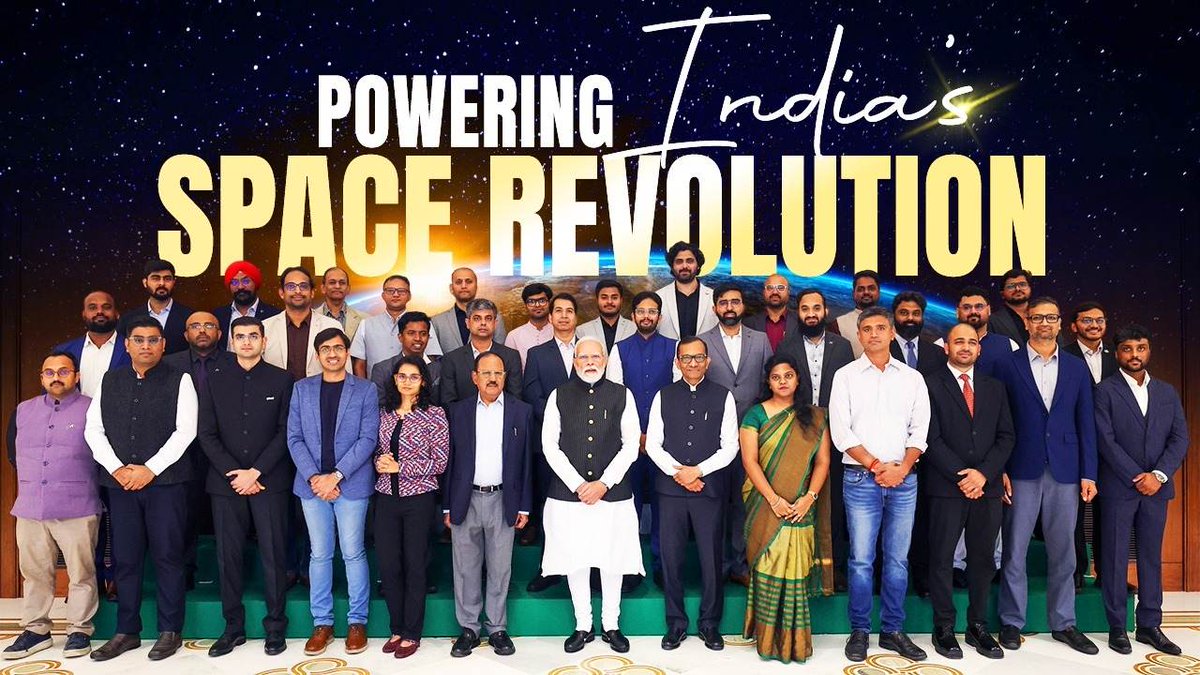
Prime Minister Narendra Modi used a National Space Day meeting with Indian space-startup founders to argue that the country should feel like the place you move if you want a career in the field. A video clip from the Delhi interaction, circulated on X, has him saying India should “create an aura where people from all over the world feel that if they want to build a life in this field, they should come to India.” The posted excerpt cuts off mid-sentence. Separate posts from the same cluster of coverage describe him highlighting policies meant to attract global talent; those posts do not spell out which measures he named.
Modi’s own account framed the session more personally: he said he had met “India’s brightest space StartUps,” came away impressed by their energy and ambition, and asked followers what excites them about the country’s space journey. The combination — a ceremonial national day, a room of founders, and a pitch aimed past them at workers and entrepreneurs abroad — is what pushed the meeting into wide circulation, not a single contract announcement or launch.
National Space Day has become an annual stage for a sector that was, for a long time, almost entirely a public-program story. The private companies in the room are newer, and the political message this year was less a recap of missions than an invitation: to domestic founders, and, at least in language, to people who might otherwise build that life somewhere else. What was actually promised, and what was only atmosphere, is not established by the posts driving the trend.
Common Perspectives
Political cover for a private space industry
Supporters of the government, and many people around the domestic space companies themselves, read the meeting as proof that startups are meant to sit in the room, not wait outside a public monopoly. Face time with the prime minister is treated as a signal to ministries, investors, and large customers that this work is wanted. The appeal is practical: attention from the top can loosen procurement habits and make a young firm look less speculative. The assumption tucked inside is that a well-staged conversation becomes durable rules. Photographs do not write launch licenses.
A bid to reverse the usual direction of talent
A second group — including parts of the Indian diaspora and people who follow the country’s long argument about engineers leaving — seized on the “come to India” line as the real news. For them, National Space Day was less about rockets than about whether India can stop being a departure lounge. The view is attractive if you think national mood, visa policy, and a few celebrated firms can change where people raise children and file patents. It asks “aura” to do work that pay, labs, schools, and the ability to settle a family usually do.
Ceremony ahead of the unglamorous constraints
Critics of the government, and some people inside the industry who are blunter in private than on a hashtag, treat the session as choreography. Founders get a photograph; the public gets a national-day post. Their objection is not that ambition is unwelcome. It is that celebrating founders is cheaper than fixing capital that is not a press note, government as a reliable first customer, or the slow machinery around testing, spectrum, and liability. This reading can undersell the fact that political signaling sometimes does move a reluctant bureaucracy. It can also be right that a clip is not a market.
Prestige first, balance sheets second
Another, more nationalist strain in the replies cares less about startup unit economics than about India as a spacefaring power. The meeting fits a story of rising capability and self-reliance, which is why it travels well on a commemorative day. That story has force, and it matches how many voters actually rank space. What it can skip is that commercial space is stubbornly cross-border — components, insurance, ground stations, capital, and customers — so “build a life here” sits next to export controls and foreign-investment rules whether anyone mentions them or not.
A Different View
The line about global talent flatters India’s brand and skips the person who actually decides. Most of the labor market that will make or break these companies is already in the country: young engineers choosing a twelve-person launch or satellite firm against a safer offer from a global tech company, often abroad. A prime-ministerial audience does not settle that choice. It can even distort it, by concentrating political access, press, and the appearance of inevitability on the handful of founders who got in the room, while the binding limits remain launch cadence, clearances, and whether the state will buy.
There is a further tension the commemorative conversation rarely sits with. A sector still tightly coupled to government approval is being sold in the language of open destination. People do not cross the world for aura alone if they cannot touch the hardware. If the talent pitch is serious, the test is not another National Space Day quote. It is whether someone who is not already inside the system can build, test, and stay.
Conclusion
The posts will fade with the holiday. What is worth watching is narrower: whether any concrete change in procurement, funding, or the rules around who may work on space systems follows the meeting, or whether the “aura” remains the product.
Sources and discussion
These public posts were collected while researching this story. They provide context and reactions, but may not independently verify every claim.
View the original topic on XNarendra Modi
@narendramodi
Met India’s brightest space StartUps. As always, came away impressed by their energy and ambition. You would love their insights and optimism. Do tell me...what excites you most about India’s space journey? #NationalSpaceDay
Aug 23, 202613.3K likes3.2K repostsNarendra Modi
@narendramodi
Happy National Space Day! 🛰️ Here’s to dreaming even bigger, innovating more and pushing newer frontiers....
Aug 23, 202612.6K likes3.2K repostsANI
@ANI
#WATCH | Delhi: During interaction with CEOs and Founders of Space Startups, Prime Minister Narendra Modi said, "...I believe we should create an aura where people from all over the world feel that if they want to build a life in this field, they should come to India—join an
Aug 23, 20263.2K likes420 reposts