

Eastern Pacific ENSO Swings Reported 37% Higher Than Preindustrial Levels
• From trending topic: New Study Reveals Stronger El Niños Driven by Human Warming
Summary
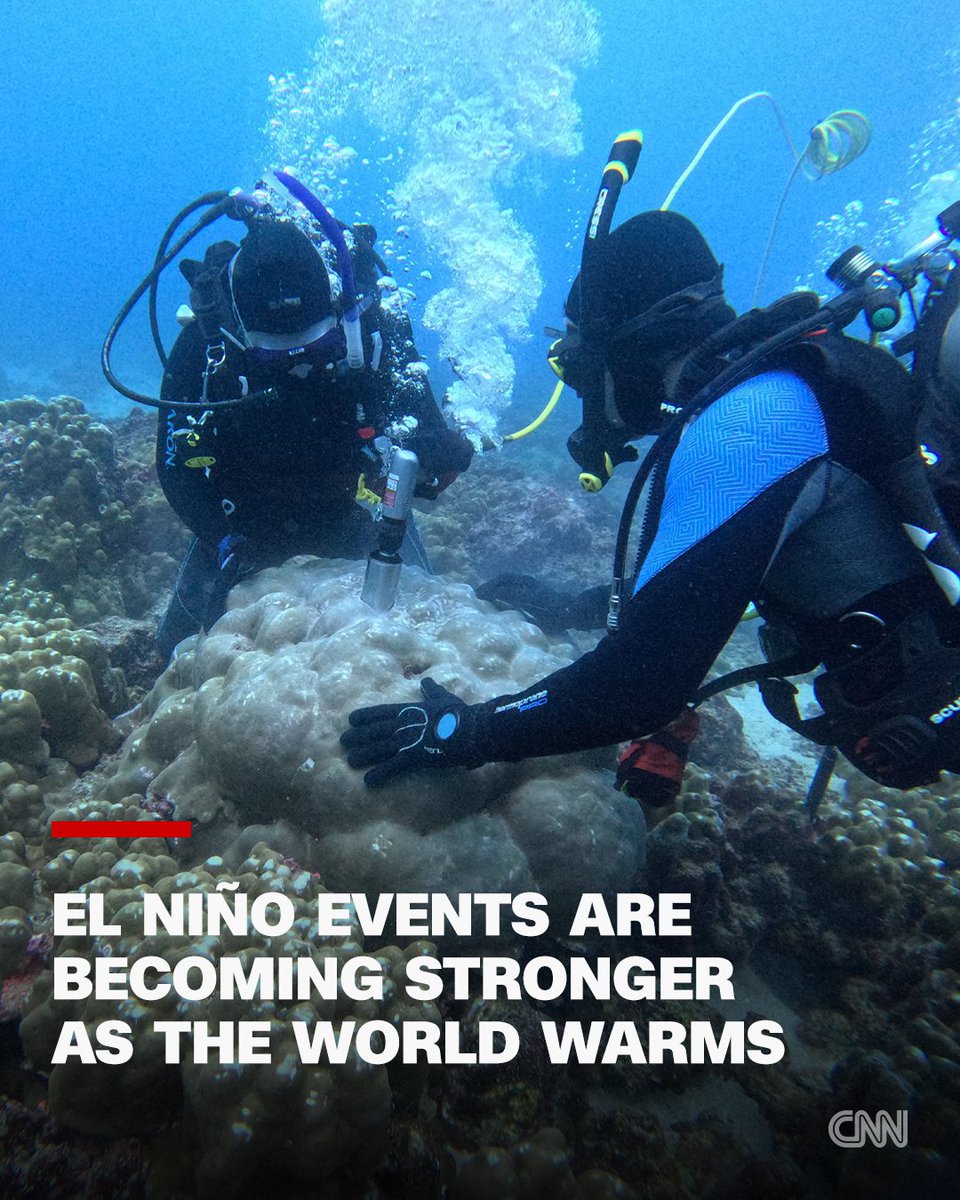
Eastern Pacific variability in the El Niño-Southern Oscillation is roughly 37 percent higher than preindustrial levels, according to a study published in Science. Recent coverage and a widely circulated post framed the paper as showing that the climate pattern driving El Niño is becoming more erratic as the planet warms and that El Niño itself is becoming more intense. The work was described as comprehensive and appeared on a Thursday; the available reporting did not name authors, spell out methods, or explain how the 37 percent figure was calculated.
The finding is the specific event behind the current discussion. ENSO already produces large year-to-year swings in tropical rainfall, temperatures, and marine conditions. A documented increase in eastern Pacific variability would imply larger excursions from the mean, with knock-on effects for drought, flooding, and fisheries that past strong El Niño years have already illustrated. What remains unclear from the clustered coverage is the mix of observations, models, and reconstructions used, and how cleanly the change is attributed to human warming versus other influences.
Common Perspectives
Human Warming Is Now Clearly Amplifying El Niño
Climate researchers and environmental advocates who have long expected greenhouse gases to alter tropical Pacific dynamics tend to read the result as confirmation. The 37 percent figure supplies a concrete number linking industrial-era warming to a weather pattern the public already recognizes. That framing appeals because it turns an abstract forcing into a familiar, high-impact oscillator and thereby supports calls for faster emissions cuts. It assumes the Science paper’s attribution is robust; the trade-off is that every future El Niño can be narrated as “climate-changed,” which can crowd out other drivers and remaining uncertainties in Pacific dynamics.
The Number May Overstate a Clean Human Signal
Some physical scientists, statisticians, and commentators wary of strong policy inferences emphasize that ENSO has always been highly variable and that paleoclimate records contain large past swings. A single percentage, they argue, does not automatically isolate the anthropogenic share, especially if models or short instrumental records dominate the analysis. The view appeals to those who prioritize caution against over-interpreting one paper. Its working assumption is that natural range and model limitations still matter as much as the forced response; the trade-off is that it can slow practical preparation if the reported increase is real and ongoing.
Vulnerable Regions Face Larger Swings They Must Plan For
Agricultural agencies, disaster managers, and communities in places already sensitive to El Niño—coastal Peru, parts of Australia, Indonesia, and eastern Africa—focus on the operational meaning. Bigger eastern Pacific events historically mean heavier rains or deeper droughts and disrupted fisheries. The appeal is immediate risk to crops, water, and lives. The assumption is that an eastern-Pacific increase translates directly into worse regional extremes; the trade-off is a tilt toward reactive spending on defenses rather than addressing other climate stressors or the root emissions question.
Forecasters See Both a Constraint and a Complication
Seasonal-prediction centers and meteorologists treat the result as new information that could eventually improve models, yet also as a warning that larger amplitude may make some forecasts harder. The appeal lies in using better process understanding for earlier warnings. It assumes the finding will be assimilated into operational systems reasonably quickly; the trade-off is that increased variability itself can degrade skill even as scientific knowledge grows.
A Different View
Public discussion has treated “stronger El Niños” as a single phenomenon. The study, however, isolates eastern Pacific variability. Central Pacific events, which have been more frequent in some recent decades, produce different rainfall teleconnections. If the reported increase is concentrated in one flavor of El Niño, the map of who is most exposed—and which adaptation investments actually match the physics—may not match the generic headline. That distinction is easy to lose once the story becomes a climate-attribution talking point, yet it is the difference between a useful regional forecast and a misleading global average.
Conclusion
The immediate test is whether independent groups reproduce a comparable eastern Pacific increase with different data and methods, and how the next major El Niño is described relative to this new baseline rather than to 20th-century statistics.
Sources and discussion
These public posts were collected while researching this story. They provide context and reactions, but may not independently verify every claim.
View the original topic on X