

NASA Selects PRIMA as First Probe-Class Far-Infrared Telescope
• From trending topic: NASA Selects PRIMA Far-Infrared Telescope for Deep Universe Probes
Summary
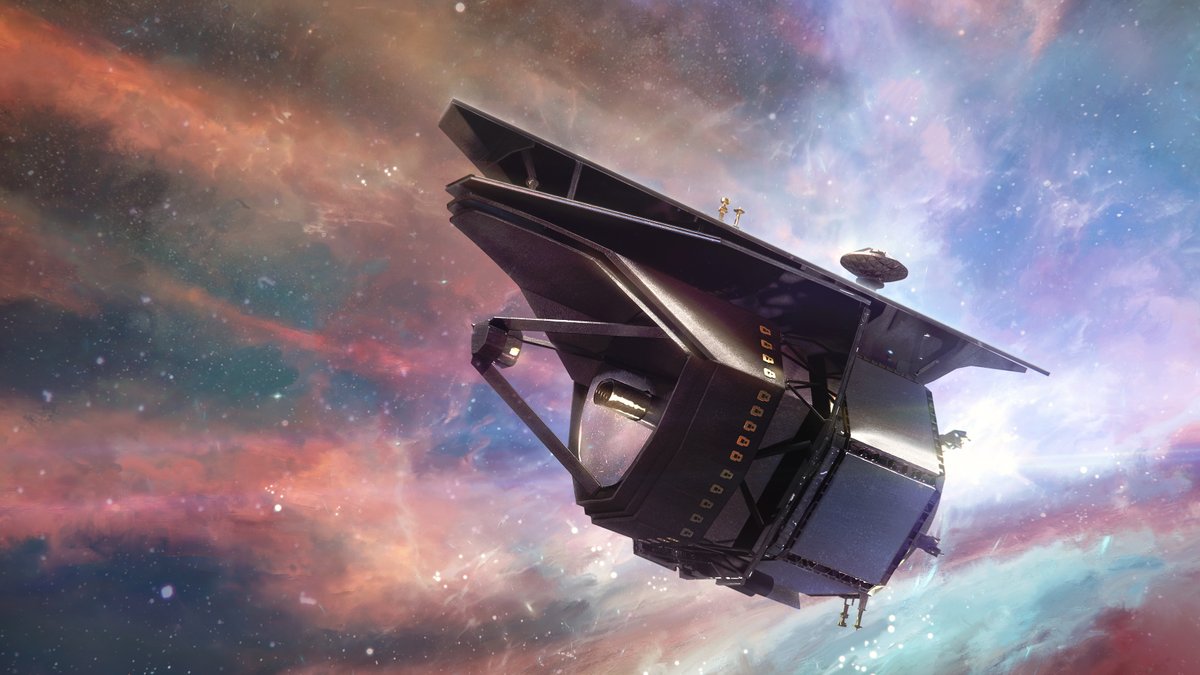
NASA has selected PRIMA, the PRobe far-Infrared Mission for Astrophysics, as the first mission in its new Probe Explorers class of astrophysics satellites. The project is managed by the Jet Propulsion Laboratory, with Caltech, IPAC, and international partners in key roles. It carries a $1.2 billion cost cap excluding launch and is targeted for 2033 if it proceeds beyond the current stage.
PRIMA is described as a 5.9-foot telescope that would conduct deep far-infrared surveys of cold, dusty regions of the universe that optical and near-infrared telescopes cannot easily see. Announcement materials circulating with the selection present it as a bridge between existing infrared observatories and radio telescopes, with science goals that include star and planet formation, black holes, and the origins of water, including on Earth.
The selection advances PRIMA into Phase B. Confirmation would still be required before it moves to later phases and a launch. The news, clustered around late September 2026 reporting, marks the start of a new NASA astrophysics mission category rather than a fully approved flight project.
Common Perspectives
Completing the far-infrared gap
Infrared astronomers and many astrophysicists treat this as a long-delayed capability. Far-infrared light traces cold dust and early stages of star and planet formation that Hubble, JWST, and ground-based optical telescopes largely miss. The view appeals to researchers whose work has been constrained since earlier missions such as Spitzer and Herschel. It assumes the scientific return will justify both the wait until the 2030s and the technical demands of a cryogenic far-infrared observatory.
Testing a middle-weight NASA mission class
Space-policy watchers and NASA program observers see the Probe Explorers category itself as the main development. A cost-capped astrophysics mission sitting between smaller Explorers and rare flagships could, in principle, fly more often. Selecting PRIMA first is a trial of that model. Supporters like the prospect of more frequent, focused telescopes. The trade-off is that a $1.2 billion ceiling may force design cuts, and the whole class depends on this first example staying on budget and schedule.
Cost, delay, and other NASA priorities
Budget-focused analysts and scientists in competing NASA disciplines note that $1.2 billion plus a launch vehicle is still a large commitment, with data years away. They ask whether far-infrared astrophysics should rank above planetary, Earth-science, or other astrophysics concepts that might deliver sooner. This perspective is common among those who track the agency’s overall portfolio. It assumes overruns or slips remain likely, as they have been on other large space telescopes.
Origins stories that travel beyond specialists
Science communicators and much of the interested public respond to the framing around planet formation, black holes, and especially how water reached Earth. That language makes a specialized far-infrared survey feel connected to everyday questions about origins. It works because it humanizes technical astronomy. The risk is that the actual observations will be dominated by distant galaxies and molecular clouds, so headline promises about Earth’s water may outrun what the mission can directly settle.
A Different View
The more consequential test may be institutional rather than scientific. Probe Explorers were meant to give NASA a steadier cadence of medium-scale astrophysics missions after years dominated by flagships. If PRIMA holds the cost cap and launches near 2033, it could make that architecture credible. If it overruns or slips badly, the class itself—not just this telescope—could be questioned, changing how future competitions are structured and how international partners commit. The neglected issue is whether NASA’s processes and industrial base can actually deliver specialized missions on a more predictable timeline, independent of how compelling the far-infrared science case is.
Conclusion
The immediate markers are whether PRIMA is confirmed for Phase C, how partner contributions are locked in, and whether the far-infrared instruments mature without large slips. The 2033 target already sits well after JWST’s prime operations; further delay would widen the observational gap the mission is intended to close.
Sources and discussion
These public posts were collected while researching this story. They provide context and reactions, but may not independently verify every claim.
View the original topic on XNASA JPL
@NASAJPL
With a 5.9-foot telescope, PRIMA will conduct deep surveys of the universe in far-infrared light, helping bridge the gap between existing infrared observatories, such as @NASAWebb, and radio telescopes. JPL is proud to manage the mission, which is targeted to launch in 2033.
Sep 23, 2026199 likes12 repostsCaltech
@Caltech
NASA has selected PRIMA, a far-infrared space observatory designed to reveal the cold, dusty universe hidden from visible-light telescopes. Caltech, JPL, and IPAC will play key roles in the mission, targeted to launch in the 2030s. Read more:
Sep 23, 202640 likes16 repostsNASA JPL
@NASAJPL
Today, NASA announced PRIMA, a new space telescope that will explore long-standing mysteries around the formation of planets, stars, black holes, and even how water on Earth came to be.
Sep 23, 20262K likes358 repostsJeff Foust
@jeff_foust
NASA has selected PRIMA (PRobe far-Infrared Mission for Astrophysics) as its first probe-class astrophysics missions. Cost cap (excluding launch) of $1.2 billion and launch in 2033.
Sep 23, 202675 likes10 repostsMarcia Smith
@SpcPlcyOnline
NASA has selected the 1st of a new class of astrophysics Explorer satellites, Probe Explorers, to continue into Phase B. PRIMA is a far-infrared mission with a $1.2 billion cost cap (not incl launch), with launch in 2033 if confirmed to proceed to Phase C.
Sep 23, 202633 likes5 reposts