

White House Denies US-Iran Framework Agreement Amid Conflicting Reports
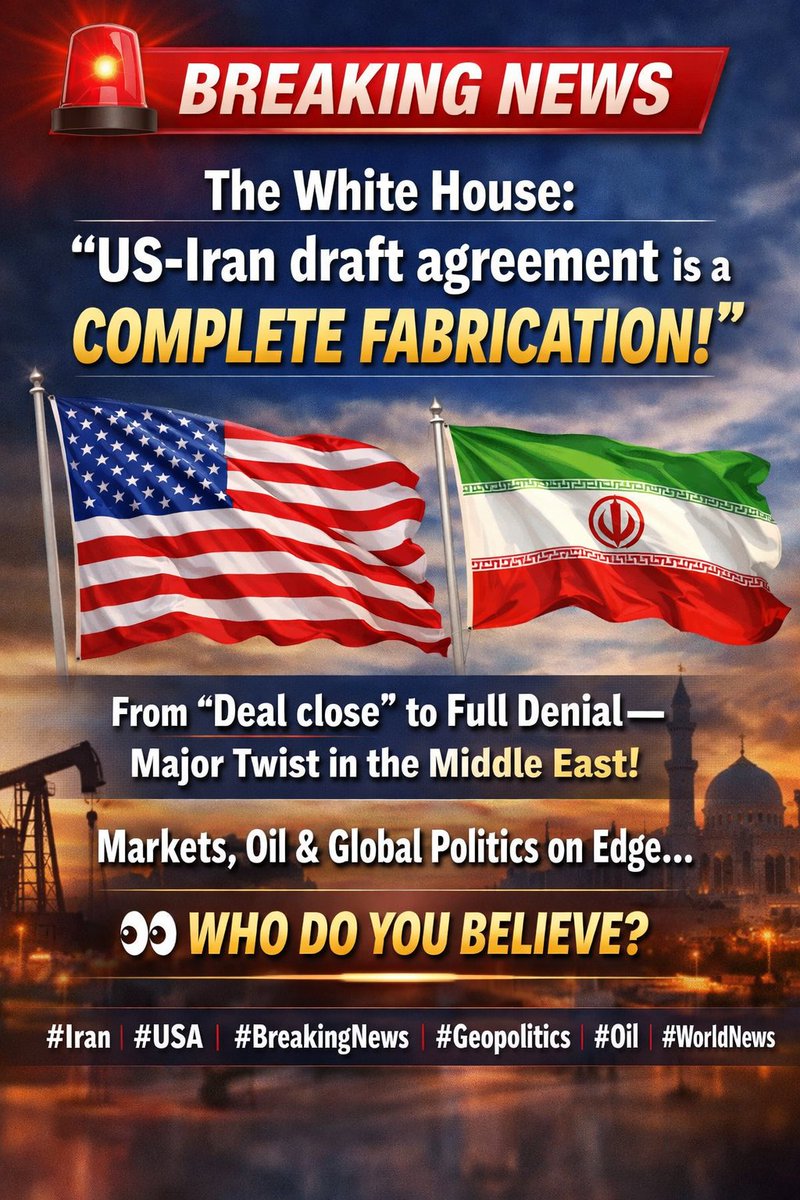
• From trending topic: White House rejects US-Iran framework deal as "complete fabrication
Summary
Right now, the trending discussion centers on the White House's swift rejection of reports claiming that a framework deal between the United States and Iran has been reached. The denial follows the publication of what Iranian state media described as a draft agreement, prompting immediate clarification from U.S. officials who labeled the reports a "complete fabrication." This back-and-forth has unfolded in the last 24 hours, with social media amplifying both the initial claims and the subsequent rebuttal. Markets and diplomatic observers are now tracking whether any actual progress toward renewed nuclear talks exists, or if the episode reflects a broader pattern of competing narratives between Washington and Tehran. The rapid cycle—from unverified reports of an imminent deal to outright denial—has injected fresh uncertainty into already tense U.S.-Iran relations.
Common Perspectives
Diplomatic Breakthrough Was Close
Some analysts and commentators suggest the episode signals that private diplomatic channels may have advanced further than publicly acknowledged, with the White House denial serving as standard procedure to manage expectations while talks continue behind closed scenes.
Iranian Media Overstated Progress
Others view the episode as evidence that Iranian state outlets published preliminary drafts or internal proposals as settled agreements, possibly to shape domestic or regional perceptions, even though no formal U.S. concurrence had been secured.
Messaging Strategy to Pressure Opponents
A third perspective holds that both sides are using public statements strategically: Iran to demonstrate leverage and seriousness, and the United States to signal that any future agreement must meet stricter conditions, thereby managing domestic political audiences in both countries.
Markets React to Uncertainty, Not Substance
Financial observers note that energy and equity markets moved on the mere possibility of reduced sanctions or renewed tensions, illustrating how headline risk—not confirmed policy shifts—can influence oil prices and investor sentiment in the short term.
A Different View
Rather than focusing solely on whether a deal exists, consider how this episode highlights the growing role of state-linked media as active participants in diplomacy itself. In this framing, Iranian outlets are not simply reporting events but attempting to set the parameters of what negotiators must address next, while the White House's denial functions as a counter-move in a public information contest. This dynamic suggests future U.S.-Iran interactions may increasingly unfold across media platforms as much as in formal negotiating rooms, reshaping how agreements are shaped, announced, or walked back.
Conclusion
The current cycle of claim and counter-claim underscores how quickly narratives can shift in U.S.-Iran relations, with both governments and markets left to parse what is signal and what is noise. As attention turns to whether any substantive talks are underway, the episode serves as a reminder that public messaging can be as consequential as private diplomacy.
Sources and discussion
These public posts were collected while researching this story. They provide context and reactions, but may not independently verify every claim.
View the original topic on XViral Politics
@ViralPolitics24
White House rejects reports of a US–Iran framework deal. Calls the report a “complete fabrication” and says “Facts Matter.” Global politics heating up again 🌍 #ViralPolitics #WhiteHouse #IranDeal #USA #DonaldTrump #BreakingNews #WorldNews #USPolitics #Iran #Geopolitics
May 27, 2026NewsOrbit
@garg_kapi
🚨 BREAKING: The White House calls the US–Iran draft agreement published by Iranian state media a “complete fabrication.” 🇺🇸🇮🇷 From “deal close” headlines to outright denial — the Middle East story just took another sharp turn. Markets, oil, and global politics are now watching
May 27, 20261 likesNewsOrbit
@garg_kapi
@BRICSinfo 🚨 BREAKING: The White House calls the US–Iran draft agreement published by Iranian state media a “complete fabrication.” 🇺🇸🇮🇷 From “deal close” headlines to outright denial — the Middle East story just took another sharp turn. Markets, oil, and global politics are now watching
May 27, 20261 likesDe Auditor Space
@Deauditorspace
World politics news today focuses on US-Iran tensions, UK warnings over Russia and China, and rising fears that one mistake could shake global security.
May 27, 2026FX_Adeline-Stock Trading Analyst【Nasdaq S&P500】
@mommykerrie
🚨🇺🇸🇮🇷 This might be the biggest news this week in global politics. The U.S.-Iran deal is reportedly finished, just needs a signature. If it goes through, it could take away a major risk that's been worrying markets worldwide. But nothing's confirmed yet. No sign
May 27, 2026FX_Camden-Stock Trading Analyst【Nasdaq S&P500】
@rustyhues
🚨🇺🇸🇮🇷 This might be the week's biggest news in global politics. The U.S. and Iran have reportedly reached a deal, just needs signing. If it's true, it could take away a huge cloud of doubt over markets worldwide. Still, nothing's official yet. No signature. No word from
May 27, 2026