

U.S. Removes Syria from State Sponsors of Terrorism List Amid Shifting Middle East Relations
• From trending topic: U.S. Removes Syria from State Sponsors of Terrorism List
Summary
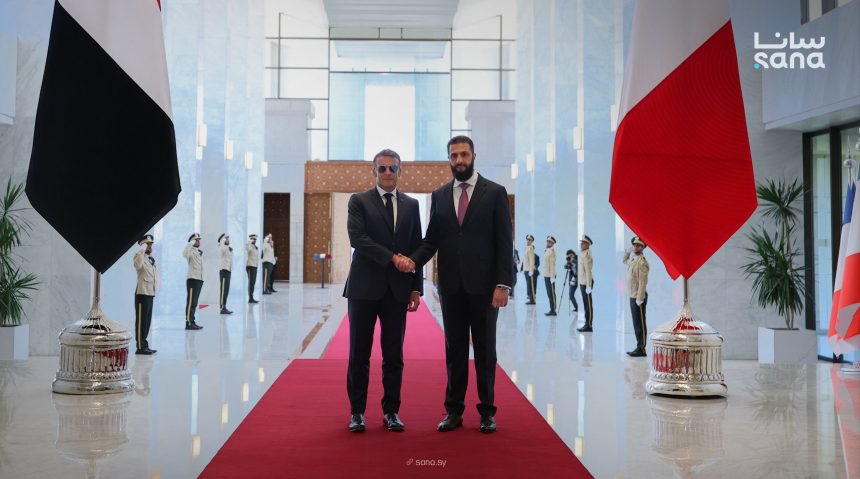
The trending topic stems from recent announcements indicating that President Donald Trump has officially removed Syria from the U.S. State Sponsors of Terrorism list, ending a designation that had been in place for years. This development is gaining traction on social media following discussions about a major shift in U.S.-Syria relations. The decision appears to reflect broader diplomatic recalibrations in the region, coinciding with French President Emmanuel Macron's visit to Syria—the first by a Western head of state since the fall of the former regime. The visit is being interpreted as a signal of Syria's reintegration into the international community and as a catalyst for renewed reconstruction efforts. These developments have sparked online conversations about the implications for U.S. foreign policy, regional stability, and Syria's path forward.
Common Perspectives
Strategic Realignment in U.S. Foreign Policy
Some observers view the removal as part of a broader strategic recalibration by the Trump administration, aimed at repositioning U.S. engagement in the Middle East. Proponents suggest that delisting Syria could open pathways for diplomatic engagement and economic cooperation, potentially reducing the influence of rival powers in the region.
Concerns Over Security and Accountability
Others express caution, emphasizing that the decision may overlook unresolved issues related to past designations and ongoing security concerns. This perspective highlights the importance of ensuring that any policy shift is accompanied by clear benchmarks for counterterrorism cooperation and accountability.
Regional and International Reintegration
A third viewpoint focuses on the symbolic and practical impact of Syria's return to the international fold. The timing of Macron's visit is seen by some as reinforcing the message that Syria is once again a legitimate partner for dialogue and reconstruction, with implications for neighboring countries and international organizations involved in the region.
Domestic Political Debate
Within the United States, reactions are also divided along political lines. Some lawmakers and commentators welcome the move as a pragmatic step toward ending long-standing conflicts, while others question the timing and the criteria used to justify the change in status.
A Different View
Beyond the immediate diplomatic headlines, some analysts are considering how this policy shift might influence non-traditional actors in the region—such as private sector investors, humanitarian organizations, and diaspora communities—who could play a growing role in Syria's recovery. Rather than focusing solely on state-to-state relations, this perspective explores how the delisting could reshape the landscape for civil society initiatives, cross-border economic networks, and cultural exchanges that operate outside formal government channels.
Conclusion
The removal of Syria from the U.S. State Sponsors of Terrorism list marks a notable development in American foreign policy, reflecting both the complexities of Middle East diplomacy and the evolving priorities of international engagement. As discussions continue online and in policy circles, the coming months may reveal how this decision shapes Syria's trajectory and the broader regional order.
Sources and discussion
These public posts were collected while researching this story. They provide context and reactions, but may not independently verify every claim.
View the original topic on X🌍⚡Middle East Insider
@omer_rance
🇺🇸🇸🇾 BREAKING: A Major Shift in U.S.–Syria Relations In a significant foreign policy decision, U.S. President Donald Trump has officially removed Syria from the United States' list of State Sponsors of Terrorism, marking the end of a designation that had remained in place for
Jul 9, 20261 likesStand with Syria Japan (SSJ)
@SSJ__official
[News] French President Emmanuel Macron visited Syria, marking the first visit by a Western head of state since the fall of the former regime. The visit reaffirms Syria’s return to the international community and the importance for accelerating the country’s reconstruction.
Jul 9, 20266 likes1 repostsReal Global News
@FelastoryMedia
🇮🇷🇳🇬🇺🇸Nigeria Keeps Official Distance from Khamenei Funeral While Balancing US Ties and Domestic Politics Nigeria declined to send an official government delegation to the state funeral of Iran's late Supreme Leader, Ayatollah Ali Khamenei, a decision widely viewed as reflecting
Jul 10, 20262 likesThe-Gossip-Wire-News
@JohnHor76068488
Updated Post: Trump announces $9B Arctic ships contract to take | Political News The United States is assembling a $9 billion fleet of Arctic ships amid ongoing tensions with Russia and China.The U.S. Coast Guard announced on Wednesday that it has accomplished the award of
Jul 9, 2026Philosopher Dr Joseph Michael
@DrJosephMichael
Dr Joseph Michael Credential Home Business From 1978 From Major East West Heritage Nutrition & Water Air Filtration. Columbus State University Columbus GA In 1998. 1999 Environment Report. Solution Procedure Via Internet. Led Me
Jul 9, 2026Philosopher Dr Joseph Michael
@DrJosephMichael
Dr Joseph Michael Credential Home Business From 1978 From Major East West Heritage Nutrition & Water Air Filtration. Columbus State University Columbus GA In 1998. 1999 Environment Report. Solution Procedure Via Internet. Led Me
Jul 9, 2026