

U.S. Asks the Security Council to Make Sudan’s Arms Embargo Nationwide
• From trending topic: U.S. Pushes Nationwide Arms Embargo on Sudan at UN Briefing
Summary
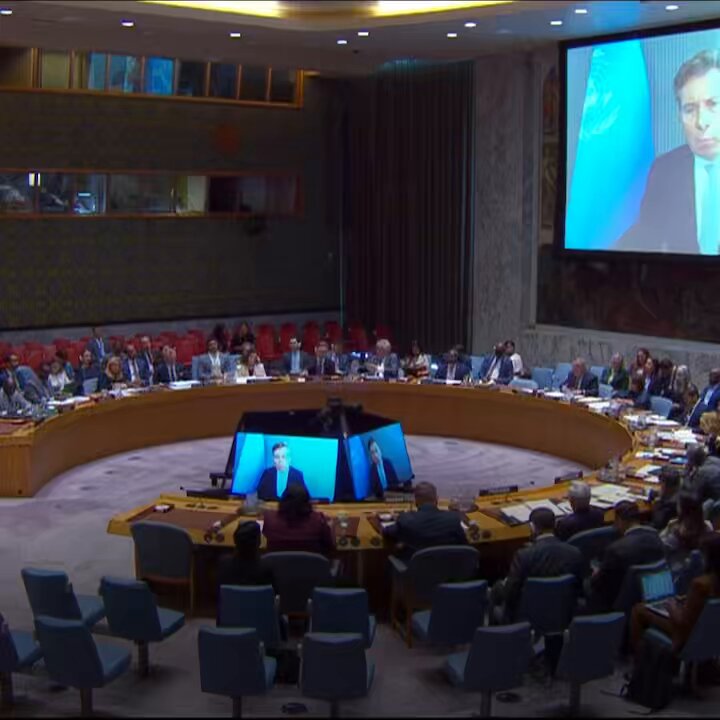
At a United Nations Security Council meeting on Sudan, the United States proposed expanding the existing arms embargo so it would cover the whole country rather than a limited area. The confirmed core of the episode is that proposal: Washington argued the Council should move to cut external financial and military support reaching the warring parties.
A U.S. representative, posting from the session, said millions of Sudanese have been displaced by the conflict and fear for their families, and that the Council “must act to stop external financial and military support to the parties.” A separate statement circulating from the same briefing put the problem differently: Sudan, it said, does not lack analysis but action; civilians need diplomacy, water, and medicine, while the outside world sends drones, weapons, and mercenaries in a contest over power, gold, and pride.
Those remarks are diplomatic messaging around the meeting, not independently audited counts of displacement or a complete map of supply lines. What is established from the reporting cluster is narrower: the United States used the briefing to push a nationwide embargo. Whether other members will back a formal measure, how it would be monitored, and whether it would constrain every external pipeline equally are not settled by the session itself.
The existing UN restrictions on Sudan have long been concentrated on Darfur. A nationwide ban would be a geographic and political enlargement of that tool, offered as the war and its outside support have spread.
Common Perspectives
Widen the embargo and choke the war
This is the view the U.S. presentation advanced, and it is shared by many Western diplomats and humanitarian advocates who treat arms and money as the war’s fuel. It appeals because it sounds like a concrete Council step short of troops: if both sides lose reliable resupply, the fighting should become harder to sustain. The assumption is that members will actually pressure suppliers and that a legal ban changes battlefield logistics. The trade-off is political cost. A text that names no patrons can pass more easily and still leave the main pipelines intact.
Civilians need relief and talks, not another resolution
The circulating non-U.S. statement from the briefing captures a stance common among aid workers and some Sudanese voices: analysis is plentiful; water, medicine, and mediation are not. It appeals to people exhausted by communiqués while displacement continues. The assumption is that embargo language can become a substitute for delivering aid or forcing a ceasefire. The trade-off is the reverse of the first view: treating resolutions as empty can also mean declining one of the few multilateral levers still on the table.
A bigger map will leak like the last one
Conflict researchers and some African diplomats often argue that Darfur already lived under restrictions while weapons still moved. A nationwide embargo, on this reading, repeats a familiar UN pattern—expand the legal zone, underfund the monitors, and watch commercial drones and overland routes adapt. It appeals because it matches a long record of porous African embargoes. The assumption is that past failure predicts future irrelevance. The risk is fatalism: rejecting the instrument because earlier ones failed can leave no collective constraint at all.
Vague “both sides” language protects the real patrons
Some regional observers and partisans of one Sudanese camp treat a nationwide ban that does not name suppliers as theater. They point to the same briefing language about drones, mercenaries, gold, and outside military support, and argue the Council already knows the problem is specific external backers, not an abstract shortage of rules. The view appeals because deniable resupply has been a recurring feature of this war. Its hazard is obvious: “name the patrons” can become a way to shield one’s preferred side rather than reduce arms overall.
A Different View
The debate is framed as a cartographic upgrade—Darfur versus the whole of Sudan—as if the main defect in the old embargo were its borders. The more neglected problem sits in the briefing remarks themselves. One side stressed financial as well as military support; the other named gold, mercenaries, and pride. A nationwide arms ban is still a territorial legal instrument in a war that can be financed with portable wealth and fought with commercially available drones and hired fighters. Widening the map does not automatically touch gold traders, logistics hubs, or the states willing to absorb the political cost of deniable supply. If the Council can agree on geography more readily than on enablers, “nationwide embargo” can become the headline that postpones the harder work.
Conclusion
The immediate test is whether Washington converts the briefing into a draft text, and whether other Council members treat nationwide scope as enough or demand enforcement and named external channels. Watch the gap between the two public messages from the room: stopping weapons and money on one hand, and delivering diplomacy, water, and medicine on the other. Those are not the same policy, and a larger embargo map will not, by itself, decide which one the Council is actually prepared to do.
Sources and discussion
These public posts were collected while researching this story. They provide context and reactions, but may not independently verify every claim.
View the original topic on XTom Fletcher
@UNReliefChief
Sudan does not suffer from lack of analysis, but lack of action. Sudanese people need diplomacy, water and medicine. Yet world sends drones, weapons and mercenaries in struggle for power, gold and pride. My Security Council statement:
Aug 24, 2026304 likes131 repostsU.S. Senior Advisor for Arab and African Affairs
@US_SrAdvisorAF
Honored to represent the United States at today’s UN Security Council meeting on Sudan. As millions of Sudanese are displaced by conflict and fear for their safety and that of their families, the Council must act to stop external financial and military support to the parties,
Aug 25, 2026256 likes50 reposts