

Unverified Claim of SpaceX Buying Cursor for $60 Billion Circulates
• From trending topic: SpaceX Buys Cursor for $60 Billion
Summary
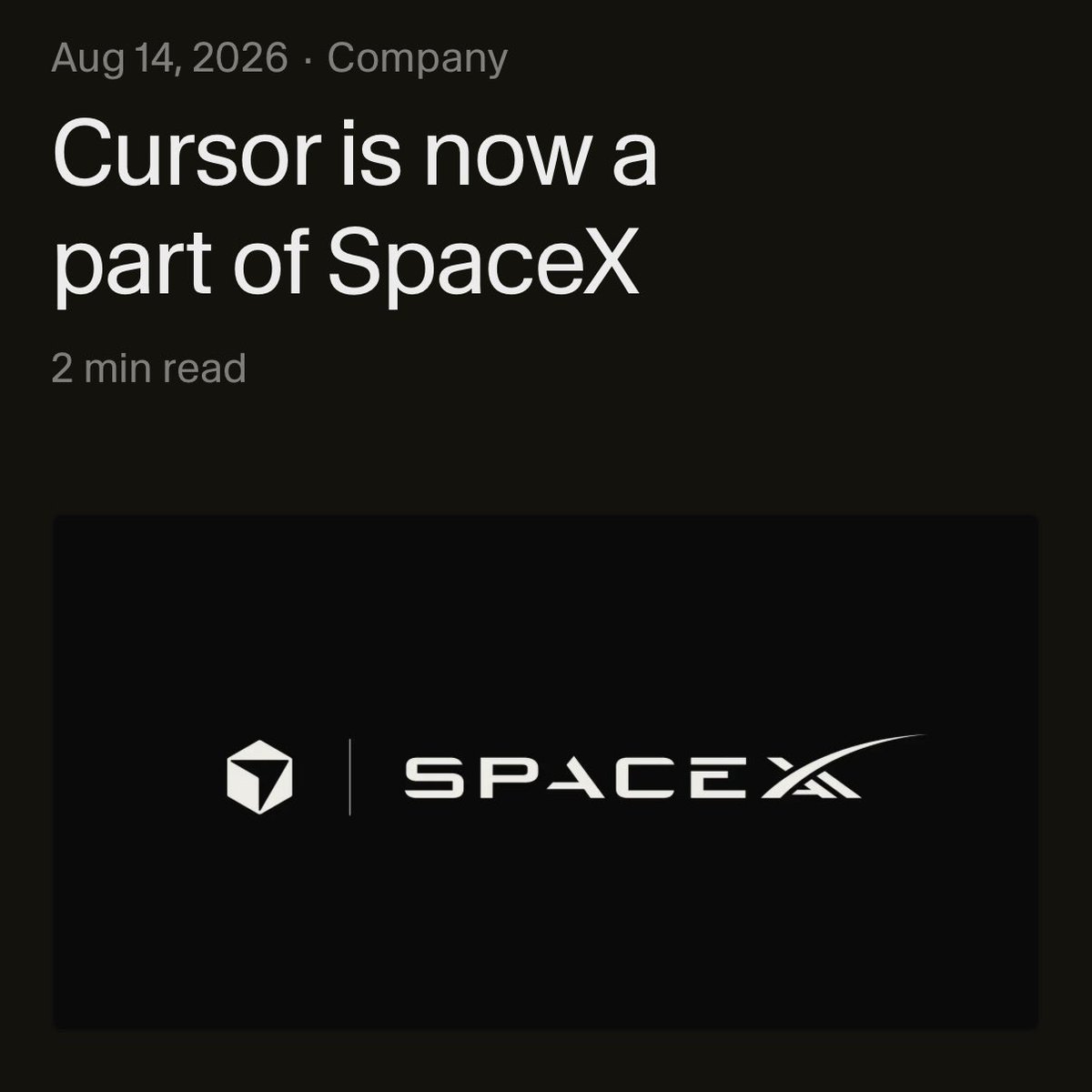
A post on X states that SpaceX officially acquired Cursor on August 14 for $60 billion so that its xAI division could better compete with OpenAI and Anthropic by controlling a primary tool used in software development. The claim presents the transaction as a completed fact and a major shift, yet the surrounding discussion consists of that single low-engagement post plus unrelated threads. No statements from SpaceX, xAI, or Cursor’s parent company appear in the available material, leaving the report unconfirmed and its details—price, timing, and strategic rationale—unverified.
Common Perspectives
A Logical Extension of Musk’s AI Push
Followers of SpaceX and xAI tend to treat the reported purchase as a straightforward way to give xAI an in-house coding platform and close the gap with better-funded rivals. The view appeals because it fits a familiar pattern of vertical integration and aggressive talent-and-tool gathering. It assumes the $60 billion outlay is both accurate and justified by future competitive gains, while downplaying integration costs and the possibility that the figure or the deal itself is overstated.
Caution About Social-Media Mega-Valuations
Market watchers and reporters note the absence of any corroborating announcement and the unusually high price tag attached to a coding-assistant company. This skepticism is common among people who have seen similar unverified Musk-related stories evaporate. It appeals because it prioritizes primary-source confirmation over viral posts. The trade-off is that genuine stealth deals can be missed if every large number is dismissed out of hand.
Worry Over Concentrated Control of Developer Infrastructure
Critics of tech consolidation, including some researchers and policy advocates, see an acquisition of this scale as another instance of a single actor gaining leverage over the tools programmers rely on daily. The concern resonates with those already tracking antitrust issues in AI. It rests on the assumption that ownership by SpaceX or xAI would necessarily reduce choice or independence for users, and it sets aside the possibility that new resources could improve the product.
A Different View
The conversation so far treats the story mainly as a contest between model labs. A less examined angle is the data that would flow through a widely used coding interface: every prompt, completion, and debug session could become training signal or product insight for the acquirer. That second-order effect—control of the development environment itself rather than just another model—receives little attention even though it would be one of the more durable advantages if the transaction were real.
Conclusion
Official comments from SpaceX, xAI, or Anysphere remain the clearest next signal; until they appear, the $60 billion figure and the August 14 closing date stay in the category of circulating claims.
Sources and discussion
These public posts were collected while researching this story. They provide context and reactions, but may not independently verify every claim.
View the original topic on XNisal Renuja
@nisalrenuja
SpaceX Buys Cursor for $60 Billion On August 14, SpaceX officially bought Cursor for $60 billion. This is a huge shift in the tech world. SpaceX wants its AI division, xAI, to compete with big names like OpenAI and Anthropic. To do this they bought the main tool that software
Aug 14, 20261 likesDirk R. Bartz
@DirkBartz
$500 billion in financing. Ten gigawatts of ambition. One billion users. Two Apple brains. And one power grid that can still say no. Silicon Drama 16: The Access Wars is out now. #SiliconDrama #eTatos
Aug 15, 20264 likes1 repostsAuronex
@AuronexOfficial
🚀 ALPHEA Explained: Building the Infrastructure for Autonomous AI Agents I took a closer look at ALPHEA — its team, $5M funding, partnerships, tokenomics, and community. 🔍 Here’s my DYOR breakdown. #ALPHEA #AIAgents #Web3 #DYOR
Aug 15, 20264 likes1 reposts