

UN Security Council Convenes Emergency Session on Lebanon-Israel Escalation
• From trending topic: UN Security Council Meeting on Lebanon-Israel Conflict
Summary
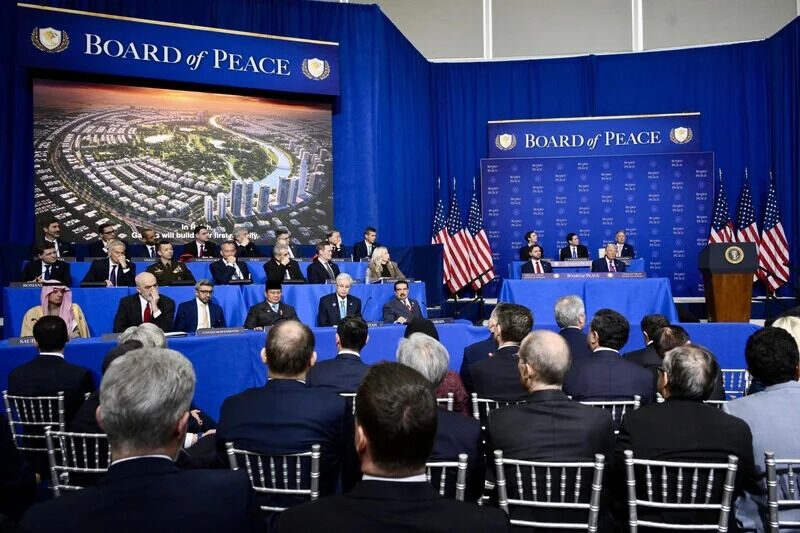
The United Nations Security Council has opened an urgent meeting specifically addressing the ongoing conflict between Israel and Hezbollah in Lebanon, with diplomats gathering as cross-border exchanges continue to intensify. The session was triggered by the most recent wave of Israeli strikes targeting Hezbollah infrastructure across southern Lebanon and the group's subsequent rocket barrages into northern Israeli communities. What made this particular convening trend on social media was the real-time circulation of posts showing the meeting's opening moments alongside reports that the Council's Board of Peace presented its first formal assessment, which notably avoided direct accusations against Israel regarding alleged ceasefire breaches in the related Gaza context. Diplomats inside the chamber heard calls from multiple member states urging both Hezbollah and Iran to cease actions that prolong the fighting, while simultaneously reminding Israel of its obligations under international humanitarian law. At the same time, several delegations referenced what they described as encouraging signals that a temporary halt in hostilities might be achievable in the coming days.
Common Perspectives
Hezbollah and Iran Bear Primary Responsibility for the Violence
Several Council members and outside observers argue that Hezbollah's decision to open a second front against Israel immediately after the October 7 attacks, combined with Iran's logistical and financial backing, is the central driver behind the current escalation. They point to the group's rocket stockpiles and cross-border raids as the spark that forced Israel's military response and subsequent expansion of operations deeper into Lebanese territory.
Israel's Military Operations Risk Violating International Humanitarian Law
Other participants stress that while Hezbollah's actions initiated the current round of fighting, Israel's choice of targets and scale of bombardment in civilian areas of southern Lebanon and Beirut's southern suburbs raise serious concerns about proportionality and distinction between combatants and non-combatants. These voices call for immediate independent investigations into reported civilian casualties and infrastructure damage.
The Meeting Signals a Narrow Window for De-escalation
A third perspective focuses on the timing of the session itself, noting that the Council's willingness to meet at this moment reflects quiet diplomatic movement behind the scenes. Leaks suggesting both sides have privately signaled openness to a limited cessation of fire have fueled speculation that the emergency meeting could serve as a platform to lock in a temporary truce before the situation spirals into a full-scale regional war.
The Gaza Linkage Complicates Any Lebanon-Specific Agreement
Some analysts argue that the Board of Peace's report, which carefully sidestepped criticism of Israel over Gaza ceasefire issues, reveals how tightly the Lebanon and Gaza fronts are now connected in diplomatic calculations. They contend that any durable arrangement in Lebanon will require parallel progress on Gaza, making the Security Council session more about managing two intertwined conflicts than resolving one isolated front.
A Different View
Rather than treating the Security Council session as merely another diplomatic ritual, consider how the meeting functions as a global stress test for the post-October 7th international order. The careful wording in the Board of Peace's report and the simultaneous public criticism of both Hezbollah and Israel illustrate a new pattern: major powers are no longer seeking comprehensive solutions but are instead attempting to choreograph a managed, rolling stalemate that prevents any single escalation from triggering direct U.S.-Iran confrontation or the collapse of already-fragile Arab-Israeli normalization deals. In this reading, the trending hashtags and live updates are less about the immediate fate of Lebanese or Israeli civilians and more about whether the Council's carefully calibrated language can keep the lid on a much larger strategic competition playing out across multiple theaters.
Conclusion
The Security Council's emergency gathering captures a moment when diplomatic language and military realities are moving in opposite directions: while envoys speak of possible cessations and humanitarian obligations, ground operations and rocket exchanges continue unabated. How the Council translates today's statements into concrete next steps will determine whether this session marks a genuine inflection point or simply another chapter in a conflict whose regional ripple effects are still expanding.
Sources and discussion
These public posts were collected while researching this story. They provide context and reactions, but may not independently verify every claim.
View the original topic on XThe Mashreq
@TheMashreq
🚨🇱🇧🇮🇱🇺🇳 #BREAKING : The beginning of the UN Security Council meeting on Lebanon-Israel War.
Jun 1, 2026Simon
@Simon_Reports
#BREAKING: UN Security Council meeting now to discuss Lebanon.
Jun 1, 2026Electronic Intifada
@intifada
Board of Peace's first report to UN Security Council goes to great lengths to avoid blaming Israel for Gaza ceasefire violations
Jun 1, 202614 likes5 repostsThe Mashreq
@TheMashreq
🚨🇺🇳🇮🇱🇱🇧 #Breaking: UPDATES from the UN Security Council; >>>
Jun 1, 20261 likesGlobalActionPW
@GlobalActionPW
In UN Security Council on the situation in Lebanon, @LatviaUN_NY chides Hezbollah and Iran for fomenting the violence in Lebanon , reminds Israel of the need to ensure its attacks do not violate IHL. Cites encouraging news on possible cessation of attacks.
Jun 1, 2026Richard Hardigan
@RichardHardigan
intifada: Board of Peace's first report to UN Security Council goes to great lengths to avoid blaming Israel for Gaza ceasefire violations
Jun 1, 2026