

UN Report Exposes "Hallmarks of Genocide" in El Fasher: RSF Attacks Spark Global Outrage
• From trending topic: UN report on "hallmarks of genocide" in El Fasher, Sudan
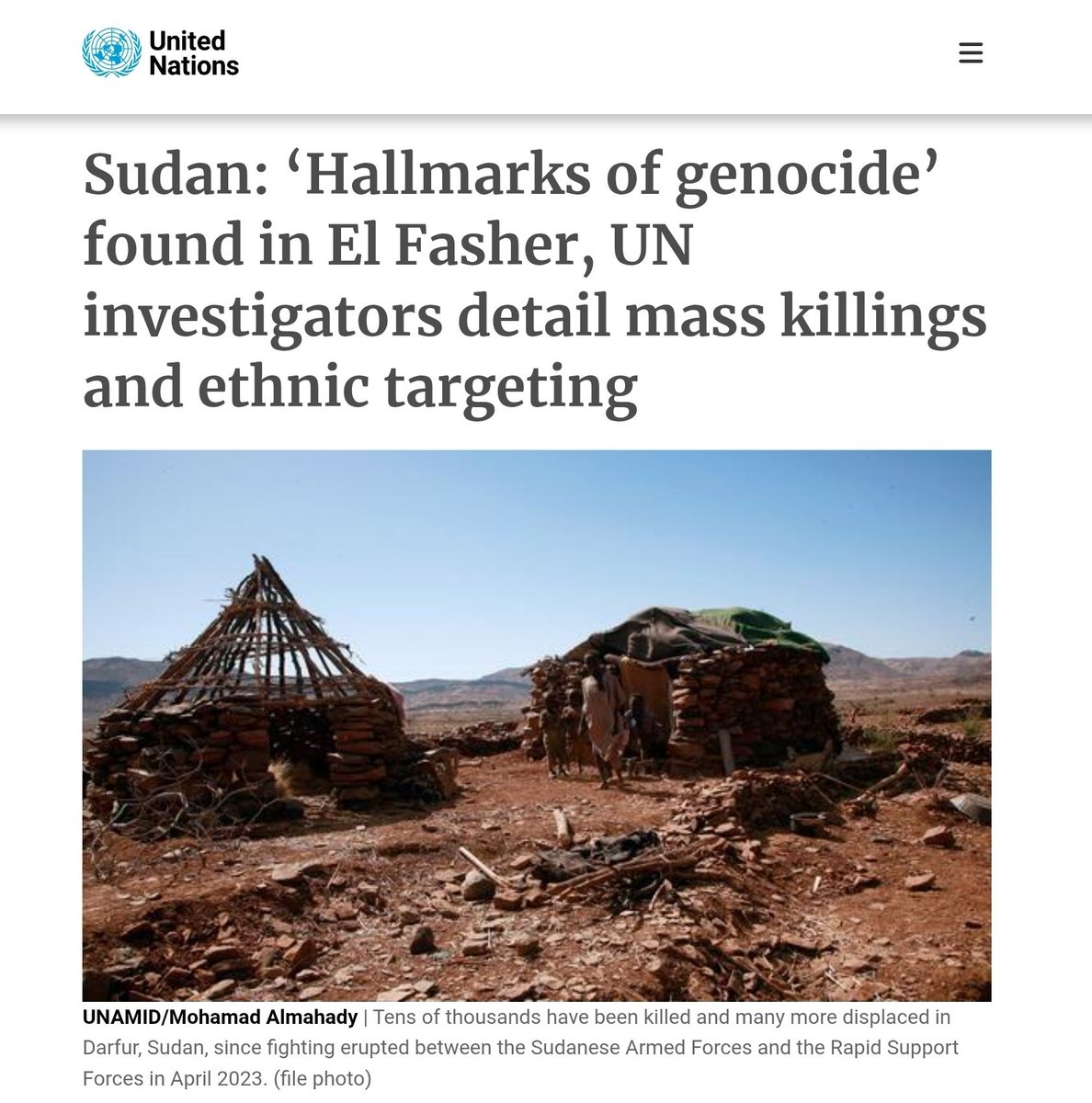
Summary
The United Nations Fact-Finding Mission on Sudan released its highly anticipated report today, igniting widespread discussions on X and trending globally under "UN report on 'hallmarks of genocide' in El Fasher, Sudan." The report details an 18-month assault by the Rapid Support Forces (RSF) paramilitary group on El Fasher, the last major stronghold in North Darfur held by the Sudanese Armed Forces (SAF). It specifically highlights a brutal October offensive involving mass killings, ethnic targeting of non-Arab Masalit and other Fur communities, widespread rape and torture, a starvation siege, and public incitement to violence—acts the investigators describe as bearing the "hallmarks of genocide" due to their consolidation, scale, systematic nature, and cumulative effects.
This release is trending right now because it marks the first UN assessment explicitly linking RSF actions in El Fasher to genocidal patterns, urging immediate civilian protection, international intervention, and accountability. Social media posts emphasize the report's fresh evidence of coordinated ethnic cleansing, with users pointing to the UAE's alleged arms support for the RSF amid ongoing conflict. The timing coincides with escalating violence in Darfur, where El Fasher remains under RSF siege, displacing hundreds of thousands and raising fears of a repeat of the 2003-2005 Darfur genocide. The report's call for urgent action has amplified calls for sanctions and peacekeeping, thrusting Sudan's 20-month civil war—pitting the SAF against the RSF—back into the international spotlight.
Common Perspectives
RSF Accountability and Ethnic Targeting
Many users and analysts focus on the report's evidence of RSF-orchestrated massacres and rapes aimed at non-Arab groups, viewing the attacks as deliberate ethnic cleansing. Posts highlight the systematic nature, including public incitement, as a direct path toward genocide, demanding RSF leaders face international courts.
UAE's Role in Arming the RSF
A prominent viewpoint accuses the UAE of fueling the violence by supplying weapons to the RSF, questioning how the Gulf state justifies its support amid the UN's genocide warnings. Trending posts call for explanations and sanctions, framing external backing as enabling the El Fasher atrocities.
Urgent Need for International Intervention
Commentators stress the report's plea for civilian protection in El Fasher, arguing the city's siege and displacement of over 1 million people require immediate UN peacekeeping or arms embargoes. This perspective sees the findings as a wake-up call to prevent full-scale genocide.
Broader Sudanese Civil War Context
Some frame the report within Sudan's SAF-RSF power struggle, noting El Fasher's strategic importance and how both sides' tactics—blockades, bombings—exacerbate famine and displacement, with the UN findings spotlighting RSF excesses but not absolving SAF actions.
Call for Justice and Investigations
Voices emphasize the report's push for accountability, praising the Fact-Finding Mission's documentation of survivor testimonies and urging prosecutions at the International Criminal Court, while criticizing global inaction despite years of warnings.
A Different View
While much attention fixates on RSF atrocities and foreign arms flows, a less-discussed angle is how El Fasher's impending fall could trigger a domino effect across Darfur's ethnic patchwork. As the last SAF-held city, its loss might not just enable RSF dominance but force a chaotic realignment of tribal militias—some allied with SAF, others RSF—potentially splintering into hyper-local genocidal vendettas. This micro-fracturing, fueled by resource scarcity from the siege-induced famine, could outpace any centralized "genocide" label, turning Darfur into a mosaic of unrestrained communal violence that overwhelms international response capacities.
Conclusion
Today's UN report on El Fasher has crystallized the horrors of Sudan's war into a stark genocide warning, dominating social media with demands for action amid finger-pointing at the RSF and its backers. As debates rage over intervention and accountability, the trend underscores a pivotal moment: will global powers heed the "hallmarks" before El Fasher becomes another Darfur tragedy?
Sources and discussion
These public posts were collected while researching this story. They provide context and reactions, but may not independently verify every claim.
View the original topic on XSalman Al-Ansari | سلمان الأنصاري
@Salansar1
The UN 🇺🇳 released its report on Sudan 🇸🇩 today: “Hallmarks of genocide” found in El Fasher, as UN investigators detail mass killings and ethnic targeting. I wonder how the UAE 🇦🇪 explains this while it continues arming the RSF militia.
Feb 19, 2026212 likes133 repostsAshis Basu 🇨🇦 ashis.bluesky.social
@BasuAshis
A brutal, 18-month assault by Sudanese paramilitaries on the city of El Fasher, culminating in a spree of massacre, torture and rape in October, bore the “hallmarks of genocide,” according to a United Nations report. @declanwalsh via @NYTimes
Feb 19, 20261 likesPress TV 🔻
@PressTV
‘Hallmarks of genocide’ found in Sudan’s El Fasher, UN investigators say
Feb 19, 202610 likes6 repostsRefugees International
@RefugeesIntl
The UN Fact Finding Mission on Sudan found that the #RSF attacks in El Fasher, Darfur last fall bear the hallmarks of genocide: "Their consolidation, scale, systematic nature, and cumulative effects may indicate a path to genocide."
Feb 19, 20262 likes2 repostsSudan Embassy Norway
@SudaNorwayEmb
UN Fact-Finding Mission on Sudan says RSF militia carried out a coordinated,ethnically targeted campaign in El Fasher bearing hallmarks of cites killings,mass rape,starvation siege, and public incitement.Urges urgent civilian protection and accountability
Feb 19, 2026