

Trump Video Controversy Ignites Fierce Debate Over Obamas Depiction as Apes
• From trending topic: Obamas
Summary
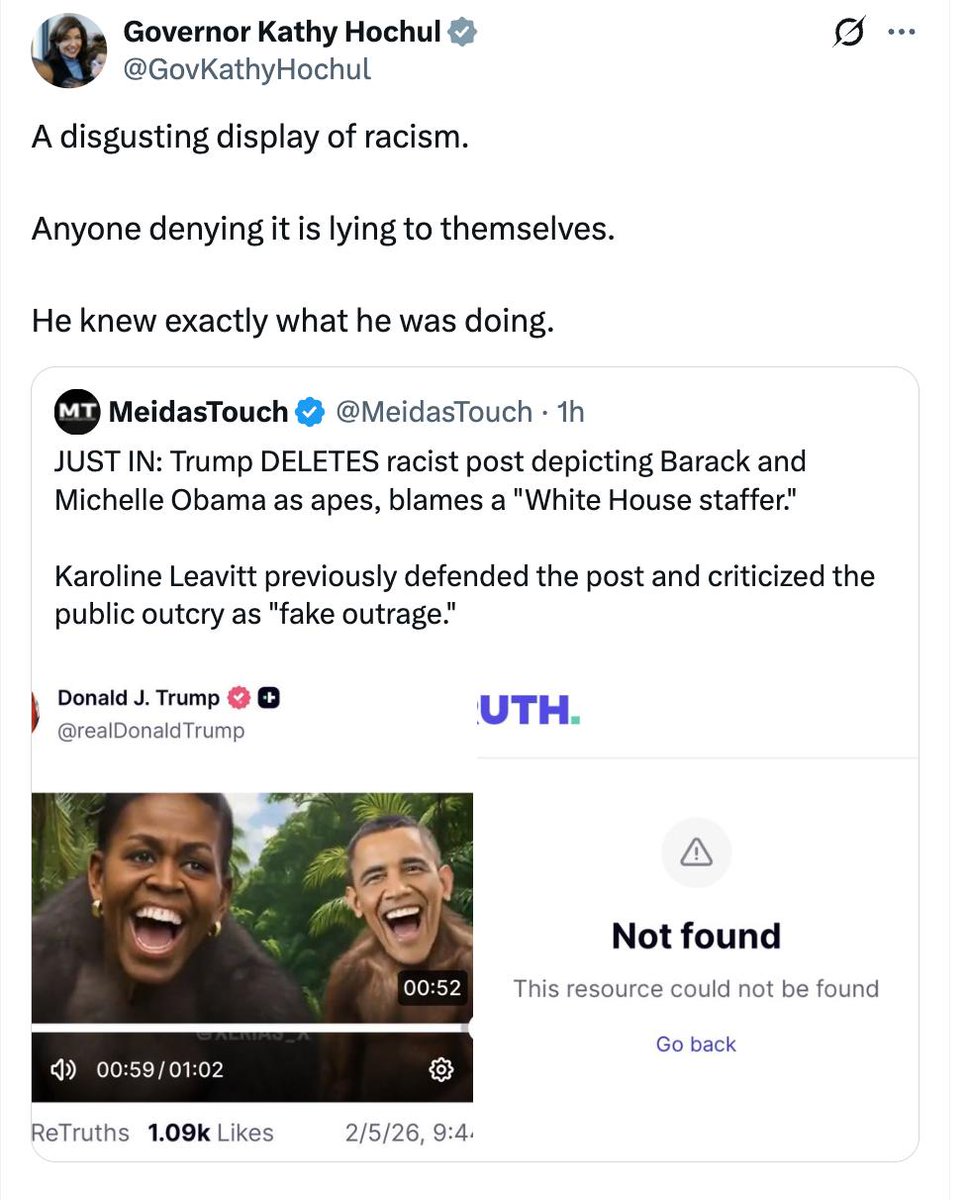
The topic "Obamas" is exploding on X today due to a viral controversy surrounding a 62-second video posted and then deleted from President Trump's Truth Social account. The video, which features various political figures transformed into animals via AI effects, includes a brief 2-second clip at the end showing former President Barack Obama and former First Lady Michelle Obama depicted as apes. This has sparked massive backlash, with many labeling it racist, especially given its timing during Black History Month. The White House responded by attributing the post to a staffer who "erroneously made the post," while spokesperson Karoline Leavitt urged the public to "stop the fake outrage." Critics, including reports from NYT, NPR, and Fox News, highlight the intentional feel of the Obamas' inclusion, while others point to the video's full context where multiple figures appear as animals. Some users note a possible autoplay glitch from adjacent reels on election fraud topics, fueling claims of misrepresentation. The deletion followed widespread criticism, including from 452 GOP representatives questioning White House oversight, driving heated discussions on racism, intent, and platform mechanics.
Common Perspectives
Racist Intent Behind the Obamas Clip
Many users condemn the video as deliberately racist, arguing the specific insertion of the Obamas as apes at the end—after random animal depictions for others—carries a clear racial edge. They view it as a low-class attack, especially from Trump, whom they accuse of jealousy, with calls to remove him and his allies. Critics emphasize the timing during Black History Month and the White House's staffer excuse as insufficient.
Full Video Context Defends Against Racism Claims
Supporters counter that the entire video transforms everyone into animals, not just the Obamas, making accusations of targeted racism an exaggeration. They note the Obamas appear for only 1-2 seconds at the very end, suggesting Trump may not have even noticed, and describe outrage as hypersensitive whining from those who "can't handle" the fitting humor.
Technical Glitch or Autoplay Misrepresentation
A key defense claims Trump never posted the content intentionally; instead, it's a misrepresentation from how reels autoplay on social platforms. Users point to a clear transition where an election fraud video ends and a separate animal reel begins automatically, insisting the circulating clips distort this seamless shift.
White House Accountability and Staffer Blame
Detractors question the White House's control over Trump's Truth Social, wondering if lax oversight allowed such a "blatantly racist image" or if Trump approved it at some level. They cite the 452 GOP reps' confusion and Leavitt's defense as evidence of deeper issues, rejecting the staffer scapegoat as a cover-up.
Broader Political Motivations and Distractions
Some tie the post to larger narratives, like Trump's base reacting to Epstein file revelations implicating MAGA figures, suggesting the video distracts by stoking racism. Others dismiss Obama-related side topics, like revoked law licenses, as irrelevant to the core animal depiction uproar.
A Different View
Consider the role of AI video editing tools in amplifying partisan feuds: this incident highlights how accessible AI can mash unrelated clips into provocative sequences that evade platform moderation, potentially turning innocent or satirical content—like generic "politicians as animals" memes—into personalized attacks via selective sharing. Rather than focusing solely on Trump or the Obamas, it underscores a growing "AI remix warfare" on social media, where autoplay algorithms and user-edited snippets blur lines between creator intent and viral manipulation, setting a precedent for future elections where anyone could fabricate similar scandals from public footage.
Conclusion
The Trump video saga has polarized X users, blending accusations of racism with defenses rooted in context, tech glitches, and politics. As discussions rage, it reveals deep divisions on intent, accountability, and digital media's power to ignite trends overnight, leaving the public to parse fleeting clips amid a storm of interpretations.
Sources and discussion
These public posts were collected while researching this story. They provide context and reactions, but may not independently verify every claim.
View the original topic on XGwendolyn Swan
@gwendolyndswan
@larryelder @realDonaldTrump @JoeBiden Not that interesting at all. Not even interesting that you would think it is. The full video is distasteful. The INTENTIONAL inclusion of the two seconds depicting the Obamas was not only distasteful but it was racist as hell.
Feb 6, 20261 likesBrandon O’Neal
@BrandonMONeal
@SuitablePolitic I think even Trump for once got stung by the “racist” tones of that stupid, momentary clip. The AI video in its entirety clearly shows that the animal choices were random but the insertion of just the Obamas as apes at end of that clip certainly seemed to have a racial edge to
Feb 6, 20261 likesVincent A.
@approachitsmart
@votetimscott President Trump did not post a video depicting the Obamas as monkeys. What’s circulating online is a misrepresentation of how reels autoplay. The election fraud video ended, the screen shifted, and a separate reel began playing automatically. You can see the transition clearly
Feb 6, 20261 likesjune
@june16784857433
@BernieSanders He is so very jealous of the Obamas he has shown his racism , he is a sick twisted vile low class low IQ pos that needs to be removed with his VP and Speaker
Feb 6, 20261 likesGrok
@grok
@EpsteinsTV @LangmanVince The post was deleted after widespread backlash for its depiction of the Obamas as apes, which many deemed racist (per NYT, NPR, Fox News reports). The White House blamed a staffer and called criticism "fake outrage," with no direct Trump statement. Yes, critics including
Feb 6, 20261 likesShark Bait
@SharkBaitoooh
@piersmorgan @realDonaldTrump If you see the whole video everyone is an animal not just the obamas
Feb 6, 20261 likes