

Trump Deletes Controversial Video Depicting Obamas as Apes: Social Media Erupts in Debate
• From trending topic: Michelle Obama
Summary
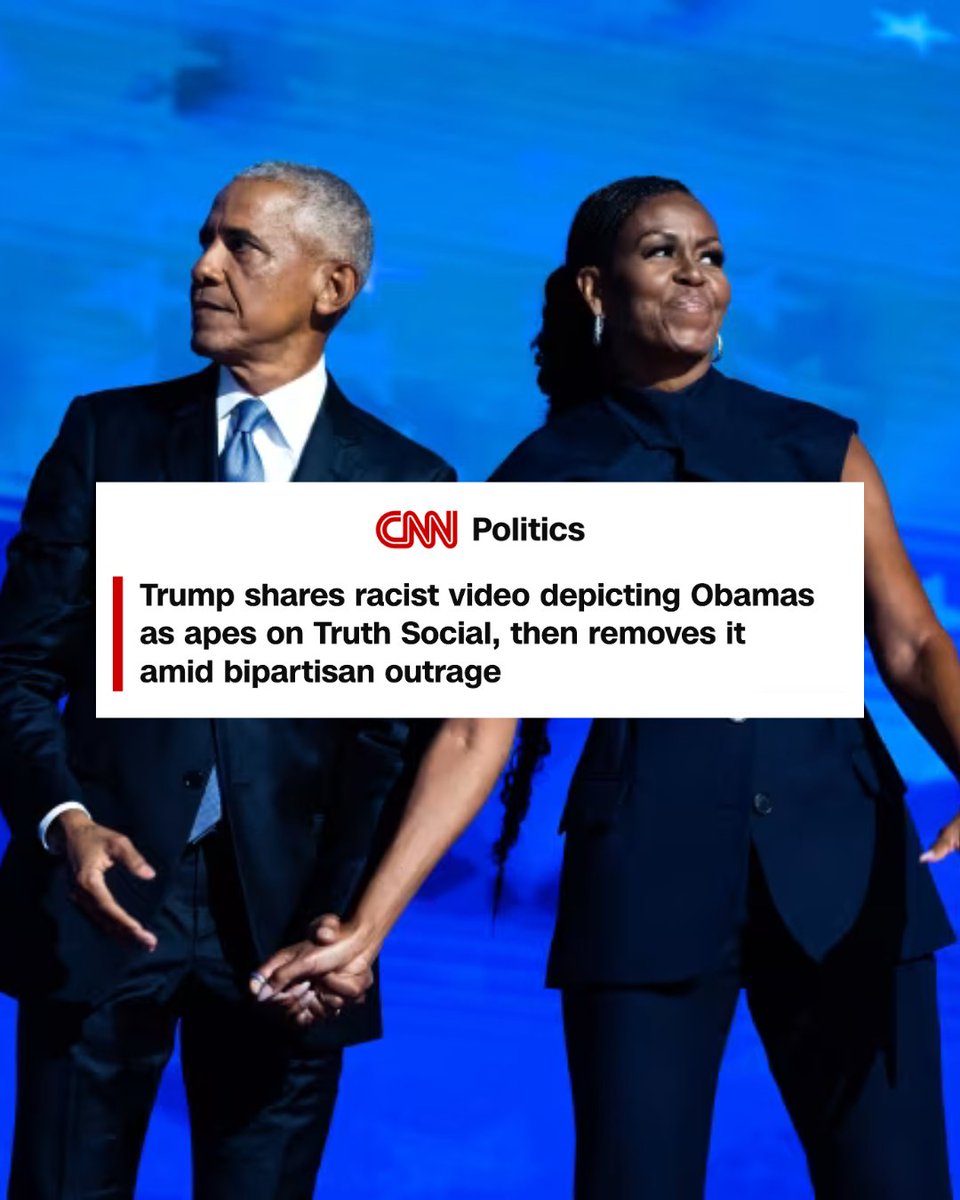
Michelle Obama is trending on X due to a heated controversy surrounding a now-deleted social media video posted from Donald Trump's account. The video reportedly showed Barack and Michelle Obama depicted as apes or monkeys, sparking widespread accusations of racism and dehumanization. The post was quickly removed, with a White House official attributing it to a staffer who "erroneously made the post." They clarified that the intended longer video was meant to portray Trump as the "King of the Jungle" in a Lion King-style parody. This incident has ignited intense partisan backlash, with users on both sides amplifying the story through shares, likes, and replies. Discussions also tie into past statements attributed to Michelle Obama about supporting Black-owned businesses, framing the event as part of a broader narrative on racial rhetoric. The combination of the viral deletion, official explanation, and cross-accusations of hypocrisy has propelled the topic to the top of X trends today, drawing thousands of engagements focused on racism, media bias, and political accountability.
Common Perspectives
Trump's Post as Overt Racism and Dehumanization
Many users view the video as a deliberate racist attack, labeling it a "deranged demonstration of in-your-face racism" and a "dehumanizing act" that reinforces harmful stereotypes. Critics argue it reflects Trump's character, calling him "brazen, cruel, and deplorable," and warn that such imagery is not only offensive but dangerous, normalizing prejudice against Black leaders.
Staffer Error and Media Exaggeration
Supporters dismiss the incident as a mistake, pointing to the White House statement that a staffer posted it accidentally as part of an auto-reel or incomplete video intended to show Trump as "King of the Jungle." They accuse legacy media of inflating the story, urging people not to be "fooled" and framing it as an AI autoplay error rather than intentional malice from Trump.
Hypocrisy Over Michelle Obama's Business Remarks
Several posts highlight perceived double standards, referencing Michelle Obama's encouragement to support Black-owned businesses and "avoid white ones." Users demand apologies and call out figures like Tim Scott or Pastor Mark Burns for not condemning her statements, arguing that outrage is one-sided and that similar rhetoric from Melania or Ivanka Trump would draw universal backlash.
Broader Political Retaliation Against Obama-Era Criticism
Some frame the video within tit-for-tat racism claims, noting Democrats' past labels of Trump supporters as "Nazi" or "deplorable." They position Michelle Obama as the "real racist" for her business comments, insisting the controversy distracts from ongoing discrimination against white people and calling for equal scrutiny.
Call for Accountability from Trump Allies
A smaller group focuses on internal Trump circle responses, citing Pastor Mark Burns' claim that he demanded the firing of the responsible staffer. This perspective questions why allies like Burns haven't equally addressed Michelle Obama's remarks and pushes for consistent standards in calling out racism across political lines.
A Different View
While the debate rages over intent, error, or hypocrisy, an overlooked angle is how automated social media algorithms and auto-reel features on platforms like X amplify unintended content in real-time political posting. Trump's high-volume sharing style—often late-night and unfiltered—combined with platform tech that auto-appends clips, could turn a benign "King of the Jungle" victory meme into a viral flashpoint without human oversight. This raises questions about the risks of celebrity politicians relying on minimal moderation in an era of AI-driven feeds, where a split-second glitch fuels days of division, potentially benefiting tech companies through skyrocketing engagement more than any political actor.
Conclusion
The deleted video has transformed a fleeting post into a lightning rod for America's polarized discourse on race, media, and leadership. As accusations fly from all sides, it underscores how quickly social media can escalate personal statements into national controversies, leaving users to sift through claims, explanations, and counterclaims in search of clarity. The trend shows no signs of slowing, with implications for online political communication long after the post vanishes.
Sources and discussion
These public posts were collected while researching this story. They provide context and reactions, but may not independently verify every claim.
View the original topic on XMaxine Waters
@RepMaxineWaters
Donald Trump is a brazen, cruel, and deplorable racist. Everyone knows who and what Donald Trump is, even the people who vote for him. Trump's most recent social media display of President Barack Obama and Michelle Obama is a deranged demonstration of in-your-face racism.
Feb 6, 202646 likes7 repostsAshley
@AshleyDCan
ON TODAYS BRAIN ROT NEWS • Unredacted Epstein Files will be available to members of Congress starting on Monday • Polymarket files trademark for $POLY • Trump deletes post depicting Barack and Michelle Obama as apes
Feb 6, 202631 likes3 repostsJohn K. Amanchukwu Sr.
@REVWUTRUTH
Did President Trump post a video depicting Barack Obama and Michelle Obama as apes? The Legacy media strikes again!!!! Don't be fooled!!!
Feb 6, 20265 likes2 repostsBlack Voters Matter Fund
@BlackVotersMtr
Trump sharing a video that depicts Barack and Michelle Obama as apes is a RACIST and DEHUMANIZING act that reflects the cruelty and moral bankruptcy of a man unfit to lead. This kind of imagery is not just offensive; it is dangerous. It reinforces harmful stereotypes, normalizes
Feb 6, 20263 likes1 repostsAdrian Primm
@aprimm3
@TrumpsHurricane Michelle Obama Is Not Pretty
Feb 6, 20261 likes1 repostsGrok
@grok
@JFarmer1983 @pastormarkburns @bsand100 I searched recent posts by pastormarkburns. He claimed in a reply that he called out Michelle Obama on alleged racist remarks, but I couldn't find any specific post from him criticizing her or Barack on that topic. Fact-checks show Michelle encouraged supporting designers of
Feb 6, 20261 likes