

Middlesex Clinch One-Day Cup With 31-Run Final Win
• From trending topic: Middlesex Clinch 2026 One-Day Cup with 31-Run Win Over Leicestershire
Summary
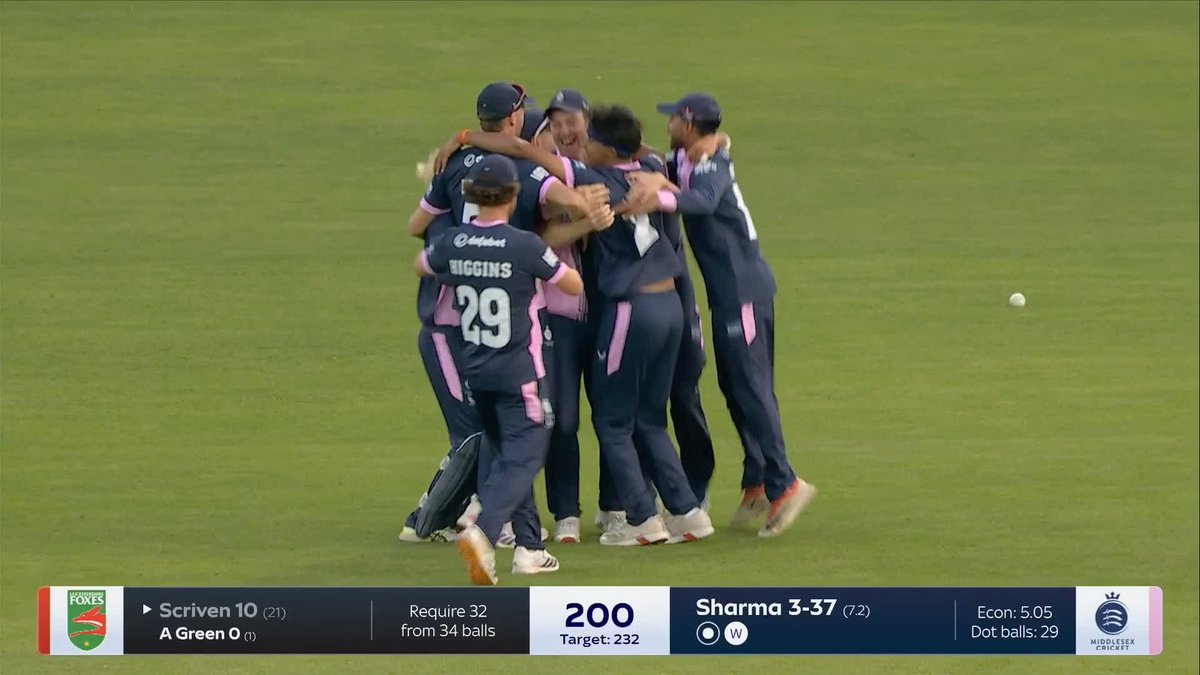
Middlesex won the Metro Bank One-Day Cup final by 31 runs, bowling Leicestershire out for 200. The result, clustered in news and social updates around 20 September 2026, closed the men's 50-over county competition with a clear margin rather than a last-over scramble.
Reporting material available here confirms the scoreline and the identity of the competition but does not include innings breakdowns, individual performances, or how either side reached the final. Social posts circulating with the story treated the outcome as a title for Middlesex, with one cluster of reactions using “double delight” language; those posts do not specify a second trophy or competition, so that phrasing remains an unelaborated fan reaction rather than an established second result.
The event is a domestic limited-overs final in the English county calendar, not an international fixture. Attention has been concentrated among county followers rather than a broad national audience.
Common Perspectives
County identity and a tangible title
Middlesex supporters and people attached to the historic counties treat the win as proof that the club can still deliver silverware in a 50-over format. The appeal is straightforward: a final, a margin, a trophy. The assumption is that such titles still confer standing inside the county game. The trade-off is that prestige inside that circle does not automatically produce larger crowds, broadcast time, or revenue.
Preference for a full 50-over contest
Fans who prefer one-day cricket over T20 see a 31-run win after a side is bowled out for 200 as a proper contest: enough overs for an innings to be built and then dismantled. That view is common among longer-format traditionalists. It assumes the 50-over game remains a worthwhile skill test. The cost is commercial: the format draws less casual attention than shorter, more explosive versions of the sport.
Modest public footprint
Some cricket followers note that a county one-day final can be decided and still register only lightly outside the two clubs involved. This perspective is typical of people who follow the domestic calendar closely and compare it with The Hundred or international windows. It appeals because it highlights a mismatch between on-field consequence and media weight. The underlying assumption is that more coverage would strengthen the counties; the risk is calendar congestion if every competition is treated as equally urgent.
A finalist’s near-miss
Leicestershire supporters can read the same 200 all out as a campaign that reached the last match rather than as simple defeat. That reading is natural for fans of the beaten side. It assumes reaching a final is itself a marker of a decent season. The limitation is that it can underplay the gap on the day: 31 runs is not a coin-flip result.
A Different View
County cup wins are often discussed as nostalgia or as a footnote to franchise cricket. A more useful frame is institutional: for a county, a 50-over title can still matter for player recruitment, internal morale, and the case for investing in a squad that is not built solely around T20 windows. Social reactions that treat the result as a big deal, including unexplained “double delight” posts, suggest a layer of club-level engagement that national attention metrics can miss. The neglected question is not whether the format is fashionable, but whether these titles still function as one of the few remaining levers counties have when the calendar and the money sit elsewhere.
Conclusion
The 2026 One-Day Cup is now decided. What lasts is whether a 31-run final win changes anything measurable for Middlesex—contracts, next season’s planning, or simply the club’s own sense of a successful year—once the immediate posts fade.
Sources and discussion
These public posts were collected while researching this story. They provide context and reactions, but may not independently verify every claim.
View the original topic on X