

Reading Fightin Phils End 31-Year Wait for Eastern League Title
• From trending topic: Reading Fightin Phils End 31-Year Drought with Eastern League Title
Summary
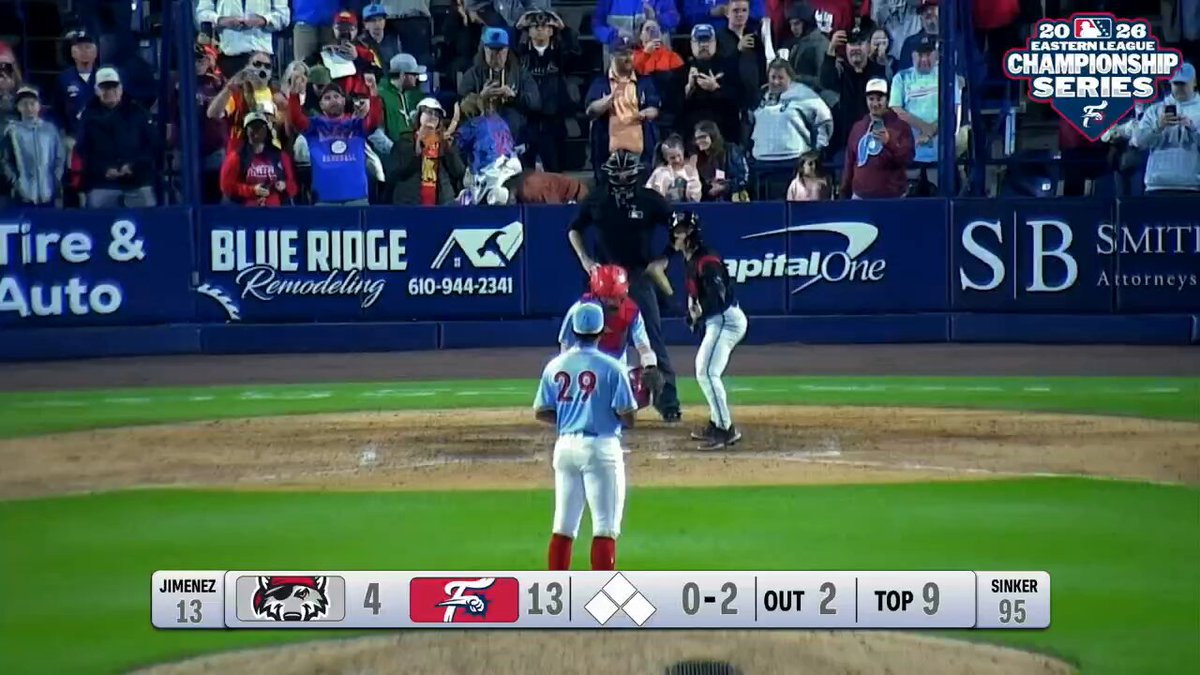
The Reading Fightin Phils won the 2026 Eastern League championship, their first since 1995. That 31-year gap is the core of the story now circulating among fans of the Philadelphia Phillies’ Double-A club. Social-media posts on September 23 treated the result as settled, including accounts of a 13-4 win over Erie and the line “The Title is back in the Town,” often paired with the hashtag #FeelsLikeIts95. Those posts drew substantial engagement in a relatively narrow circle of Reading-area and Phillies-affiliated readers.
The championship itself is the event behind the trend. The final score and the precise clinching game appear in those discussions rather than in independent confirmation in the available material; they should be read as fan and local reporting until box scores and league statements are checked. Double-A titles do not freeze a roster in place. Players move, get promoted, or leave, which is why a long drought at this level is common even for a stable affiliate. Reading has been the Phillies’ Double-A home for a long stretch; the 1995 title is the last previous one identified in the reporting around this win.
Common Perspectives
Hometown relief and civic ownership
Reading fans and residents talk about the title as something that belongs to the city. The drought had become part of local sports talk; ending it, and reaching for 1995, gives people a rare shared win. This view appeals because the Fightin Phils are a visible institution even when the players are not from Berks County. The assumption is that a developmental club can still represent the town. The trade-off is obvious next spring: many of the names on this roster will not be.
Farm-system optimism among Phillies fans
Supporters of the major-league club read an Eastern League title as a positive data point about player development. Double-A is where many prospects are sorted. The appeal is forward-looking: a strong Reading team is easier to map onto hopes for Philadelphia. The assumption is that success at this level will show up later in the majors. It often does not, or not on the same timeline fans want.
A Double-A title is a modest achievement
Some baseball followers, including fans of other organizations and people who watch only the majors, treat the story as overstated. Rosters turn over every year; a 31-year gap is less startling here than it would be in MLB. This view appeals to anyone who ranks competitions by the highest level. It can miss what the win actually does in Reading—packed stands, local talk, a break in a long dry spell—even if the hardware is not Cooperstown material.
Memory of 1995 as the real frame
People who remember the last title, or who grew up on stories of it, experience 2026 as a closing of a loop. Younger fans meet that history through the hashtag. Continuity is the draw. The assumption is that 1995 and 2026 are comparable seasons. Minor-league structure, affiliations, and how titles get talked about have all changed in between.
A Different View
Minor-league championships are poorly designed to last. Affiliates exist so the parent club can evaluate and move players; a group good enough to win the Eastern League is, by the system’s logic, a group that should be promoted. A three-decade gap is closer to the expected pattern than a curse. The useful question is not whether the trophy stays in Reading but which members of this cohort are in Philadelphia next year, and whether the city still fills the park after they leave. Social media made this moment louder than a 1995 newspaper recap ever was. That changes how droughts feel. It does not change how the player pipeline works.
Conclusion
The local story is the drought ending. The organizational story is whether this roster was a peak or a waypoint. Attendance in Reading and call-ups to the Phillies will say more than the trophy about what 2026 actually meant.
Sources and discussion
These public posts were collected while researching this story. They provide context and reactions, but may not independently verify every claim.
View the original topic on XBarstool Philly
@BarstoolPhilly
The Reading Fightin Phils won the Eastern League title for the first time since 1995!
Sep 23, 20261.4K likes87 repostsFuturePhils
@FuturePhils
For the first time since 1995 the Reading Fightin Phils are the CHAMPIONS of the Double-A Eastern League! Final score: Reading 13 Erie 4
Sep 23, 2026999 likes98 repostsReading Fightin Phils
@ReadingFightins
The Title is back in the Town 🏆 #FeelsLikeIts95
Sep 23, 20261.9K likes324 reposts