

La Sasso Beats Rahm by One With a Final-Hole Birdie in Indianapolis
• From trending topic: Michael La Sasso Birdies Final Hole to Win LIV Golf Indianapolis
Summary
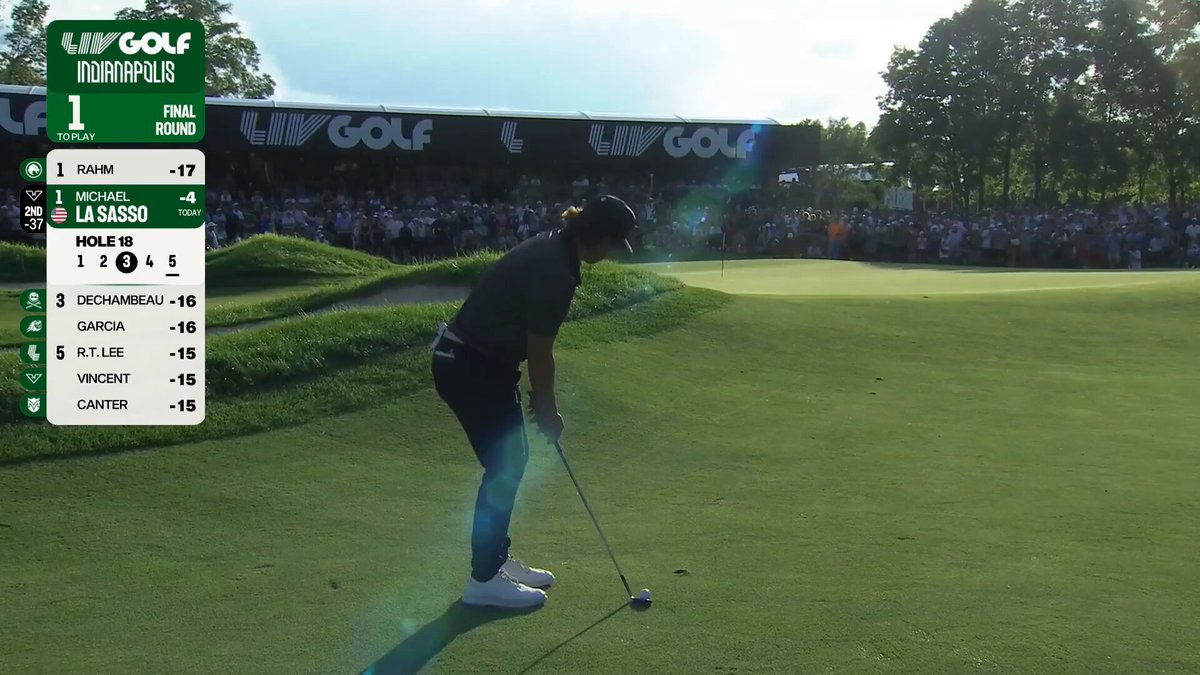
Michael La Sasso birdied the last hole at LIV Golf Indianapolis and beat Jon Rahm by a single stroke. The reported card was 71-60-66-65, an 18-under total that turned a volatile week into a one-shot win over one of the circuit’s most recognizable players.
What spread fastest after the round was not only the margin. Posts circulating on X described a wedge into the 72nd hole that set up the deciding birdie, called the result La Sasso’s first professional title, and framed Indianapolis as the closing event of “LIV Golf 1.0.” Those details come from coverage and fan accounts of the finish, not from the scoring line itself. The confirmed picture is narrower and still striking: a little-known winner, a 60 in the middle of the tournament, and a last-hole birdie against Rahm.
That combination is why the result is traveling. A Sunday birdie is ordinary golf language. A Sunday birdie that separates a first-time name from Rahm, in a week some supporters are already filing under a league era, is a story people can argue about without agreeing on what LIV is for.
Common Perspectives
A new winner finally arrived
This is the view among fans who follow leaderboards more than league politics. A last-hole birdie and a first title, if the social accounts are right about the latter, fit the oldest golf plot: someone unknown plays the shot that the star does not. It appeals because it promises succession rather than another week owned by the same few names. The trade-off is obvious. One 18-under week, even with a 60 in it, can be a peak rather than a career. The assumption hiding in the celebration is that clutch equals lasting.
The league still knows how to end a season
LIV loyalists read the finish as product, not upset. A one-shot duel with Rahm, decided on the 72nd hole, is the kind of Sunday the circuit wants attached to a finale — especially if Indianapolis is being sold as the last event of a “1.0” version of the tour. The appeal is legitimacy through theater: if the ending looks like elite golf, the surrounding arguments recede. The cost is that drama is not the same thing as depth. A thriller can also be a soft field, a generous setup, or one hot stretch. Treating the last wedge as a referendum on the league assumes the broadcast moment is the evidence.
Rahm losing is the tell
Skeptics of LIV, including many who still measure the sport by the established tours, will take the opposite inference from the same scoreboard. If a player they barely know outlasts Rahm, they see confirmation that the circuit’s hierarchy is unstable or that star power is rented rather than earned week to week. That reading is satisfying to anyone already convinced the product is an exhibition with better lighting. It also flattens the actual golf. Rahm can lose a close one without the field being fake, and La Sasso’s 60 is an awkward fact for anyone who wants the week dismissed as noise.
Ignore the brand fight and watch the shot
A large group of casual viewers does not care whether this was LIV 1.0, 2.0, or a one-off in Indiana. They care that a wedge and a birdie decided a tournament on the last hole. That stance keeps the sport intelligible: golf is still a person, a number, and a finishing hole. The limitation is that it treats the surrounding structure — who is in the field, how the season is built, why this event is being labeled a finale — as decoration. Sometimes the decoration is the story.
A Different View
The argument locked onto the 72nd hole is a last-shot argument. The stranger number is the 60. An opening 71, a round that low, then 66-65, is less a coronation arc than a week of extreme variance. Courses, conditions, and setups that allow that shape of scoring make Sunday heroes and Sunday accidents out of almost the same material. If Indianapolis is also being remembered as the end of a league chapter, that branding does extra work: it turns an ordinary season-ending leaderboard into a historical hinge, which benefits the tour whether La Sasso becomes a regular name or a trivia answer. The neglected question is not who hit the better wedge. It is how much of this “era-ending” drama is competitive signal and how much is a scoring week that happened to land on a convenient narrative.
Conclusion
The next test is dull and decisive: whether La Sasso’s name keeps appearing near the top, or whether Indianapolis becomes a single-week spike attached to Rahm and a farewell label. The scores will settle that faster than the posts.
Sources and discussion
These public posts were collected while researching this story. They provide context and reactions, but may not independently verify every claim.
View the original topic on XNUCLR GOLF
@NUCLRGOLF
🚨🏆⛳️ #WINNER — Michael La Sasso has won LIV Golf Indianapolis to claim his 1st career pro title and outlasts Jon Rahm in what was the final event of LIV Golf 1.0.
Aug 23, 2026581 likes5 repostsFore Play
@ForePlayPod
Michael La Sasso CLUTCH wedge on the 72nd hole to set up birdie and beat Jon Rahm by 1. He gets his first professional win in the final event of LIV 1.0
Aug 23, 20261.1K likes7 repostsLIV Golf
@livgolf_league
🏆 MICHAEL LA SASSO WINS IN INDIANAPOLIS #LIVGolfIndy | @HyFlyers_GC
Aug 23, 2026652 likes59 reposts