

Iran's Araghchi Accuses Israel of Blocking Ceasefire Diplomacy with the US
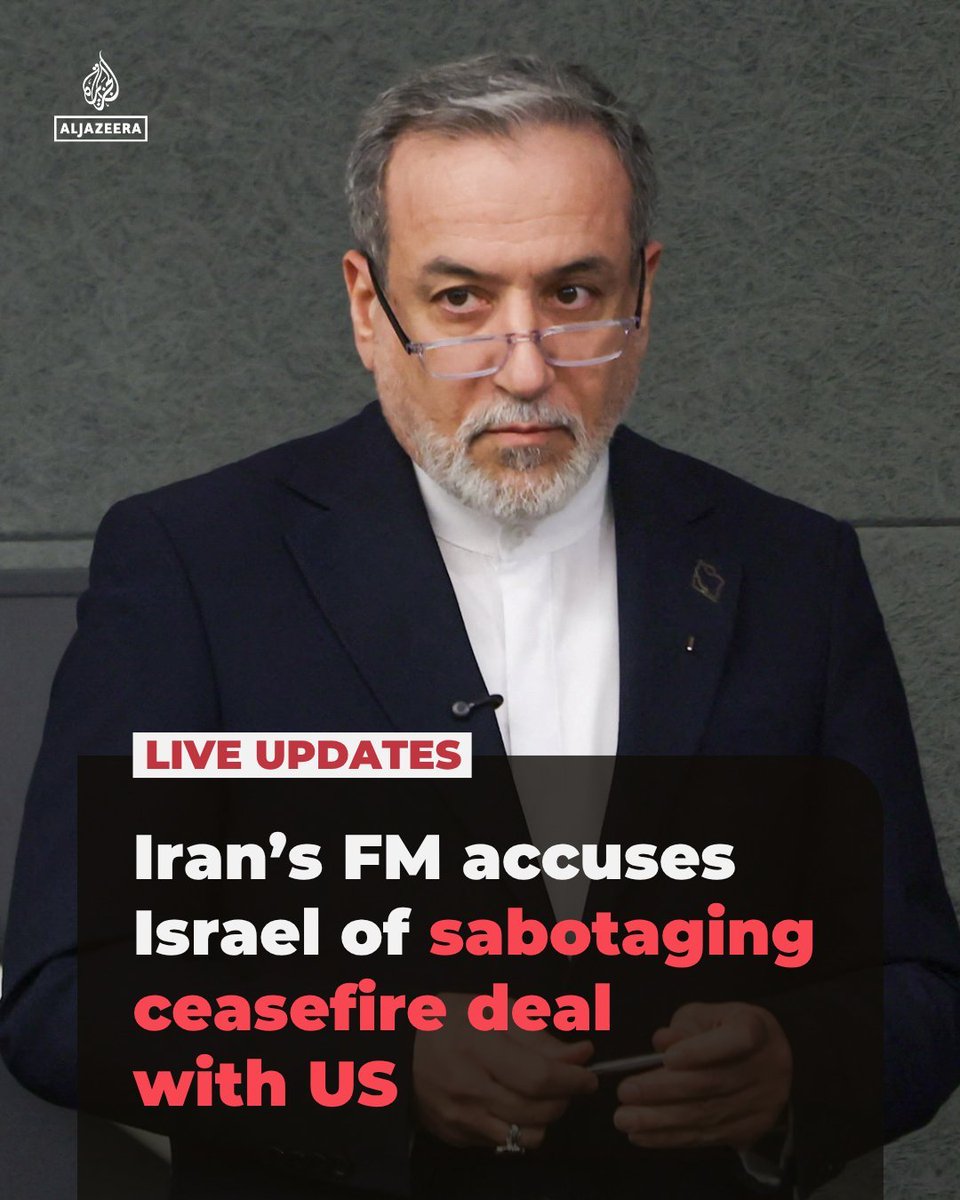
• From trending topic: Iran's Foreign Minister Abbas Araghchi accuses Israel of sabotaging diplomacy and discusses Iran's approach to ceasefire negotiations with the US.
Summary
Iranian Foreign Minister Abbas Araghchi has accused Israel of actively sabotaging diplomacy and serving as the primary obstacle to a lasting ceasefire deal with the United States, according to Iran's official IRNA news agency. Related comments attributed to Araghchi describe Iran as having pushed the US toward confrontation specifically to create leverage for subsequent talks, framing the sequence as a strategic diplomatic gain. Those who had pressed for Iran's unconditional surrender, he noted, sought negotiations soon after fighting began. The remarks, circulating through state media and social platforms, arrive amid reports of possible ceasefire discussions between Tehran and Washington. They highlight the public, accusatory style that has characterized recent exchanges, with Iran positioning Israel as the party preventing any agreement from taking hold. Confirmed details remain limited to the statements themselves as reported by IRNA and the circulating attributions; broader claims about the status of any talks, specific military actions, or other parties' private positions are not independently established in the available reporting.
Common Perspectives
Iran's Account of Israeli Interference
Iranian officials, aligned regional voices, and critics of Israeli policy treat Araghchi's accusation as an accurate description of events. This view holds that Israel benefits from prolonged tension and works to prevent any US-Iran understanding that might constrain its military options. It appeals to audiences already convinced of Israeli intransigence and sees the public statement as a necessary pressure tactic on Washington. The core assumption is that Iran and the United States could reach a workable ceasefire if Israel were restrained; the trade-off is that it can downplay Iran's own regional activities that Israel cites as the original source of friction.
Dismissal as Iranian Deflection
Israeli officials, many US lawmakers, and security-oriented analysts typically read the comments as an attempt to shift blame and drive a wedge between Washington and Jerusalem. The suggestion that Iran deliberately escalated toward war to gain negotiating leverage is taken as confirmation of a provocative strategy rather than evidence of good-faith diplomacy. This perspective resonates with those focused on Iran's nuclear program, missile capabilities, and support for armed groups. It assumes Tehran's public posture is almost entirely tactical and insincere; a potential cost is overlooking any genuine change in Iranian calculations that might be worth testing through limited engagement.
Rhetoric as Standard Bargaining
Diplomats, some European officials, and conflict-resolution analysts often regard such accusations as predictable theater in high-stakes Middle East talks rather than a reason to abandon the effort. They note Araghchi's own description of how quickly war talk gave way to negotiation interest and argue that rising costs create openings regardless of the public script. This view appeals to those prioritizing an immediate reduction in violence and economic disruption. The assumption is that private channels can function even when public ones are filled with blame; the risk is entering discussions without first addressing the security issues that have repeatedly caused earlier efforts to collapse.
A Different View
Public focus stays on whether Israel is truly blocking a deal or whether Iran is negotiating in bad faith. A less examined dynamic is how the statements themselves operate as multi-audience signaling. Naming Israel as the saboteur tests the tightness of US-Israel coordination and may be intended to force Washington into an explicit choice. At the same time, the "leverage through confrontation" narrative recasts any later de-escalation as a win for Iranian hardliners at home, preserving the regime's resistance story even if talks stall. This pattern of using public diplomacy to manage both alliance gaps and domestic constituencies has appeared in earlier Iranian negotiations and can either create unexpected pressure or simply harden all sides' positions.
Conclusion
Whether these comments produce any concrete US or Israeli response, or whether they simply become another layer of public positioning, will indicate if a ceasefire track still has room to move.
Sources and discussion
These public posts were collected while researching this story. They provide context and reactions, but may not independently verify every claim.
View the original topic on XEmmanuel Chisawa
@EChisawa88094
Iran's FM Abbas Araghchi has accused Israel of actively sabotaging diplomacy, describing the country as the primary obstacle to a lasting ceasefire deal with the US, reports IRNA news agency. 🔴 LIVE.update
Aug 18, 20261 likesDrew Grimaldi
@Grimillionaire
Iran’s Araghchi says Iran pushed US toward war to gain leverage for a ceasefire, framing it as a strategic victory in diplomacy. He notes those who pressed for unconditional surrender sought negotiations soon after the conflict started. Informative tone.
Aug 18, 2026