

‘Heated Rivalry’ Wins Program of the Year at the TCA Awards
• From trending topic: Heated Rivalry Wins Program of the Year at TCA Awards
Summary
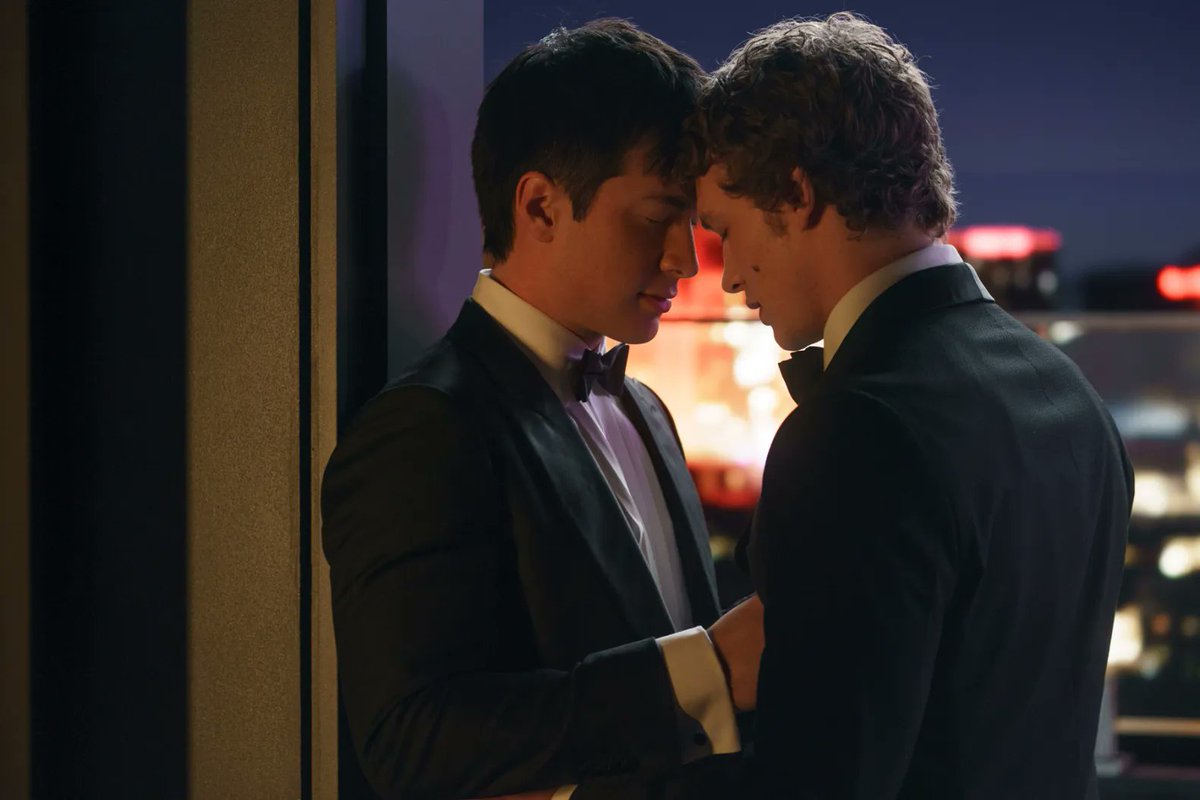
“Heated Rivalry” has been named Program of the Year at the 2026 Television Critics Association Awards, the group’s highest honor. The TCA announced the result, and Variety and Deadline reported the winners. Posts from the ceremony said executive producers Jacob Tierney and Brendan Brady were on hand to accept.
The same night, according to the circulating winners list, “Widow’s Bay” took Outstanding Achievement in Comedy and “The Pitt” won Outstanding Achievement in Drama. Rhea Seehorn received Individual Achievement in Drama for “Pluribus.” The comedy individual prize was also awarded, though the fragment of the list circulating most widely did not include that name.
Program of the Year is the TCA’s catch-all top prize, voted by working television critics rather than by a large industry academy. The association typically presents the awards in August, after much of the previous season has aired and before the fall calendar takes over. That timing makes the honor both a backward-looking critical consensus and an early marker for the next awards cycle. What the win does not, by itself, establish is the show’s audience size, its platform, or how it will fare with Emmy voters.
Common Perspectives
A critics’ prize still worth having
Awards-focused viewers and many people who work in television treat the TCA’s top prize as one of the cleaner signals of critical agreement. The voting body is smaller and more professionalized than the Television Academy, which is why this camp reads the result as a judgment on the work rather than on campaign machinery. The appeal is obvious: it feels closer to a review consensus than to a popularity contest. The assumption underneath is that working critics are still the right jury for “best,” and that their taste maps onto lasting quality. That can flatten disagreement among critics themselves and treat one room of voters as a stand-in for the medium.
A Canadian credit on an American ballot
Because the series is closely associated with Canadian producers, and because Canada is where the win is being read most intently, some industry figures and viewers there see the trophy as proof that a Canada-linked show can take the highest U.S. critics’ honor. The appeal is both cultural and practical: it is a pride story, and it is an argument for export, financing, and talent staying put. The trade-off is that it can over-assign nationality to a result that American critics may have reached for reasons that have little to do with where the show was made. A win can be Canadian news without being, first and foremost, a Canadian verdict.
Insider scorekeeping, not a public event
Another common reaction, especially among people who do not follow critic groups, is that mid-August awards are industry weather. They rearrange trade headlines and social posts more than they change what gets watched on a Thursday night. That view appeals to anyone tired of being told a show is important because a professional organization said so. Its cost is that it can dismiss a real, documented consensus among reviewers as noise, and it can miss the downstream uses of the phrase “Program of the Year” in advertising, renewals, and foreign sales.
The rest of the ballot is the real map
Some awards watchers will spend less time on the top prize than on the split among “Widow’s Bay,” “The Pitt,” and Seehorn’s win for “Pluribus.” In that reading, Program of the Year is a headline category that collapses a messy year into one title, while the genre and performer awards better describe what critics actually liked. The attraction is specificity. The limitation is that it can treat the TCA’s own highest honor as a rounding error, which is not how the association, or most of the coverage, is framing the night.
A Different View
The more neglected question is not whether “Heated Rivalry” “deserved” the trophy, but who the trophy is for once the room empties. Critic-group awards now travel less as cultural coronations than as portable language. “Program of the Year” is a line that can be dropped into a streamer homepage, a festival brochure, a licensing deck, or a year-end ad in a market that never saw the ceremony and may not know the TCA from any other set of initials. For a series being talked about from Canada into a U.S. and international marketplace, that label can matter more to buyers and publicists than to the viewers who already finished the show months ago. August critic awards often freeze a conversation around work whose first-run moment has already passed. The second-order effect is a small professional ritual with a long afterlife in marketing copy.
Conclusion
The confirmed fact is narrow: the TCA named “Heated Rivalry” its Program of the Year, and the other major prizes of the night lined up behind “Widow’s Bay,” “The Pitt,” and Seehorn. What to watch next is not a rerun of whether the choice was correct, but how quickly the honor is put to work—in awards campaigning, in renewal talk, and in the way the series is sold outside the room that voted.
Sources and discussion
These public posts were collected while researching this story. They provide context and reactions, but may not independently verify every claim.
View the original topic on XVariety
@Variety
Television Critics Association Awards Winners: Program of the Year: “Heated Rivalry” Outstanding Achievement in Comedy: “Widow’s Bay” Outstanding Achievement in Drama: “The Pitt” Individual Achievement in Drama: Rhea Seehorn, “Pluribus” Individual Achievement in Comedy:
Aug 20, 20264.6K likes494 repostsDeadline
@DEADLINE
'Heated Rivalry,' 'Widow's Bay' & 'The Pitt' Lead 2026 TCA Awards: Full Winners List
Aug 20, 2026898 likes147 repostsThe TCA
@OfficialTCA
#HeatedRivalry has been named Program of the Year at the 2026 #TCAAwards! EPs Jacob Tierney and Brendan Brady are here to accept. @heatedrivalrycrave @heatedrivalryhq @hbomax
Aug 20, 2026288 likes64 reposts