

Canada Unveils Immediate Write-Offs for New Business Investment
• From trending topic: Canada Launches Productivity Mega Deduction to Boost Business Investment
Summary
Canada has announced a Productivity Mega Deduction allowing businesses to immediately expense eligible investments. François-Philippe Champagne described the measure as applying to businesses of different sizes; the retained announcement does not include the full eligibility rules.
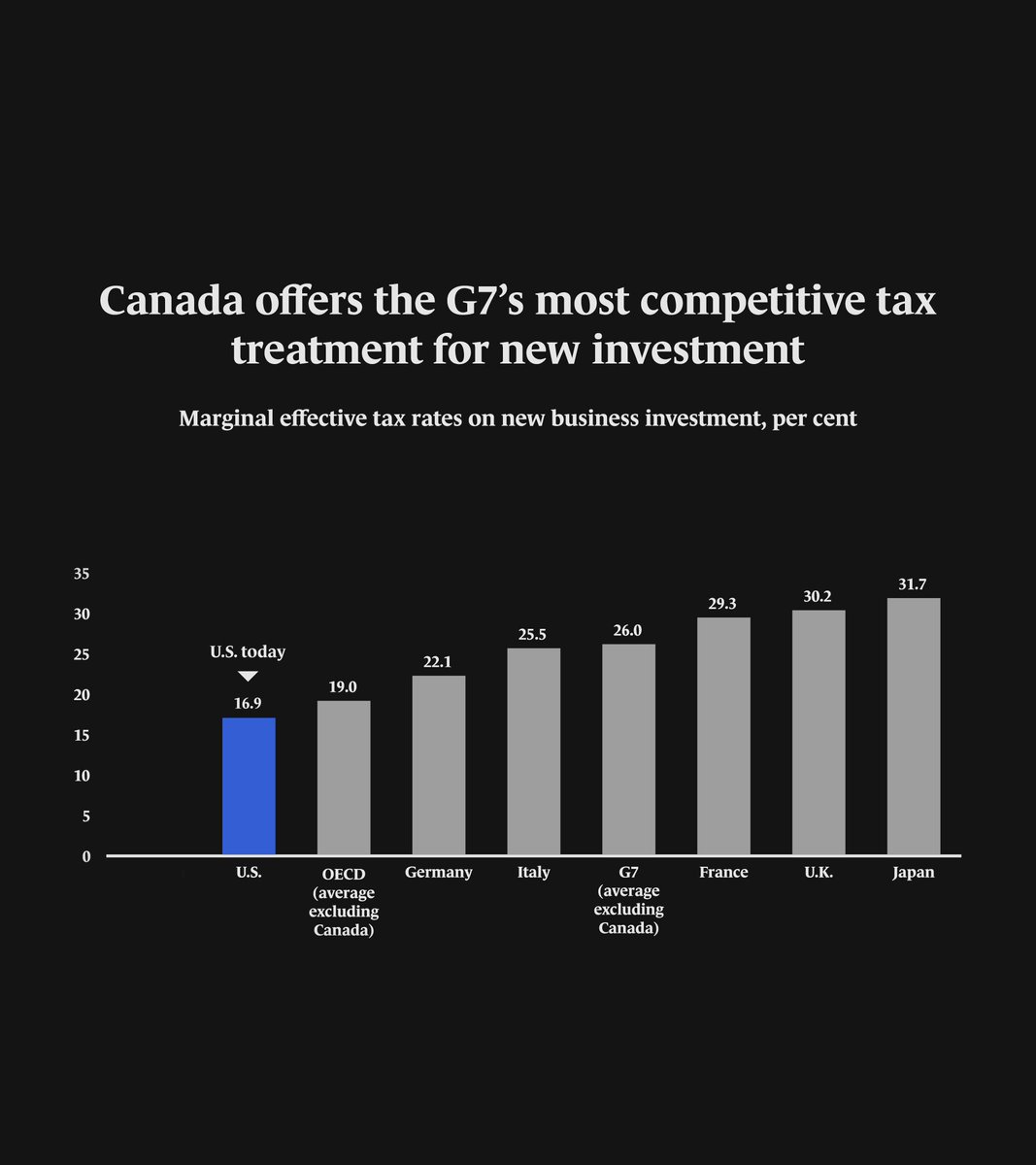
Mark Carney said the measure cuts the marginal effective tax rate on new business investment from 13% to 6.4%, and described that as the lowest among major economies. Those are Carney's claims about the policy's effects and international position, not an independently reproduced calculation here. The two announcements establish the policy announcement, but do not supply a revenue estimate or the assumptions behind the comparison. The following analysis considers potential effects rather than report reactions from unnamed business or political groups.
Common Perspectives
Earlier deductions can change investment timing
Immediate expensing can bring a deduction forward compared with spreading it over time. For an eligible business able to use the deduction, that can improve the financial case for a purchase. The size of the benefit depends on the applicable rules and the firm's tax position.
Eligibility determines who benefits
Champagne presents the measure as relevant to small and large businesses. Size alone does not establish that a particular purchase qualifies. Businesses would need the detailed rules before treating the announcement as a basis for spending decisions.
Assess the public cost alongside the incentive
Earlier deductions can change the timing of government revenue. A full assessment would compare that cost with additional investment attributable to the measure. The retained announcements provide neither a fiscal estimate nor evidence of subsequent investment, so those outcomes remain to be evaluated.
A Different View
The important distinction is between investment that would not otherwise occur and investment brought forward from a later date. Both can create an initial increase in spending, but they have different implications for lasting productive capacity. Future evaluation should separate the two rather than treat an early rise as proof of a permanent change.
Conclusion
The eligibility rules, the basis of the tax-rate calculation and later investment data will be more useful than the announcement's competitiveness claims alone.
Sources and discussion
These public posts were collected while researching this story. They provide context and reactions, but may not independently verify every claim.
View the original topic on XMark Carney
@MarkJCarney
We just announced Canada’s new Productivity Mega Deduction. This cuts Canada’s marginal effective tax rate from 13% to 6.4% on new business investment — the lowest of any major economy in the world. Canada is building big — and becoming the best place in the world to build.
Sep 15, 202612.9K likes1.4K repostsFrançois-Philippe Champagne (FPC) 🇨🇦
@FP_Champagne
The Productivity Mega Deduction is a game changer for small and medium-sized businesses and Canada’s biggest players alike. It will supercharge growth and make Canada the best place for new investment. Businesses of all sizes can now immediately expense eligible investments,
Sep 16, 202699 likes27 reposts