

September Flash PMI Shows U.S. Business Activity at a Five-Year High
• From trending topic: US Business Activity Hits Five-Year High in September PMI Surge
Summary
S&P Global’s flash purchasing managers’ indexes for September put U.S. composite business activity at 58.4, with manufacturing at 57.0 and services at 58.7. Those readings were reported as a five-year high and above expectations. In a PMI, 50 is the dividing line: figures above it mean more surveyed firms reported an improvement in activity than a decline.
Flash estimates are built from a subset of responses and can be revised when the full survey is published. Commentary circulating with the release, including posts on X, stressed the size of the beat—some cited manufacturing expectations near 53.7 against 57.0, services near 55.8 against 58.7, and a composite near 55.3 against 58.4. One widely shared take treated the print as evidence that households are still spending and firms are still investing. Another paired the growth signal with rising cost pressures. The headline numbers supplied here are the activity indexes; they do not, by themselves, confirm how prices, hiring, or output volumes moved in the same month.
Common Perspectives
Demand is stronger than the cooling story
Investors and commentators who had been leaning on a slowdown narrative read a five-year high as timely proof that private-sector activity is still broadening. The appeal is speed and breadth: PMI is a monthly survey of purchasing managers, not a lagged government total, and a print this far above 50 is hard to shrug off if it is confirmed. The assumption is that “more firms expanding” maps cleanly onto jobs, capital spending, and GDP. The trade-off is familiar: if the same expansion is pulling in scarce labor or materials, the “good” number can show up later as higher prices rather than higher real incomes.
Cost pressures keep the inflation argument alive
A second camp, often in rates and inflation-watching circles, treats the surge as a warning as much as a celebration. That view showed up quickly in market posts that yoked strong activity to rising costs. It appeals to people who remember how demand rebounds in 2021–22 fed into prices, and to anyone who thinks the Federal Reserve should stay cautious. The assumption is that a hot PMI is a leading sign of sticky inflation, not just a sign of health. The trade-off is that they may overweight one survey’s implied price pressure and underweight the chance that supply, inventories, or productivity absorbed the extra demand.
A flash print is a first look, not a new cycle
Data-cautious readers point out that flash PMIs get revised, one month is noisy, and survey diffusion can diverge from hard series such as industrial production, real consumer spending, or payrolls. That view appeals to people who have been burned by overreading a single “beat.” Its assumption is that official data will either confirm or quietly walk the story back. The trade-off is delay: waiting for confirmation can mean missing a genuine turn if the survey is catching something the slower statistics have not yet shown.
Markets will split the same number into growth and rates
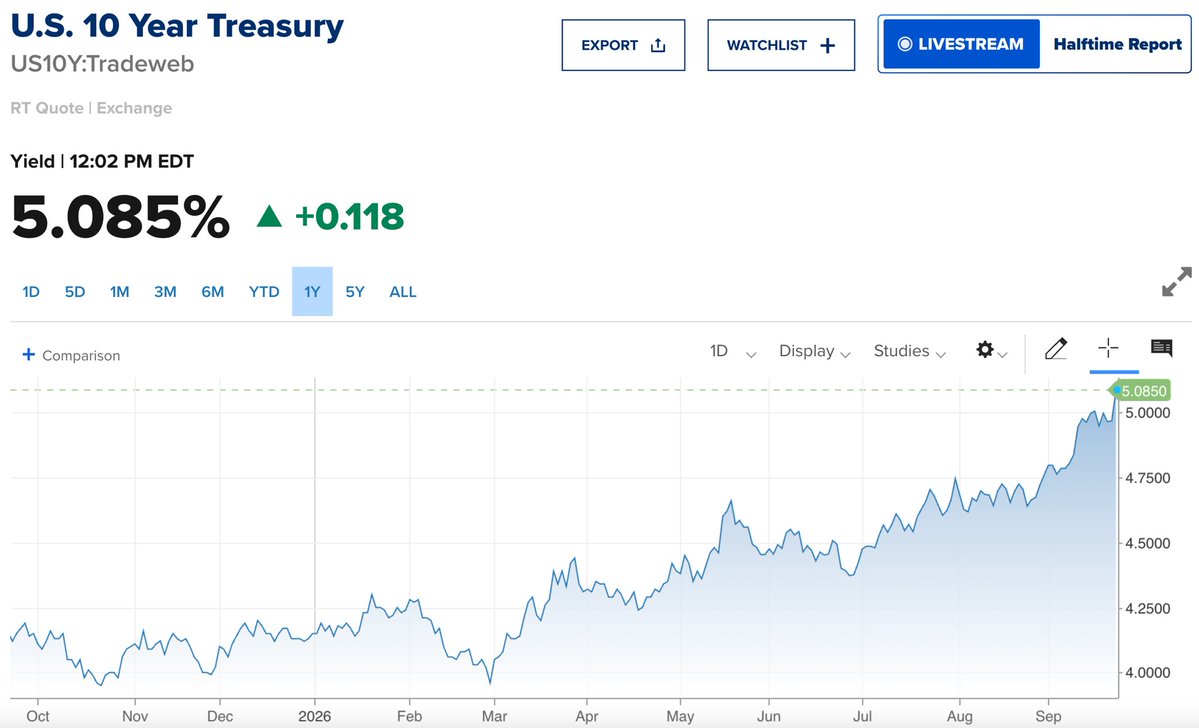
Equity-oriented traders often like an expansion surprise; bond-oriented traders may sell duration on the idea that rate cuts become less likely. That split is less a theory of the real economy than a theory of how policy makers and positioning will react. It appeals because it is immediately tradable. Its assumption is that this print is large enough to move the Fed’s path. Its trade-off is overfitting: the central bank already watches a stack of indicators, and a flash PMI is only one of them.
A Different View
The index is a diffusion measure, not a growth rate. A composite at 58.4 means a larger share of surveyed managers reported better conditions, not that national output rose by anything like that figure, and not that every region, firm size, or industry participated equally. A five-year high in how widespread expansion feels can still be shallow in dollar terms—or, conversely, it can strain capacity if many firms try to expand at once. The X discussion largely sorted the release into “strong growth” versus “cost pressure.” It spent less time on the mechanical question the survey actually poses: whether suppliers, labor, and logistics can absorb another burst of orders without the next constraint showing up as delays and prices rather than as a clean boom.
Conclusion
The next useful checks are the final PMI, whether official output and labor data move in the same direction, and whether the survey’s price and employment details—when they are fully reported—match the cost-pressure talk already attached to the headline.
Sources and discussion
These public posts were collected while researching this story. They provide context and reactions, but may not independently verify every claim.
View the original topic on X*Walter Bloomberg
@DeItaone
U.S. PMI SURGES, SIGNALING STRONG GROWTH AND RISING COST PRESSURES U.S. business activity accelerated sharply in September, with manufacturing PMI rising to 57.0, services to 58.7, and the composite index to 58.4, all well above expectations. The data points to the strongest
Sep 23, 2026408 likes88 repostsamit
@amitisinvesting
Well, today was a weird day for macro data. PMI came in at the HIGHEST level since…2022. Expectations were 53 and we came in at 57. What does that mean? Well, people are spending, they have jobs, companies are investing…everything good for a functioning economy. But…it
Sep 23, 20261.6K likes83 repostszerohedge
@zerohedge
US Mfg PMI 57.0, Exp. 53.7, five year high US Services PMI 58.7, Exp. 55.8 US Composite PMI 58.4, Exp. 55.3
Sep 23, 2026350 likes70 reposts