

Bad Bunny's Super Bowl Halftime Show Sparks Nationwide Firestorm of Praise, Backlash, and Cultural Debate
• From trending topic: #HalftimeShow
Summary
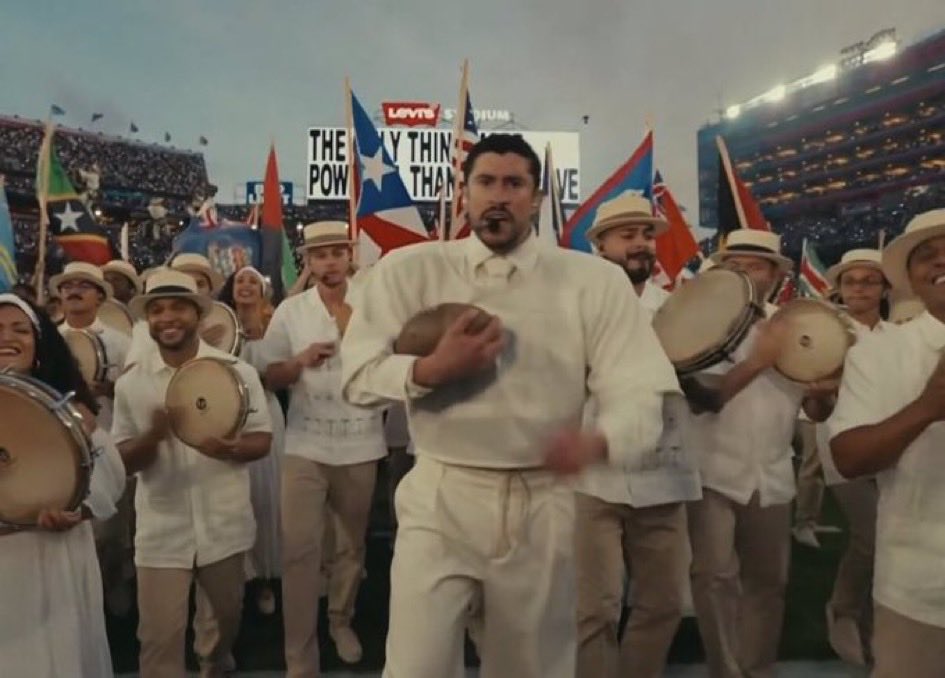
Bad Bunny's electrifying Super Bowl halftime performance has ignited "#HalftimeShow" as a top trending topic on X, dominating conversations just hours after the game. Fans and critics are flooding timelines with reactions to his high-energy set, blending Puerto Rican pride, nonstop hits, and a vibrant dance party atmosphere on the field. The show's Spanish-language focus, explicit lyrical nods, and celebrity-packed spectacle—drawing comparisons to past performers like Lady Gaga and Ricky Martin—have split audiences, with some hailing it as unforgettable cultural triumph and others slamming it as the worst ever. This surge in buzz stems directly from post-game recaps, viral clips, and hot takes questioning everything from language choices to family-friendliness, amplified by figures like Trump weighing in despite prior disinterest. The performance's bold VIP-themed lyrics and Latin flair have turned the field into a battleground for debates on NFL entertainment standards, propelling the hashtag to explosive visibility today.
Common Perspectives
Electrifying Triumph and Cultural Celebration
Enthusiasts are raving about Bad Bunny "owning" the halftime show, praising its infusion of Puerto Rican pride, relentless hits, and infectious energy that transformed the stadium into a massive dance party. Posts highlight the performance's unforgettable vibe, star power, and cultural representation, with one user declaring it turned the field into "PartyOnTheField" amid flames of excitement.
Outrage Over Language and Family-Friendliness
A vocal contingent decries the show's heavy use of Spanish, arguing the Super Bowl halftime in America should stick to English to reach a broader audience. Critics also spotlight explicit lyrics—like references to VIP encounters and selfies with "the ones I already fucked"—questioning why NFL leadership allowed content unfit for families, with some calling it outright "horrible" and shameful.
Worst Performance in Super Bowl History
Harsh detractors label it "the worst #HalftimeShow ever," expressing deep disappointment in the execution and overall quality. This view ties into broader frustration with NFL choices, with users urging accountability from league leaders and contrasting it unfavorably against past spectacles.
Political Hypocrisy and Celebrity Commentary
Some users zero in on external critiques, like Donald Trump's rating of the show as one of the worst despite claiming he wouldn't watch. This sparks intrigue and skepticism, framing the backlash as inconsistent and fueling meta-discussions on who's really tuning in and opining.
Hype for Future Latin-Powered Shows
Optimists are already projecting ahead, buzzing about potential 2026 lineups featuring Bad Bunny alongside Lady Gaga and Ricky Martin. These posts recap the current show while envisioning escalating Latin influence, tagging it as a full-performance preview that sets the stage for bigger collabs.
A Different View
While debates rage over language, lyrics, and quality, few are noting how Bad Bunny's set subtly mirrors the Super Bowl's own evolution into a global spectacle—much like the NFL's embrace of international fanbases through streaming and merchandise. By centering Puerto Rican roots and unapologetic reggaeton, the performance didn't just entertain; it positioned the halftime as a cultural export, potentially boosting NFL viewership in Latin America (where soccer reigns) more than any English-only act could. This angle recasts the controversy not as a misstep, but as a savvy bet on demographic shifts, turning divisive energy into untapped revenue streams that transcend U.S. borders.
Conclusion
Bad Bunny's Super Bowl halftime has polarized X like few events before, blending joyous fandom with fierce critique to make "#HalftimeShow" unmissable. As reactions evolve from raw post-game heat to forward-looking speculation, one thing's clear: this performance has redefined halftime as a lightning rod for identity, entertainment, and expectation—ensuring its echoes will linger far beyond the final whistle.
Sources and discussion
These public posts were collected while researching this story. They provide context and reactions, but may not independently verify every claim.
View the original topic on XintheMatrixxx
@intheMatrixxx
Who was hoping that ICE would have shown up? #BadBunny #SuperBowl #SuperBowlLX #HalftimeShow
Feb 9, 202611 likes2 repostsAwes
@AwesMetaX
Morning Everyone ! Happy Monday! 🔥✨ New week, new goals. Let’s set the pace early and lead from the front. Let's win the day! 💪 Side note, The SuperBowl was amazing , really enjoyed the halftime show🔥🐰👏 #SuperBowl #HalftimeShow 🎉
Feb 9, 20264 likes1 repostsLilly inLondon
@Lillyin_London
Summary of the #BadBunny halftime show: #SuperBowl #Halftime #HalftimeShow #HalftimeShow2026
Feb 9, 20261 likes1 repostsCreepyBrent
@CreepyBrent1
The #SuperBowl #HalftimeShow in America should be in English.
Feb 9, 20262 likesThe Silent Quest
@SilentQuestGame
The Silent Quest #Halftime #HalftimeShow #HalftimeShow2026
Feb 9, 20262 likesErika babiex
@Erikababiex
Imagine you inside and I squeeze #ad #HalftimeShow #latina
Feb 9, 20262 likes