

Xi Jinping’s Return to Pyongyang Signals Renewed China-North Korea Coordination
• From trending topic: Xi Jinping Visits North Korea
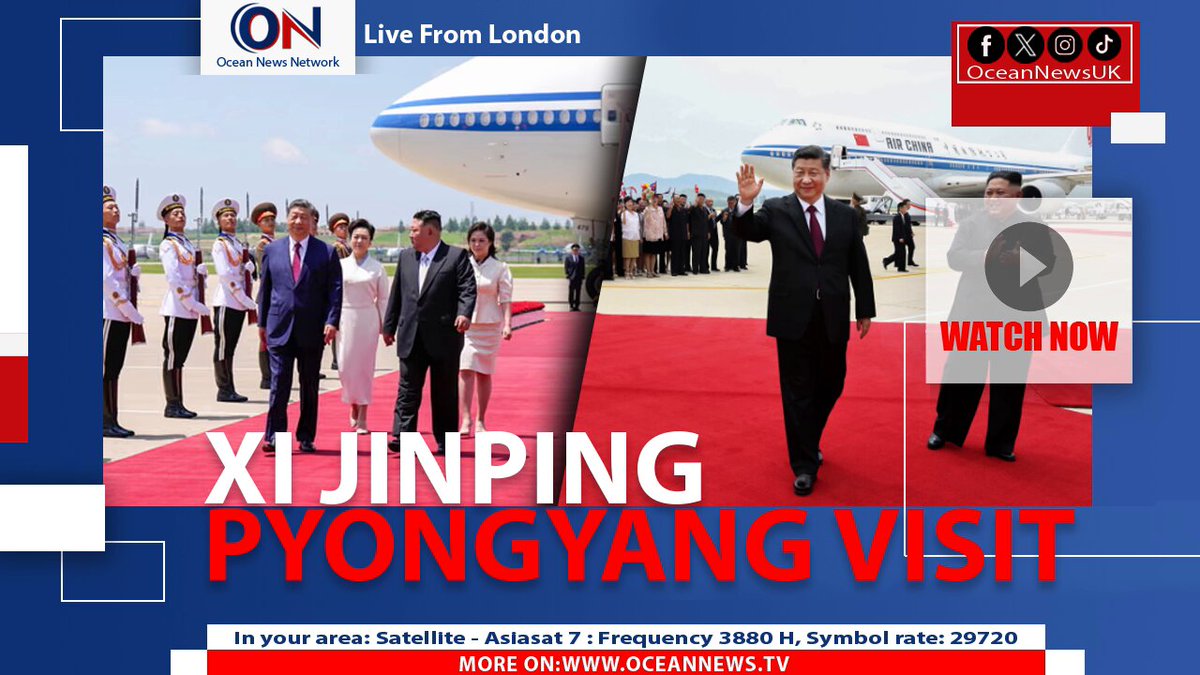
Summary
Chinese President Xi Jinping touched down in Pyongyang today for his first state visit to North Korea in nearly seven years, marking his first overseas trip of the year. North Korean leader Kim Jong Un personally greeted the Chinese leader at the airport, an unusually high-profile welcome that immediately dominated headlines and social-media feeds. State media in both capitals framed the two-day summit as a “new chapter” in bilateral ties, while observers noted that the timing—amid stalled nuclear talks and shifting U.S. policy—gives the meetings added weight. Within hours, hashtags tracking the arrival surged worldwide, driven by speculation over what concrete agreements might emerge from the closed-door sessions.
Common Perspectives
Strategic Reassurance for Pyongyang
Analysts in Seoul and Washington argue the visit is first and foremost a message from Beijing that it still serves as North Korea’s indispensable backstop. With sanctions fatigue growing and rumors of new U.S. pressure campaigns, China’s physical presence is seen as a deliberate signal that any escalation will be buffered by continued political and economic cover from its largest neighbor.
Domestic Legitimacy Boost for Kim
North Korean state television devoted wall-to-wall coverage to the red-carpet arrival, underscoring how the optics of hosting Xi can be packaged at home as proof that the regime commands respect on the global stage. The imagery is expected to circulate for weeks inside the country, reinforcing Kim’s narrative that his diplomacy keeps the nation secure despite external isolation.
Testing the Temperature in Washington
U.S. officials privately acknowledge that the summit complicates efforts to coordinate fresh sanctions or arms-control overtures. Some voices on Capitol Hill view the optics as a setback, while others contend it may actually open a narrow window: if Beijing uses its renewed leverage to nudge Pyongyang toward dialogue, the visit could function as an indirect diplomatic channel rather than a simple show of solidarity.
Economic Lifeline Calculations
Traders tracking cross-border rail traffic and fuel prices note that any new memorandums on infrastructure or resource cooperation could translate into incremental sanctions relief for North Korea. Chinese firms already active in cross-border projects are watching for follow-on contracts in transport corridors and power-grid links, viewing political warming as a gateway to long-stalled commercial opportunities.
A Different View
Rather than treating the visit as a purely geopolitical chess move, consider its environmental ripple effects. Energy assistance packages discussed on the sidelines could determine whether North Korea’s aging coal plants receive Chinese financing for scrubbers or shift toward imported fuel—decisions that would shape winter air quality not only in Pyongyang but also in China’s northeastern provinces that share the same weather patterns. In that light, the summit is as much an air-pollution strategy session as a security one.
Conclusion
Xi’s arrival in Pyongyang crystallizes a moment where symbolism and substance intersect: the images of the two leaders on the tarmac reverberate far beyond the DMZ, touching everything from sanctions policy in Washington to air-quality forecasts in cities hundreds of kilometers away. How the coming two days translate optics into agreements will set the tone for regional diplomacy well into the rest of the year.
Sources and discussion
These public posts were collected while researching this story. They provide context and reactions, but may not independently verify every claim.
View the original topic on XOcean News
@OceanNewsUK
Chinese President Xi Jinping has arrived in Pyongyang for a historic two-day state visit, his first trip to North Korea in nearly seven years and his first overseas visit of 2026. North Korean leader Kim Jong Un personally welcomed Xi at the airport, with the Chinese president
Jun 8, 2026Saint Marc
@SaintMarc001
𝗕𝗥𝗘𝗔𝗞𝗜𝗡𝗚 🇨🇳🇰🇵Xi Jinping Arrives in North Korea for First Visit Since 2019 Chinese President Xi Jinping arrived in Pyongyang at noon local time on June 8, according to China's state news agency Xinhua. The visit marks Xi's first official trip to North Korea since 2019 and
Jun 8, 2026Arkangelmichaelladd
@Arkangelmi0420
The Man: The original name of the grandson of Abraham, son of Isaac, and father of the twelve tribes of Israel (Genesis 35:10). The United Kingdom: Used to describe the twelve tribes collectively, particularly during the reigns of Saul, David, and Solomon.The Northern Kingdom:
Jun 8, 20261 likes