

UK MOD Whistleblowers Expose Grave National Security Risks from Palantir Systems in Bombshell Claims
• From trending topic: UK MOD Whistleblowers on Palantir Systems
Summary
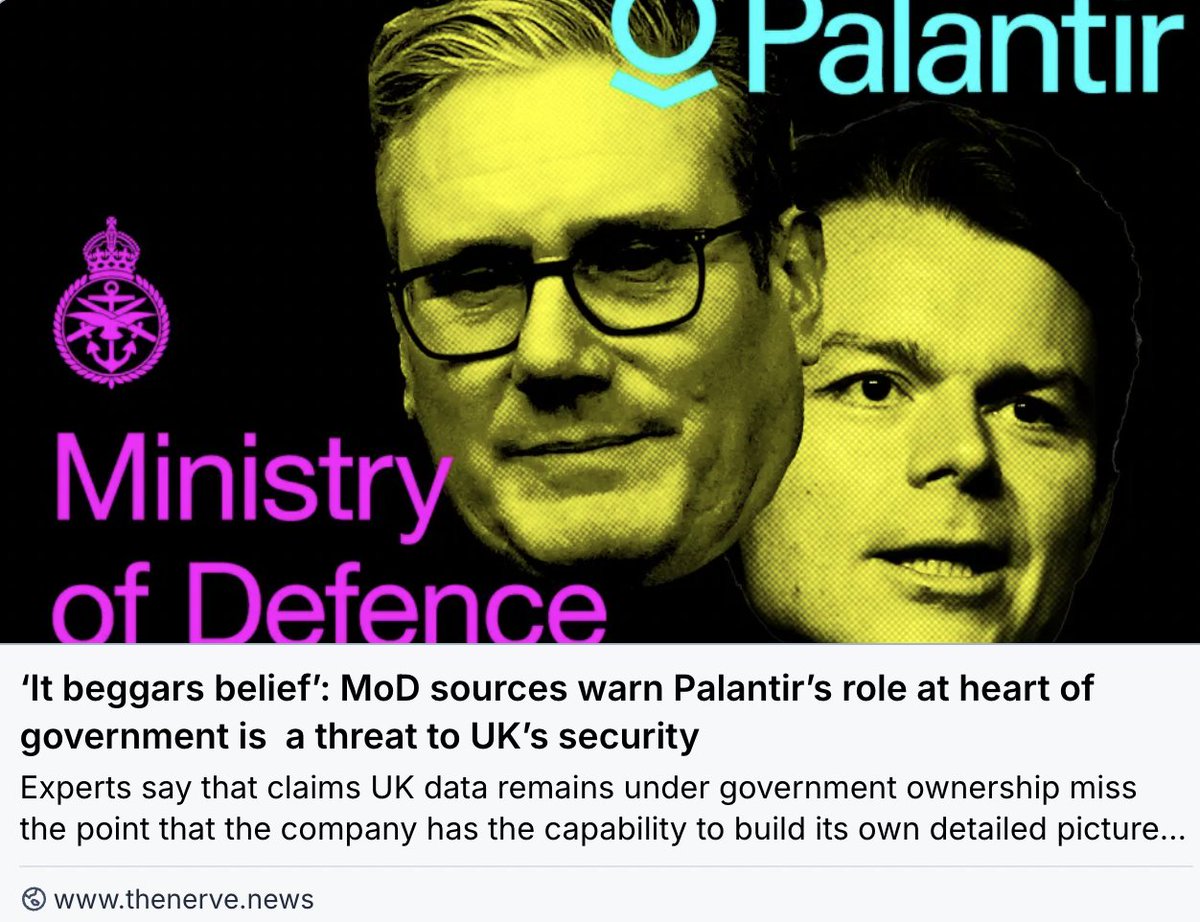
Two senior whistleblowers from the UK Ministry of Defence (MOD) with direct inside knowledge of Palantir's data analytics systems have come forward this week, sparking a massive online firestorm. In statements shared widely on X (formerly Twitter), they accuse UK government ministers of being completely ignorant about the severe national security vulnerabilities posed by Palantir's technology, which is deeply integrated into MOD operations for data processing, surveillance, and decision-making. Posts detailing these revelations have racked up thousands of likes and retweets, propelling "MOD whistleblowers Palantir systems" to trending status as users debate the implications for UK defense and privacy.
The trend exploded today due to the fresh timing of these whistleblower disclosures, coinciding with ongoing parliamentary scrutiny of defense contracts and Palantir's expanding role in UK public sector tech. Palantir, the US-based firm known for its AI-driven platforms used in military and intelligence applications, has faced criticism for its opaque algorithms and potential backdoor risks. The whistleblowers claim ministers have not been briefed on specific flaws—like unpatched vulnerabilities or over-reliance on proprietary US-controlled software—that could expose sensitive UK military data to foreign exploitation. This comes amid reports of Palantir securing multi-million-pound MOD deals, amplifying fears of compromised sovereignty in an era of heightened geopolitical tensions.
Common Perspectives
Alarm Over Ministerial Ignorance and Security Blind Spots
Many online voices, including the most-liked posts (over 5,900 likes), express outrage that top UK ministers remain unaware of these "grave" risks, viewing it as a catastrophic failure of oversight. Supporters of this view argue it underscores deeper systemic issues in how defense tech contracts are approved, potentially leaving the nation exposed to cyber threats from state actors.
Praise for SNP's NHS Stance as a Model of Caution
A vocal segment celebrates the Scottish National Party (SNP) and Scottish Government's decision to block Palantir from accessing NHS data, positioning it as prescient foresight. With posts gaining traction (e.g., 85+ likes), this perspective frames Scotland's rejection as a protective win against the same risks now highlighted by the MOD whistleblowers, fueling calls for wider UK public sector bans.
Defense of Palantir as Essential for Modern Warfare
Pro-Palantir commenters highlight the company's track record in high-stakes operations, like Ukraine aid analytics, arguing the whistleblowers exaggerate risks while ignoring how the tech enhances UK capabilities against rivals like Russia or China. They see the disclosures as politically motivated leaks that could undermine vital defense tools.
Calls for Immediate Contract Reviews and Transparency
A broad consensus demands urgent MOD audits and ministerial briefings, with users pointing to the whistleblowers' insider status as credible grounds for action. This view emphasizes accountability, urging Parliament to investigate Palantir's contracts without scrapping them outright.
Geopolitical Concerns Over US Tech Dependency
Some frame the issue as a sovereignty crisis, warning that reliance on American firms like Palantir gives the US undue influence over UK security decisions. This perspective ties into broader "tech decoupling" debates, suggesting the whistleblowers' claims reveal uncomfortable truths about post-Brexit vulnerabilities.
A Different View
While the spotlight is on immediate security risks and ministerial lapses, a less-discussed angle is the whistleblowers' timing and anonymity: their emergence aligns precisely with Palantir's recent push for NHS expansion south of the border, following Scotland's rebuff. This raises questions about whether the disclosures are not just alarms on tech flaws, but a strategic insider pushback against commercial overreach—potentially whistleblowers leveraging their positions to influence policy and procurement in a high-stakes corporate-government tug-of-war, where exposing "ignorance" serves as leverage for rivals or reforms rather than pure public interest.
Conclusion
The MOD whistleblowers' revelations have ignited a national conversation on the double-edged sword of cutting-edge defense tech, thrusting Palantir's UK footprint into the headlines. As debates rage from security hawks to devolution advocates, the coming days could see parliamentary inquiries reshape government contracts—underscoring how insider voices can swiftly alter the trajectory of national policy.
Sources and discussion
These public posts were collected while researching this story. They provide context and reactions, but may not independently verify every claim.
View the original topic on XCarole Cadwalladr
@carolecadwalla
NEW: Two senior MOD whistleblowers with inside knowledge of Palantir's systems have come forward to @thenerve_news to say government ministers are ignorant of the grave national security risks the technology poses. Hugely important by @CharlieNotOld
Mar 15, 20265.9K likes3.6K repostsDavid Francis
@beith123
Two senior MOD Whistleblowers with inside knowledge of Palantir's systems have come forward to @thenerve_news to say UK MINISTERS are ignorant of GRAVE NATIONAL SECURITY RISKS their technology poses. THANK CHRIST the SNP SCOTGOVT REFUSED to let Palantir anywhere near OUR NHS
Mar 15, 202685 likes48 reposts