

Elon Musk Ignites Debate with Universal High Income Proposal to Counter AI Job Losses
• From trending topic: Elon Musk proposes Universal High Income to address AI-driven unemployment
Summary
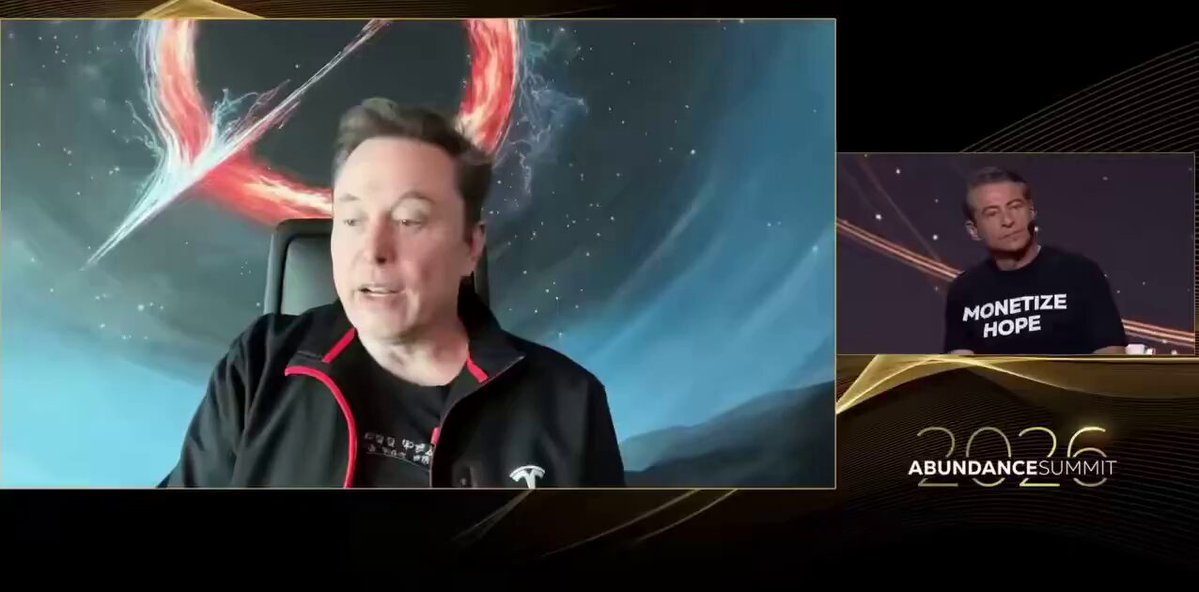
Elon Musk has reignited national conversation on X (formerly Twitter) by explicitly endorsing "Universal High Income" (UHI) as the optimal response to unemployment triggered by AI and robotics advancements. In recent posts circulating widely today, Musk stated that UHI—delivered via no-strings-attached checks from the Federal government—addresses job displacement while AI boosts production of goods and services enough to avoid inflation from expanded money supply. This fresh articulation, including Musk's claim that "Universal HIGH INCOME via checks issued by the Federal government is the best way to deal with unemployment caused by AI," has propelled the topic to trend status, amassing thousands of interactions. The surge stems from Musk's timely comments amid accelerating AI deployments by his own companies like Tesla and xAI, where automation is visibly eliminating traditional roles. Discussions exploded with reactions questioning economic feasibility, societal impacts, and alternatives like private-sector versions, making UHI the focal point of today's tech-policy discourse in the USA.
Common Perspectives
Economic Feasibility and Inflation Fears
Many users argue that flooding the economy with universal payments, even if termed "high income," would inevitably spark rampant inflation unless paired with global economic collapse and strict price controls. They point to past government programs like COVID-era unemployment insurance, which saw massive fraud losses estimated at $100-135 billion, warning of similar pitfalls in a UHI rollout.
Loss of Purpose and Motivation
Critics contend that UHI, akin to basic income schemes, undermines human drive by removing the meaning derived from work. Observations of individuals reliant on government aid are cited as evidence that free money fails to replicate the fulfillment of employment, potentially leading to widespread societal malaise.
Practical Necessity in an AI Abundance Era
Supporters view UHI as an urgent survival strategy, given AI's infinite scalability without needs like salaries or breaks. They emphasize that AI-driven abundance in goods and services could outpace monetary expansion, positioning UHI not as charity but as essential for maintaining consumer economies as jobs vanish permanently.
Political and Implementation Skepticism
Doubts center on government execution, with some highlighting alternative spending priorities like foreign aid over domestic support, and others questioning if working individuals would receive checks atop salaries. Fraud risks and slow federal bureaucracy are flagged as barriers, alongside satirical jabs at definitional absurdities like "universal high income" inherently diluting to basic levels.
Private-Sector Alternatives
Innovators propose bypassing government via company-led "Abundance Clubs" at firms like Tesla or xAI, where voluntary participation ties UHI to aligned visions. Musk himself hinted at a forthcoming private UBI product from Tesla, suggesting it could scale into UHI by incorporating public funds.
A Different View
Rather than pitting government checks against private initiatives, UHI could evolve into a hybrid "reputation economy" where AI tracks individual contributions—creative, communal, or innovative—beyond traditional labor, doling out income based on societal value algorithms. This sidesteps inflation by tying payouts to verified impact (e.g., open-source AI improvements or local volunteering), turning unemployment into a launchpad for human-AI symbiosis that Musk's vision overlooks, potentially fostering purpose through gamified abundance.
Conclusion
Musk's bold UHI endorsement has crystallized fears and hopes around AI's workforce upheaval, sparking a vital, polarized dialogue on X that's reshaping perceptions of post-work America. As automation accelerates, these conversations underscore the urgency for innovative policies blending public support with private ingenuity to navigate the coming abundance.
Sources and discussion
These public posts were collected while researching this story. They provide context and reactions, but may not independently verify every claim.
View the original topic on XThe Crypto Times
@CryptoTimes_io
🚨NEW: Elon Musk backs universal high income as the solution to AI-driven unemployment. Says AI & robotics will massively boost goods/services output, preventing inflation despite increased money supply.
Apr 17, 20261 likes1 repostsMCO Global
@moretradingonl
🤖 Elon Musk: "Universal high income through checks issued by the Federal government is the best way to deal with unemployment caused by AI." Musk made his position clear today: as AI and automation eliminate jobs, the best response is direct government checks. He argues
Apr 17, 20261 likes1 repostsQuantPipPilot
@QuantPipPilot
@elonmusk Universal HIGH INCOME via checks issued by the Federal government is the best way to deal with unemployment caused by AI. - no strings attached.
Apr 17, 2026R2D2
@R2D2zen
Universal HIGH INCOME via checks issued by the Federal government is the best way to deal with unemployment caused by AI- Elon Ok, what will happen with OnlyFans?
Apr 17, 202623 likesel Sid
@RevSid
@elonmusk @AndrewYang There is no such thing as UNIVERSAL HIGH income. By definition once an income becomes universal it will no longer be high. Maybe you’re high? This is Econ 101 which trumps 😉 Elon 101z
Apr 17, 2026Y̞͉̘̖̮ọ̭̬̱̲͎g̹͓̙-͍͖̬̜S̼̗̮o̗̼͓̺͔̳th̭̟ͅo͚t͙h̼
@IsTheKeyAndGate
@elonmusk Universal high income? Trump and his government would rather spend a billion dollars a day murdering children in the Middle East.
Apr 17, 20261 likes