

Russia Shares Satellite Imagery and Drone Tech with Iran to Target US Forces: WSJ Report Sparks Global Alarm
• From trending topic: Russia Sharing Satellite Imagery and Drone Technology with Iran
Summary
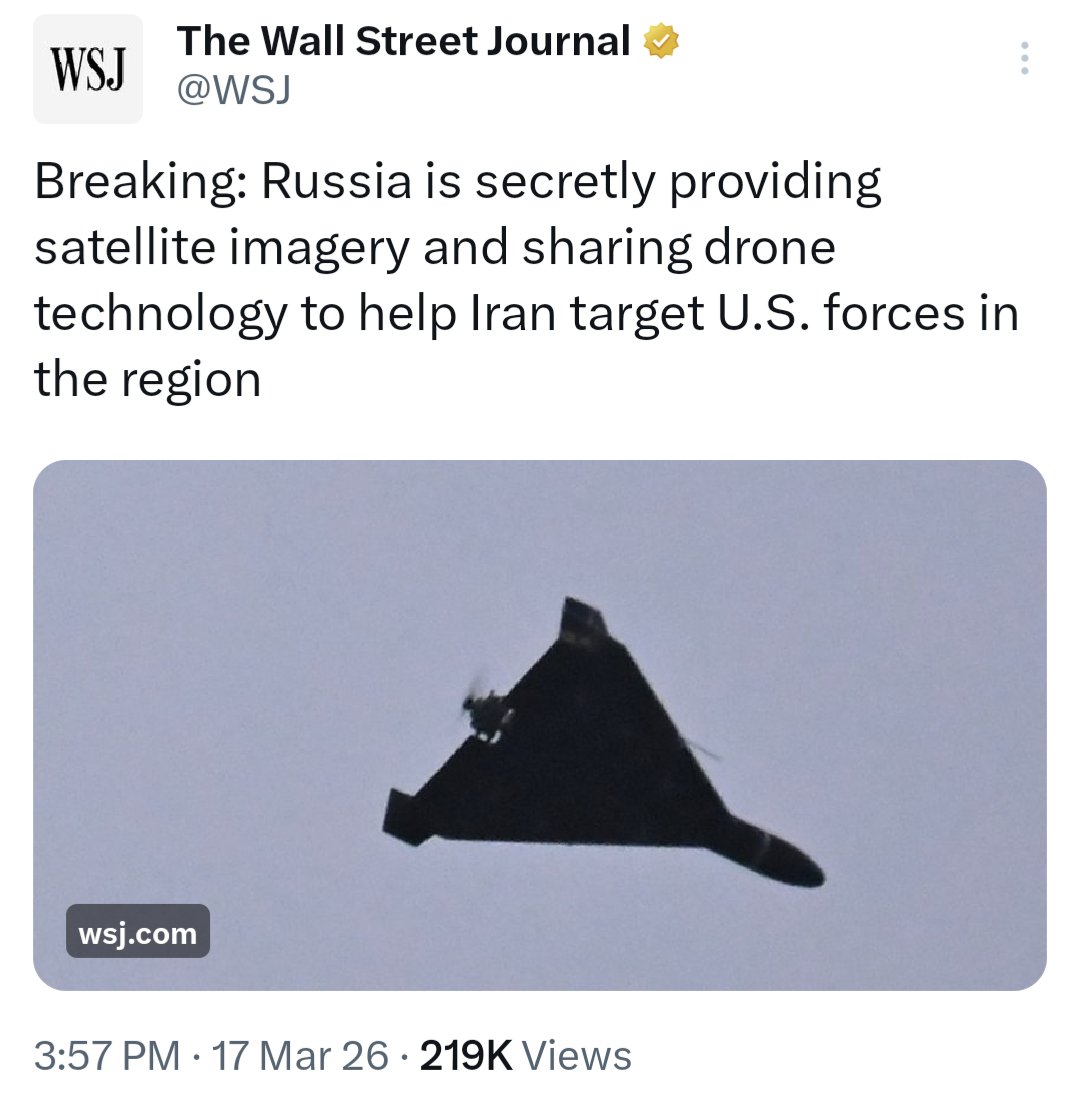
A fresh Wall Street Journal report, published on Tuesday, has ignited widespread online buzz after revealing that Russia is expanding its intelligence sharing and military cooperation with Iran by providing advanced satellite imagery and improved drone technology. According to sources familiar with the matter cited in the WSJ article, this assistance is specifically aimed at aiding Tehran's efforts to target U.S. forces in the region. The disclosure has exploded across X (formerly Twitter), with posts amassing hundreds of likes and shares under searches like "Russia sharing satellite imagery drone technology Iran," turning it into a top trending topic.
This isn't abstract geopolitics—it's a timely escalation tied directly to ongoing regional tensions, where Iran-backed groups have intensified attacks on U.S. positions amid broader conflicts involving Israel and proxy forces. The report highlights Moscow's role in bolstering Tehran's capabilities, including real-time satellite data for precision strikes and enhancements to drone systems already in use against American assets. Trending spikes, with the top post garnering over 570 likes, underscore public shock at the deepening Russia-Iran axis, especially as it positions the partnership against U.S. and Israeli military interests. The timing aligns with recent U.S. military engagements in the Middle East, amplifying fears of a broader proxy war fueled by Russian tech transfers.
Common Perspectives
Escalation Threatening Global Stability
Many view this as a dangerous step-up in hostilities, with users calling it a "chilling" development that "threatens global stability" and "reshapes modern warfare." They argue it directly empowers Iran to hit U.S. forces more effectively, risking wider conflict.
Proof of Anti-US Axis Between Russia and Iran
A prevalent take frames it as evidence of a brazen Russia-Iran alliance against America, with posts emphasizing Moscow's "secret" aid to help Tehran combat "U.S. and Israeli military might." This perspective sees it as Putin openly challenging Washington.
Political Finger-Pointing at US Leadership
Some posts tie it to domestic U.S. politics, blaming figures like Trump or Congress for enabling the situation, with claims like "you did vote for the war" and accusations that leaders are "scared of Vladimir Putin" or even "serving" him, linking it to American casualties.
Defense of Iran as Sovereign Victim
A counter-narrative portrays Iran as a sovereign nation defending against "illegal wars" by America and "apartheid Israel," celebrating Russia's support as "proud" assistance from allies like Russia and China against aggressors.
Confirmation of Long-Standing Intelligence Ties
Several reactions treat the WSJ report as validation of expanding military ties, quoting it verbatim to stress Russia's role in keeping Iran "in the fight," viewing it as a strategic necessity rather than a surprise.
A Different View
While most focus on immediate military risks, consider this angle: Russia's tech-sharing could inadvertently accelerate a global drone arms race, forcing the U.S. and allies to innovate faster in counter-drone defenses and satellite jamming. Historically, such transfers—like Soviet aid to Arab states in past conflicts—have boomeranged, spurring Western tech leaps (e.g., advanced EW systems in the Gulf Wars). Iran might gain short-term edges, but this could unify NATO-like coalitions in the Middle East, sharing anti-drone tech with Israel and Gulf states, ultimately eroding Russia's and Iran's long-term advantages through collaborative innovation.
Conclusion
The WSJ's bombshell on Russia's satellite and drone aid to Iran has crystallized online debates, exposing fault lines from security fears to ideological divides. As tensions simmer in the region, this development signals not just bilateral ties strengthening, but a pivotal shift in how great powers wield technology in proxy battles—warranting close watch on U.S. responses and potential ripples worldwide.
Sources and discussion
These public posts were collected while researching this story. They provide context and reactions, but may not independently verify every claim.
View the original topic on XPolymarket
@Polymarket
BREAKING: Russia reportedly sharing satellite imagery and drone technology with Iran.
Mar 17, 2026570 likes48 repostsFranz-Stefan Gady
@HoansSolo
“Russia has been expanding its intelligence sharing and military cooperation with Iran, providing satellite imagery and improved drone technology to aid Tehran’s targeting of U.S. forces in the region, people familiar with the matter said. … The technology provided includes
Mar 17, 202667 likes20 repostsCatherine Rampell
@crampell
Russia has been expanding its intelligence sharing and military cooperation with Iran, providing satellite imagery and improved drone technology to aid Tehran’s targeting of U.S. forces in the region, people familiar with the matter said via @WSJ
Mar 17, 202643 likes20 repostsFranz-Stefan Gady
@HoansSolo
Russia Is Sharing Satellite Imagery and Drone Technology With Iran
Mar 17, 202617 likes5 repostsEnd Time Headlines
@EndTimeHeadline
🚨 A chilling new report has confirmed that Russia is now actively sharing advanced satellite imagery and sophisticated drone technology with Iran. This isn't just a "partnership"—it’s a dangerous escalation that threatens global stability and reshapes the landscape of modern
Mar 17, 20263 likes1 repostsFrank Amari
@FrankAmari2
@WhiteHouse @POTUS Breaking: Russia is secretly providing satellite imagery and sharing drone technology to help Iran target U.S. forces in the region
Mar 17, 20263 likes1 reposts