

Ramaphosa Launches Phase 3 of Government-Business Partnership on Growth and Jobs
• From trending topic: Ramaphosa Launches Phase 3 of Government-Business Partnership for Growth and Jobs
Summary
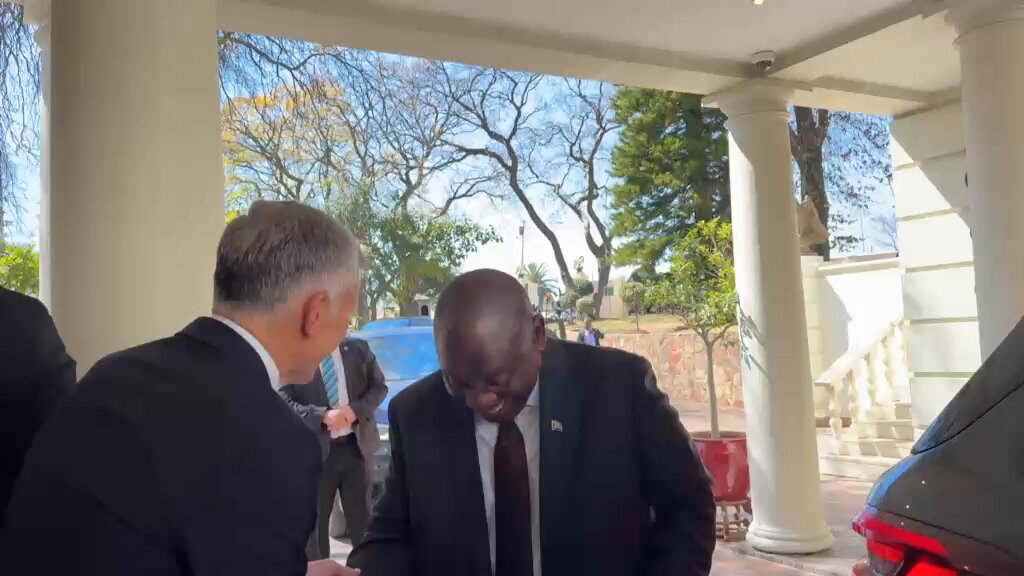
President Cyril Ramaphosa launched Phase 3 of South Africa’s Government-Business Partnership, convening officials and corporate leaders to advance economic reforms, strengthen investment and push for growth above 3 percent alongside job creation. The event marked the start of the next stage of structured collaboration between the state and business. Accounts from the gathering described Ramaphosa arriving and later addressing attendees, stressing that economic recovery must produce meaningful improvements in the lives of South Africans and that reforms should be judged by that standard. Circulating discussion of the launch included references to ambitions of 3 percent growth and a million jobs, though those figures appear in social-media summaries rather than as independently confirmed official targets from the event itself. The partnership is now in its third phase, indicating both an attempt at continuity and the unfinished nature of earlier work on the same problems of low growth and unemployment.
Common Perspectives
Structured collaboration as the practical option
Government supporters and many organized-business voices treat the partnership as a necessary acknowledgment that the state cannot deliver faster growth alone. Pairing policy tools with private capital and operational know-how looks like common sense after years of weak performance. The appeal is its pragmatism. The assumption is that interests can be aligned and that dialogue will produce implementation. The trade-off is that closed coordination can reduce public and parliamentary scrutiny.
Phase 3 as evidence that earlier phases fell short
Opposition figures, some independent analysts and a large part of the public see another launch as confirmation that previous iterations did not achieve enough. This reading resonates because South Africans have heard similar announcements before. It assumes the same political and capacity constraints will persist. The corresponding risk is writing off any incremental changes that might actually be present this time.
Growth without built-in inclusion
Unions and social-justice groups typically argue that a government-business forum tilts toward corporate priorities. Jobs and higher growth matter, they say, but the quality, location and distribution of those jobs, plus worker protections, cannot be left as an afterthought. The view is strongest where inequality is most visible. It assumes business will not deliver broader gains without pressure, and it carries the risk that extra conditions could reduce the investment the partnership is trying to attract.
Ceremony versus operational unblocking
A more focused investor and economist perspective welcomes the intent but treats the launch itself as secondary. What counts is whether energy supply, logistics, crime and regulatory delays actually improve. This stance appeals to those who have sat through earlier engagements. Its assumption is that the binding constraints are operational, not a shortage of talking shops. It can underplay the political coalitions still required to force those operational shifts.
A Different View
The conversation stays mostly at the level of national growth rates and headline job numbers. A less examined dynamic is the incentive to participate. Large firms gain a formal channel to government that can be valuable for access and predictability even if the broader economy barely moves. Government gains a visible moment of action. Smaller firms and informal operators, who account for much employment, are rarely in the room. Phase 3 may therefore formalize influence for those already influential while leaving many of the economy’s everyday frictions untouched.
Conclusion
The test in the coming period is whether the partnership produces published, time-bound actions and whether investment or reform steps follow, rather than another cycle of meetings. Ramaphosa’s stated standard—that lives must improve—is the one most South Africans will apply.
Sources and discussion
These public posts were collected while researching this story. They provide context and reactions, but may not independently verify every claim.
View the original topic on XThe Presidency 🇿🇦
@PresidencyZA
President @CyrilRamaphosa arrives for the launch of Phase 3 of the Government-Business Partnership. The launch brings Government and business together to advance the next phase of economic reforms, strengthen investment and accelerate growth and job creation. Phase 3 will
Aug 20, 2026333 likes47 repostsNews24 🇿🇦
@News24
Government-Business Partnership shoots for 1 million jobs, 3% growth
Aug 20, 2026110 likes4 repostsThe Presidency 🇿🇦
@PresidencyZA
President @CyrilRamaphosa addresses the launch of Phase 3 of the Government-Business Partnership, emphasising the need to ensure that economic recovery translates into meaningful improvements in the lives of South Africans. The President says the true measure of reform is not
Aug 20, 202630 likes7 reposts