

North Korea Pledges Massive Nuclear Buildup at Key Party Congress Amid Warnings of South Korea Collapse
• From trending topic: North Korea Pledges Nuclear Buildup at Party Congress
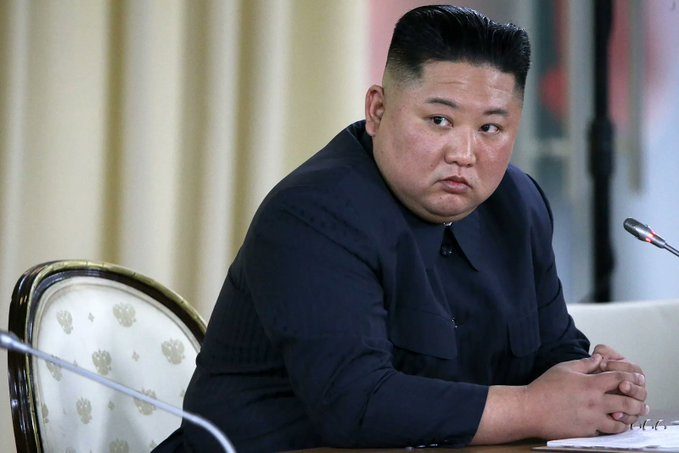
Summary
North Korea's leader Kim Jong Un has made headlines at a major Workers' Party Congress by pledging a significant expansion of the country's nuclear arsenal, announcing a "prospective plan to strengthen our national nuclear force" with a focus on "projects to increase the number of nuclear." This statement comes alongside stark warnings that "the possibility of South Korea's complete collapse cannot be ruled out," escalating tensions on the Korean Peninsula. The remarks, shared widely on X (formerly Twitter) under hashtags like #Kim_Jong_Un, #DPRK, and #nuclear, have propelled the topic to trend status today, amplified by discussions tying the pledge to international law, U.S. relations, and regional stability.
Kim also extended an olive branch, stating that if "the U.S. withdraws its policy of confrontation with North Korea by respecting our country's current status... There is no reason why we cannot get along well with the U.S." This dual message—threat of nuclear growth paired with conditional diplomacy—has ignited global online debate, especially as it invokes UN Charter Article 2(4) prohibitions on attacks and Article 51 self-defense exceptions. The Party Congress timing underscores North Korea's strategic signaling amid ongoing U.S.-South Korea military drills and stalled denuclearization talks, making this the immediate catalyst for the trend as users dissect its implications for potential conflict or negotiation breakthroughs.
Common Perspectives
Escalation Toward Conflict
Many view Kim's nuclear buildup pledge and South Korea collapse warning as direct provocation, heightening risks of war. Online discussions highlight UN Charter limits on attacks, seeing this as North Korea positioning for self-defense claims under Article 51, potentially justifying preemptive actions amid perceived threats from U.S.-allied drills.
Conditional Diplomacy Opportunity
Supporters of engagement point to Kim's U.S. overture as a pragmatic off-ramp, suggesting respect for North Korea's status could lead to "getting along well." This perspective frames the nuclear plan as leverage for talks, not inevitable confrontation, echoing past summits.
Regional Power Shift Signal
Some interpret the statements as North Korea asserting dominance, predicting South Korea's "collapse" through internal pressures or asymmetric warfare, bolstered by nuclear expansion. This view ties into broader Asian geopolitics, including U.S. alliances with Japan and others.
Defiance Against Sanctions
A common take sees the pledge as bold resistance to international isolation, with the Party Congress serving as a domestic rally to unify support for military projects despite economic strains from sanctions.
Global Security Alarm
Users express widespread concern over nuclear proliferation, linking it to UN Security Council dynamics and questioning enforcement amid veto powers, viewing it as a test of international resolve.
A Different View
While most focus on immediate military risks or diplomatic gambits, an overlooked angle is the domestic economic angle: North Korea's nuclear buildup pledge at the Party Congress could be a veiled jobs program. By prioritizing "projects to increase the number of nuclear," Kim may aim to redirect resources into state employment in weapons production, stabilizing the workforce and regime loyalty amid food shortages and isolation—transforming a global threat into a survival tactic for Pyongyang's elite.
Conclusion
Kim Jong Un's Party Congress nuclear vows and South Korea warnings have electrified global discourse, blending brinkmanship with outreach. As perspectives clash from alarm to opportunity, the trend underscores a pivotal moment: will this spur UN action, U.S. policy shifts, or further entrenchment? The world watches closely.
Sources and discussion
These public posts were collected while researching this story. They provide context and reactions, but may not independently verify every claim.
View the original topic on XStanley Cohen
@StanleyCohenLaw
Under international law, attacking another country is prohibited by Article 2(4) of the UN Charter. The only recognized exceptions are individual or collective self-defense against an active/imminent attack (Article 51) or explicit authorization by the UN Security Council.
Feb 25, 20263 likes1 reposts⚡️🌎 World News 🌐⚡️
@ferozwala
#BREAKING #Kim_Jong_Un: The possibility of #South_Korea's complete collapse cannot be ruled out. - @clashreport #DPRK 📌We have a prospective plan to strengthen our national #nuclear_Force & will focus on projects to increase the number of nuclear
Feb 25, 20261 likes1 repostsاني عبد الله (نظيف ابن ابراهيم)عبد الرحمن
@nasifisa979
Everyone calls her "mad," but in Bariga, the "mad" are the only ones telling the truth. 🏚️ Iya Igarashi sits at the roundabout, a fixture of the chaos. Her decree? "Buhari ni o pa ti mo fi un si oju irin..." > She blames the ghost of old regimes for her bed on the railway tracks
Feb 25, 20261 likes1 reposts⚡️🌎 World News 🌐⚡️
@ferozwala
#Kim_Jong_Un: If the U.S. withdraws its policy of confrontation with North Korea by respecting our country's current status... There is no reason why we cannot get along well with the U.S. #DPRK | #USA @clashreport
Feb 25, 20261 likes1 repostsstar
@HiStar26
@isamanyasin @UNICEF @LeoTerrellDOJ @LindseyGrahamSC @marklevinshow @IHRights ⚠️⚠️⚠️URGENT ⚠️⚠️⚠️ 16 YEAR OLD GIRL #Diana_Taherabadi IMMINENT DANGER OF EXECUTION BE HER INNOCENT VOICE🆘️ SILENCE COSTS LIVES @hrw @UNHumanRights @UNICEF @IHRights @amnesty @Europarl_EN @fidh_un @IranIntl @axios @ohchr @volker_turk @MaryLawlorhrds #IranMassacre
Feb 25, 20261 likes1 repostseee
@eee1580525
@ehe1335418 Un 3nwh
Feb 25, 2026