

NHS Extends Martha’s Rule to Every A&E in England
• From trending topic: NHS Rolls Out Martha’s Rule to All England Emergency Departments
Summary
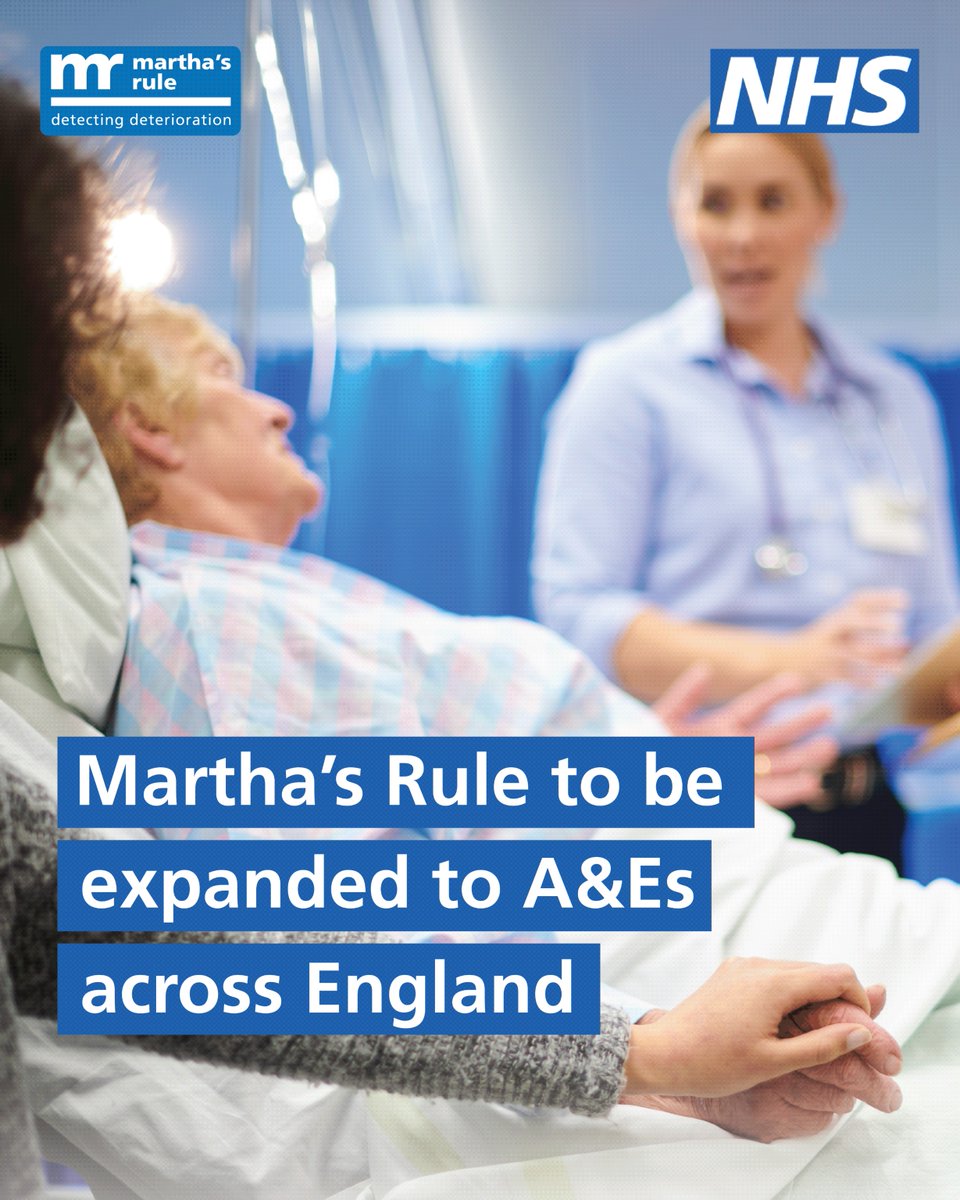
NHS England is expanding Martha’s Rule to all accident and emergency departments, giving patients, families and staff a dedicated number to request an urgent clinical review if they believe a patient’s condition is worsening and those concerns are not being acted on.
The mechanism already exists in many inpatient settings. The latest step brings it into emergency departments, where patients often arrive acutely unwell, stay only a short time, and where missed deterioration can unfold quickly. Relatives and staff who feel they are not being heard can now trigger a second look from a critical care team rather than relying solely on the usual chain of communication.
How the dedicated lines will be staffed around the clock in busy A&Es, and how rapidly a review team can actually attend, have not been spelled out in the initial reports of the rollout.
Common Perspectives
Families and campaigners treat it as overdue protection
People who have sat with a deteriorating relative in A&E often say they noticed the change first and were dismissed. For them the dedicated number is a simple, formal way to force a senior review. The view appeals to anyone who has experienced or feared a medical miss, and it rests on the idea that those closest to the patient are sometimes the most reliable early-warning system. The trade-off is extra calls that may not be clinically urgent, which the system will still have to handle.
Front-line staff see both a tool and extra pressure
Some doctors and nurses welcome a structured route they themselves can use when they feel a concern is being ignored by more senior colleagues. Others worry that another interruptible line in already chaotic emergency departments will pull people away from other patients at the worst moments. This perspective assumes the reviewing team will actually be available without creating new delays, an assumption that has not yet been tested at scale in A&E.
Capacity critics call it a process overlay
Those who focus on NHS staffing, beds and waiting times argue that missed deteriorations more often stem from overcrowding and handover failures than from a simple refusal to listen. A new phone number is easier to announce than extra doctors or shorter waits. The view appeals to people weary of successive patient-safety initiatives that leave the underlying numbers unchanged. It treats the rule as more likely to become a complaints channel than a genuine clinical backstop.
A Different View
The public argument is mostly about empowerment versus workload. Less examined is whether a telephone-triggered critical-care review, designed for wards where patients stay for days, actually fits the emergency department. In A&E the critical window can be minutes, staff rotate constantly, and the clinician who first saw the patient may already have left. A dedicated number could therefore produce reviews that arrive after the useful moment, or it could simply record concerns without changing what happens. The expansion is as much a test of whether a ward safety idea can be bolted onto the most time-pressured part of the hospital as it is a test of listening.
Conclusion
Uptake numbers, response times and any early effect on serious incidents will show whether the lines function as a real safety net in emergency departments or become another layer that documents worry without altering care.
Sources and discussion
These public posts were collected while researching this story. They provide context and reactions, but may not independently verify every claim.
View the original topic on XNHS England
@NHSEngland
Martha’s Rule is to be expanded to A&Es across England. Patients, loved ones and NHS staff will be able to call a dedicated number to request an urgent review if a patient’s condition is getting worse and they’re concerned it’s not being listened to. ➡️
Sep 22, 2026160 likes86 repostsBBC News (UK)
@BBCNews
Martha's Rule rolled out at every A&E department in England
Sep 22, 2026238 likes61 reposts