

Micron's Record-Breaking Earnings Ignite Market Rally as AI Demand Fuels 13% Stock Surge
• From trending topic: Micron ($MU) reports record earnings, stock surges 10-13%
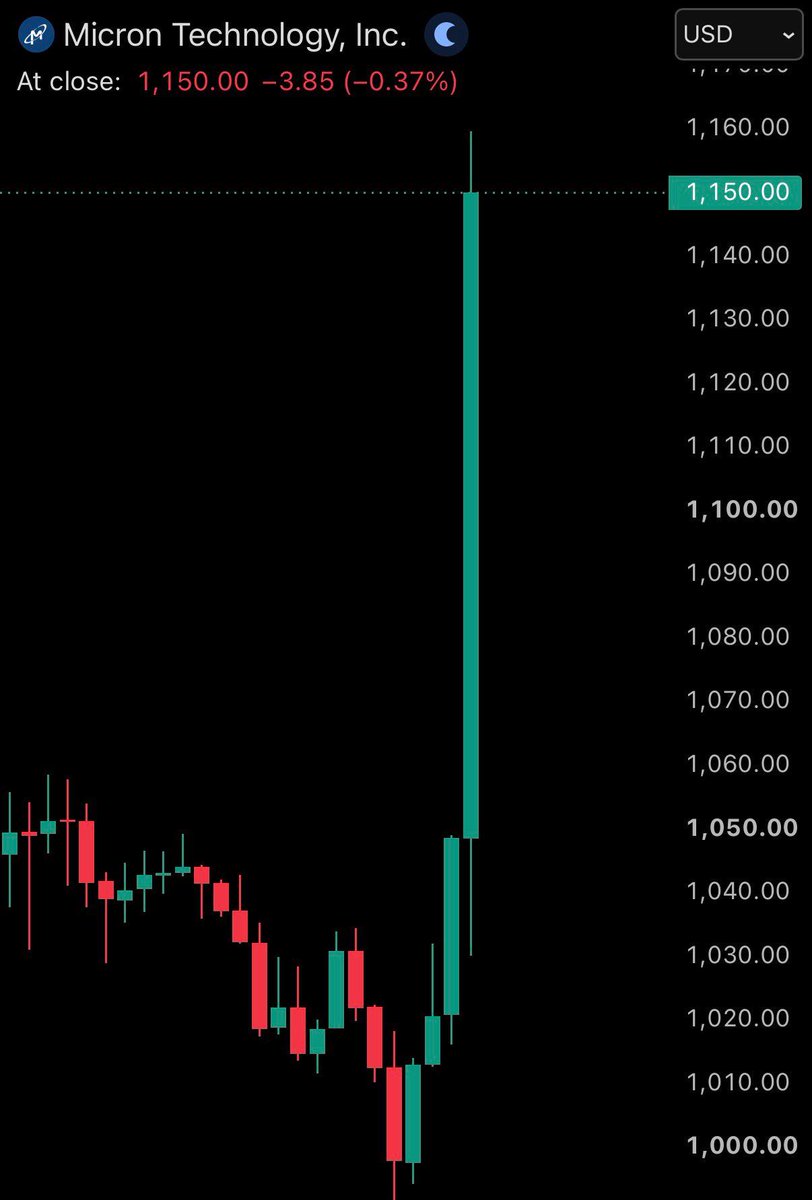
Summary
Micron Technology ($MU) just delivered a blowout earnings report that crushed even the most optimistic "whisper numbers" on Wall Street, triggering an immediate 10-13% surge in after-hours trading. The semiconductor giant's results have added approximately $120 billion to its market capitalization in a single session, with management highlighting 16 new strategic customer agreements that underscore long-term AI infrastructure demand. What makes this trending right now is the stark contrast between Tuesday's broad semiconductor selloff and Wednesday's dramatic rebound—Micron's performance has become the focal point for investors reassessing whether the AI-driven memory chip boom is accelerating rather than cooling, despite the broader Nasdaq 100 closing lower.
Common Perspectives
The "Real Winner of the AI Arms Race"
Market participants are positioning Micron as the unexpected beneficiary of the ongoing artificial intelligence infrastructure buildout. Unlike GPU makers that grabbed early headlines, Micron's memory chips are now being recognized as equally critical to AI training clusters, with the company's 16 strategic agreements suggesting deep entrenchment with hyperscale customers who are locking in supply for multi-year deployments.
Results Over Expectations Narrative
Traders are emphasizing that this move validates the principle that actual financial performance—not just meeting lowered expectations—drives meaningful stock reactions. The fact that Micron exceeded even informal whisper numbers has created a template for how memory stocks might behave when AI demand translates into hard revenue rather than just capacity expansion announcements.
Cautionary Tale of Post-Earnings Reversals
Some observers are drawing parallels to historical patterns where strong earnings reports failed to sustain momentum, noting that a previous record-breaking quarter for a major chip company was "erased in a single session" despite beating estimates. This perspective suggests the after-hours surge could face profit-taking once regular trading resumes, particularly given the broader tech sector weakness.
The Weekend Trading Frustration Angle
Retail investors are highlighting how traditional market closures create information asymmetry, with Micron's earnings dropping during a period when many cannot immediately act on the news. This has sparked discussions about alternative trading mechanisms and 24/7 market structures that could capture semiconductor moves regardless of calendar timing.
A Different View
Rather than viewing Micron's surge as simply another AI beneficiary story, consider this as evidence of a fundamental shift in how memory pricing power is being reallocated. The 16 strategic agreements suggest customers are now competing for allocation rather than negotiating discounts—a reversal from the typical boom-bust cycle where oversupply eventually crushes margins. This could indicate the memory industry is entering a structurally different phase where AI demand creates sustained pricing power instead of the cyclical volatility that has historically defined semiconductor memory markets.
Conclusion
Micron's record earnings have crystallized the market's evolving understanding of AI infrastructure economics, transforming what began as a broad tech selloff into a semiconductor-specific reassessment. The $120 billion market cap addition reflects not just one company's success, but a broader recognition that memory chips may be the bottleneck—and therefore the profit center—in the next phase of artificial intelligence deployment.
Sources and discussion
These public posts were collected while researching this story. They provide context and reactions, but may not independently verify every claim.
View the original topic on XNigam Arora
@TheAroraReport
Micron ($MU) just crushed earnings. ✅ Beat even the whisper numbers. ✅ Stock up about 13% after hours. ✅ Management says it now has 16 strategic customer agreements, strengthening long-term AI demand. The crowd is celebrating. Prudent investors should be asking a different
Jun 24, 20261 likesCoinwaft
@coinwaft
📊 JUST IN: Micron shares, $MU, surges more than 10% after an earnings beat. Since the report, the stock has added $120B in market cap.
Jun 24, 20261 repostsJoel Smith 🇺🇸🇺🇸
@JoelSmith_0
BREAKING: Micron stock, $MU, surges over +10% after reporting stronger than expected earnings. The stock has now added +$120 BILLION in market cap since reporting earnings.
Jun 24, 2026James lucky 🇺🇸
@JamesLucky94958
BREAKING: Micron stock, $MU, surges over +10% after reporting stronger than expected earnings. The stock has now added +$120 BILLION in market cap since reporting earnings.
Jun 24, 2026Amanda FX 🇺🇸
@amandafx_1
BREAKING: Micron stock, $MU, surges over +10% after reporting stronger than expected earnings. The stock has now added +$120 BILLION in market cap since reporting earnings.
Jun 24, 2026Ozan Korman Tarman
@ozanktarman
X BREAKING: Micron stock, $MU, surges over +10% after reporting stronger than expected earnings. The stock has now added +$120 BILLION in market cap since reporting earnings. Frd/client: “Real winner of the arms race” Brassssilll v Scotland Andddd Los Angeles Macro Dinner
Jun 24, 2026