

IEBC Brings Police Into Early Planning for Kenya’s 2027 Vote
• From trending topic: Kenyan Officials Unite for Peaceful 2027 Election Preparations
Summary
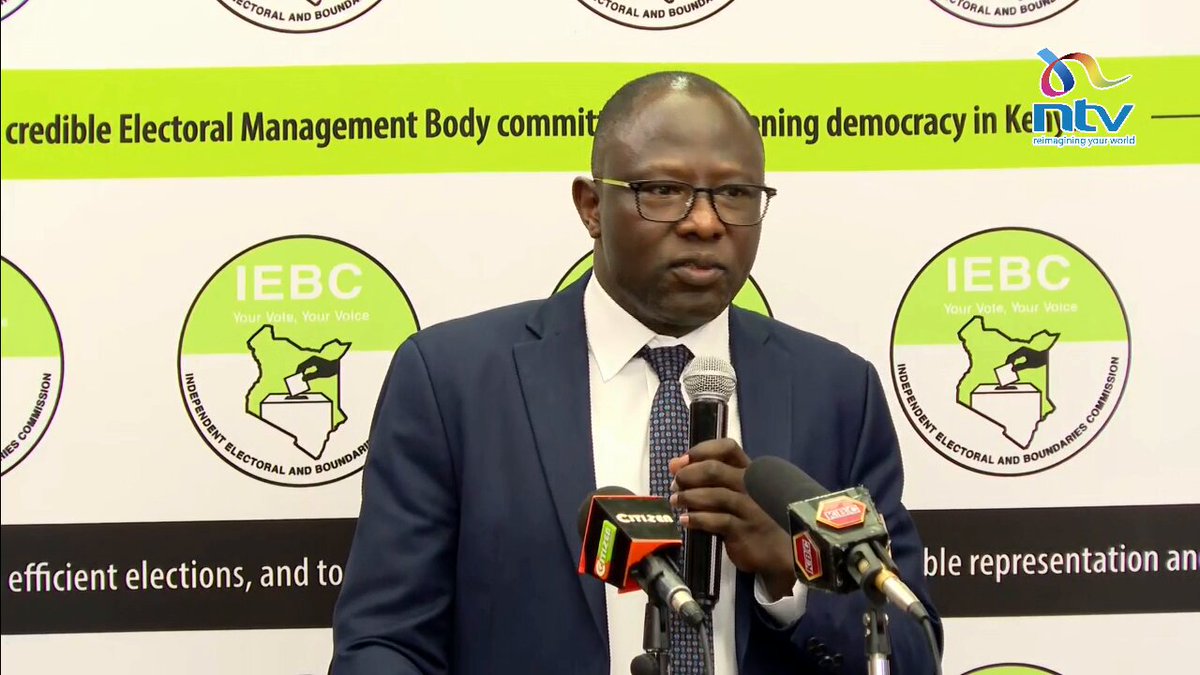
Kenya’s Independent Electoral and Boundaries Commission hosted a roundtable with security stakeholders on preparations for the 2027 general election, and the Inspector General of Police presented a force roadmap. That is the concrete event behind the current discussion: an early, state-to-state huddle rather than a campaign launch or a results dispute.
On X, Erastus Ethekon, speaking as someone who “took this job knowing I will not be alone,” said he believes Kenya has the institutions to deliver a “peaceful, credible, free and fair election.” In a separate post he rejected claims that the IEBC is compromised, calling them “narratives that will lead to certain risks and to distrust our institutions” and urging care about stories “woven around institutions of governance” as 2027 approaches. Those posts are public comments, not a transcript of the roundtable; they show how the commission is already answering a credibility argument in public, not only coordinating behind closed doors.
What is confirmed in the available reporting is the meeting and the police presentation. What is not yet public is the substance of the roadmap, who besides security agencies sat in the room, and whether any of it will be published. Kenya’s next general election is still many months away. The argument over how to prepare for it—and whom to trust while doing so—has started anyway.
Common Perspectives
Early talks as a way to keep the peace
Officials and Kenyans who remember previous cycles of unrest tend to treat any IEBC–police coordination this far out as a plus. The appeal is straightforward: campaign and polling-day violence has been expensive in lives and in the country’s standing. The assumption is that the main missing piece is inter-agency planning. The trade-off is that a security-first frame can recast political competition as a public-order problem and leave the referee’s independence as a secondary issue.
Distrust of the commission is the issue that a roundtable cannot close
People circulating the “compromised IEBC” claims Ethekon addressed—often opposition-leaning voters and some monitors of past petitions—see a police meeting as beside the point until questions about independence and results are answered. The view appeals because it treats legitimacy as something that has to be shown, not announced. Its assumption is that the present commission cannot outrun earlier controversies. The cost is that if distrust becomes a refusal to engage, critics have less chance to shape the actual plan.
A police roadmap is professional—and potentially restrictive
Security professionals and citizens who want visible order read the Inspector General’s presentation as overdue. How officers are deployed, whom they protect, and how they handle crowds has often decided whether an election stays calm. Human-rights advocates and people who have faced heavy policing during campaigns hold a related but harder version of the same point: “election security” can become preemptive limits on assembly and speech long before anyone votes. Both versions treat the force as central; they disagree on whether that is reassuring.
Partisan readings of a state meeting
Incumbent-aligned voices may take the huddle as competence. Rivals may take it as the security apparatus lining up. The assumption on both sides is that the Kenyan state is not a neutral referee. That lens is politically realistic in a competitive system; it also makes genuine coordination harder, because every working session is scored as a signal.
A Different View
The guest list may matter more than the show of unity. An IEBC session with security stakeholders, plus a police roadmap, defines a “peaceful” election first as a problem of force. Issues that have repeatedly put Kenya in court after polling day—register integrity, results transmission, party conduct, the commission’s own internal fights—are easier to leave off that agenda. Ethekon’s warning about “narratives” of compromise is also an early move in the information space: it treats public doubt as a risk to be guarded against. A neglected question is whether that posture reassures undecided Kenyans or confirms to skeptics that the commission sees criticism as a threat rather than a demand for evidence they would actually accept.
Conclusion
Watch whether the police roadmap becomes a public document, whether parties and observation groups are brought into later sessions, and whether appeals to trust institutions are paired with steps skeptics would count as proof. The calendar is still open. The fight over who defines a peaceful 2027 election is not.
Sources and discussion
These public posts were collected while researching this story. They provide context and reactions, but may not independently verify every claim.
View the original topic on XNTV Kenya
@ntvkenya
Erastus Ethekon: I took this job knowing I will not be alone... I believe we have the institutions that will ensure we deliver a peaceful, credible, free and fair election in our Republic.
Sep 2, 2026384 likes42 repostsNTV Kenya
@ntvkenya
Erastus Ethekon on claims of IEBC being compromised: These are narratives that will lead to certain risks and to distrust our institutions. As we move towards 2027, we need to be careful about these narratives that have been woven around institutions of governance...We will guard
Sep 2, 202677 likes18 reposts