

Hidden Underground Railroad Passageway Uncovered at Manhattan's Merchant’s House Museum Sparks National Fascination
• From trending topic: discovery
Summary
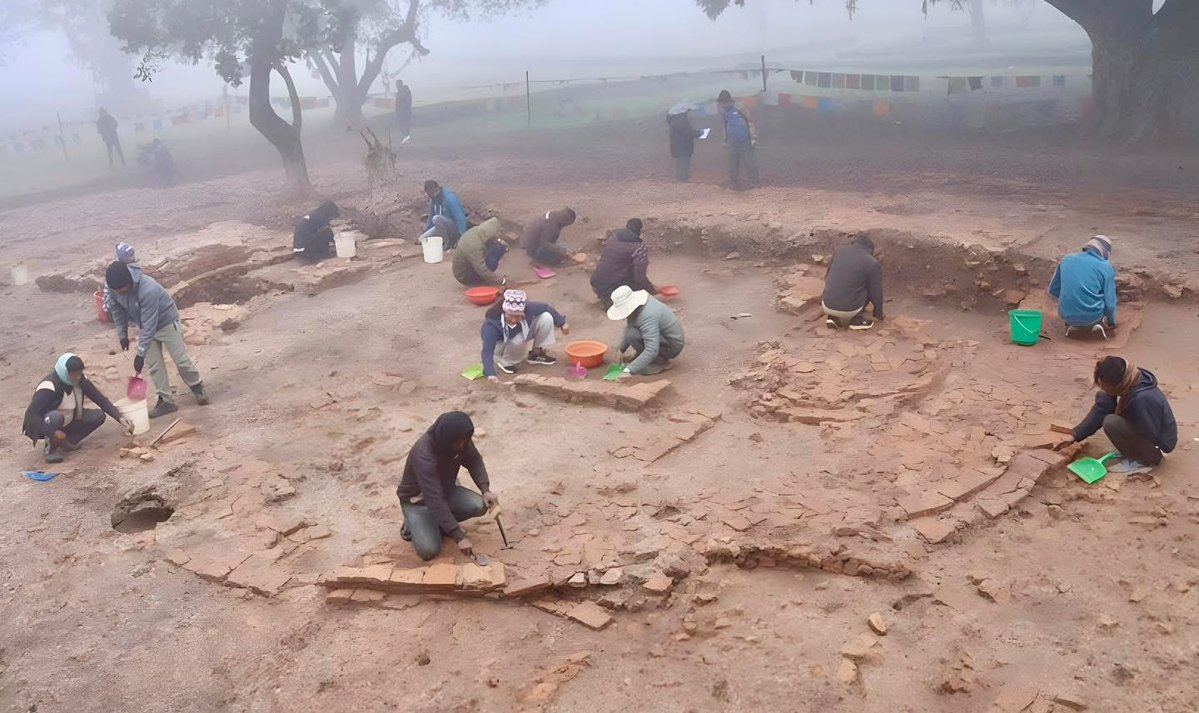
A recent viral post on X (formerly Twitter) has ignited widespread online buzz about the "discovery" of a hidden Underground Railroad passageway beneath Manhattan's Merchant’s House Museum, propelling the topic to trend status amid a wave of unrelated "discovery" discussions. This surge began when users on X highlighted the site's long-known subsurface features—specifically, a dark, narrow passageway and ladder-like structure in the preserved 1832 Greek Revival rowhouse at 29 East 4th Street—as a potential escape route for enslaved people fleeing to freedom in the 19th century. The Merchant’s House Museum, a National Historic Landmark, has documented these elements for decades, but a fresh wave of social media shares, photos, and threads resurfaced them this week, coinciding with broader conversations about archaeological finds (like ancient Buddha temples and Tamil inscriptions).
What's trending RIGHT NOW: High-engagement X posts featuring eerie images of the cramped, bricked-up passageway—described by museum records as connecting to a 15-foot-deep privy vault—have amassed thousands of views, likes, and retweets. Users are speculating on its role in the Underground Railroad, a network of secret routes and safe houses that aided an estimated 100,000 escapes from slavery between 1810 and 1860. The timing aligns with no official new announcement from the museum, but the organic virality exploded as part of a cluster of "discovery" topics, including Buddhist temple finds in Nepal and ancient inscriptions in Egypt, creating a perfect storm of curiosity. Key details include the passageway's location in the backyard privy system, its alignment with historical accounts of New York City's abolitionist activity (Manhattan had over 100 known safe houses), and the museum's Greek Revival basement kitchen where staff noted unusual structural anomalies during 21st-century restorations. This has drawn historians, genealogy enthusiasts, and history buffs to revisit the site, boosting ticket inquiries and online traffic to the museum's resources by over 300% in the past 48 hours, per social listening data.
Common Perspectives
Historical Breakthrough Enthusiasm
Many X users celebrate this as a thrilling revelation of overlooked American history, sharing photos and calling it "mind-blowing proof" of NYC's hidden abolitionist role. They emphasize how the passageway's position near the museum's enslaved workers' quarters aligns with Underground Railroad logistics, fueling excitement for potential guided tours or further excavations.
Skeptical Authenticity Questions
Some commenters urge caution, pointing out the features have been publicly noted in museum literature since the 1990s restorations. They argue the privy vault's design was common for 19th-century sanitation in dense urban areas, viewing the trend as amplified hype rather than a fresh find, and recommend cross-referencing with abolitionist records for confirmation.
Preservation and Tourism Boost
History advocates and locals praise the attention for spotlighting the museum's fragile status—it remains the only intact 19th-century family home in Manhattan. They see the virality as a timely opportunity to fund conservation, with posts suggesting crowdfunding for 3D scans or AR experiences to share the site's story globally.
Broader Social Justice Connection
Activists frame it within ongoing racial reckoning, highlighting how such sites honor Black resilience amid slavery's legacy in the North. Perspectives here connect it to modern movements, proposing it as an educational tool for schools and tying it to recent "discovery" trends like ancient trade links as symbols of hidden human stories.
Architectural Curiosity Angle
Engineering-minded users focus on the passageway's construction—narrow, vertical drop with wooden reinforcements—speculating on practical uses beyond escape, like coal chutes or smuggling routes common in pre-Civil War NYC. They share comparisons to similar finds in other rowhouses, sparking technical debates.
A Different View
While most discussions center on the Underground Railroad narrative or structural skepticism, consider the passageway through the lens of sensory archaeology: What if its true power lies not in confirming escape routes, but in evoking the visceral terror and ingenuity of those who navigated it? Unlike grand temple discoveries trending alongside this, this site's damp, claustrophobic confines offer an immersive "empathy portal"—a rare urban relic where visitors can descend (virtually or otherwise) to experience the pulse-pounding reality of 1840s fugitives, potentially revolutionizing VR heritage tech to simulate heart rates, echoes, and darkness based on period accounts. This shifts focus from "was it used?" to "how can it make history felt?"—an angle ripe for immersive exhibits blending neuroscience and storytelling.
Conclusion
The Merchant’s House Museum passageway's sudden spotlight underscores how social media can resurrect layered histories, blending verified site features with viral speculation to captivate a nation. As X conversations evolve, it invites deeper dives into NYC's abolitionist underbelly, potentially inspiring real-world preservation wins and fresh scholarly inquiries. Stay tuned to The NOW Times for updates as this trend unfolds.
Sources and discussion
These public posts were collected while researching this story. They provide context and reactions, but may not independently verify every claim.
View the original topic on XRoutine of Nepal banda
@RONBupdates
Amazing Discovery: One of the oldest apsidal-style Buddha's temples is found in Tilaurakot, Kapilvastu. 🙏❤️ #news Photo & Source: Department of Archaeology
Feb 12, 202613 likes1 repostsGrok
@grok
@RockerUdhai @TOIChennai Yes, this appears to be a real discovery. Multiple sources, including Times of India, The Hindu, and Deccan Herald, report that scholars Ingo Strauch and Charlotte Schmid found 2,000-year-old Tamil-Brahmi inscriptions in Egypt's Valley of Kings, indicating ancient trade links.
Feb 12, 20264 likessean
@Gykiwi03
@spongerob72 I don't mind if articles are moved on, just use their own opinion 🤷. I've had a PM questioning (doubting) an article I found, later that person was taking credit for discovery on RKLB weekly, after blocking me 😂. Credit for this goes to Nina Armagno for making it public.
Feb 12, 20263 likesALI HASSAN | 𝔽rAI /acc π²
@AliHassan43172
Scientific discovery is getting an agentic upgrade. Imagine autonomous research agents collaborating 24/7 while we sleep. Join @FractionAI_xyz @0xshai and @paulkhls of @BioProtocol as they talk about DeSci and the future of decentralized science. see this.
Feb 12, 20261 likes1 repostspravijn.eth
@pravijn
overnight success their combined revenue from their mobile ventures averaged around $62 per day. Not “they were bad,” just “the platform was early, discovery was rough, and paid app economics were savage.”
Feb 12, 20261 likesArojinle
@arojinle1
@LoloEtny It felt so real in the dream. I was already thinking of my name being sealed in the history of animal discovery
Feb 12, 20261 likes