

Former CEC Calls Electoral Roll Revision a Scam, Seeks Prosecution of the Commission
• From trending topic: Election Roll Revision Draws Scathing Criticism from Former CEC
Summary
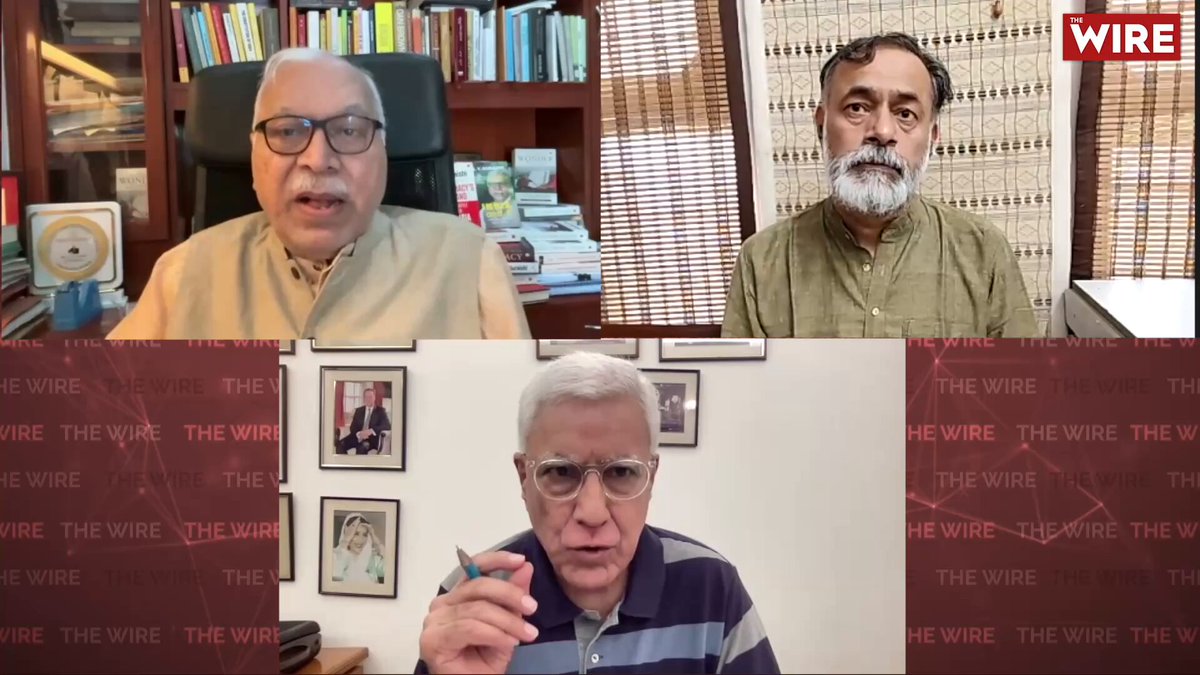
S.Y. Quraishi, a former Chief Election Commissioner of India, has called the Election Commission’s Special Intensive Revision of electoral rolls a scam and said the commission should be criminally prosecuted. The remarks, made in a recent interview and amplified on X, have turned a bureaucratic-sounding list-cleaning exercise into a fight over whether the body that runs Indian elections is still a referee or a participant.
The public record available around the trend is thin on operational detail. What is circulating is Quraishi’s charge itself—quoted in posts as “SIR is a scam and Election Commission should be criminally prosecuted”—and the fact that a former head of the same institution is now urging criminal process against it. Whether SIR is a lawful intensive update of voter lists, a politically timed purge, or a messy mix of both is precisely what the argument is about. Those are contested interpretations, not settled findings.
The collision is consequential because India’s voter roll is the gateway to the franchise. Any large revision can add or drop millions of names. A former CEC attacking the current commission in the language of fraud, rather than error or overreach, raises the temperature: it invites parties to treat the rolls as stolen goods and the commission as a defendant, not an umpire.
Common Perspectives
The revision as a political deletion drive
Opposition parties, civil-liberty groups, and voters who already distrust the present Election Commission tend to hear Quraishi as confirmation, not surprise. Intensive revision, in this view, is a way to knock genuine voters off the list—especially the poor, migrants, and people whose papers are incomplete—under the cover of “cleaning” the rolls. The appeal is pattern recognition: list revisions have long been fought as tools of inclusion or exclusion, depending on who is in power. The assumption is that the commission is no longer independent enough to run such an exercise in good faith. The trade-off is real: treating every deletion as malice can also protect inflated or inaccurate rolls.
The revision as overdue hygiene
Ruling-party supporters and voters who believe Indian rolls are padded with the dead, the duplicated, and non-citizens see SIR as something previous commissions postponed. Democracy, they argue, is distorted if ineligible names vote. Quraishi’s language is dismissed as partisan afterlife from a former official. This view assumes the current process is technically competent and aimed at accuracy, not outcome. Its trade-off is the opposite of the first: a zeal for purity can disenfranchise people who are entitled to vote but cannot produce documents on the state’s timetable.
Criminal charges as a line that should not be crossed
Constitutional lawyers, some retired officials, and voters who prize the Election Commission as an institution may accept that SIR is clumsy or even unfair and still reject prosecution talk. Commissioners are not ordinary bureaucrats; making them criminal targets, in this reading, is how you destroy the last referee. The appeal is institutional memory: India’s EC credibility was built slowly and can be spent quickly. The assumption is that courts, Parliament, and public scrutiny are the right remedies. The trade-off is that “protect the institution” can sound like immunity for people who, if Quraishi is right, have already abused public power.
The soundbite as the real product
A more cynical public, including some journalists and political operators, treats the interview less as evidence about SIR than as a move in a long contest over who gets to define “electoral integrity.” Former commissioners have become commentators; parties boost whichever ex-official fits the week’s narrative. The quote travels because it is absolute. This view appeals to people tired of both “scam” and “cleanup” as moral slogans. Its assumption is that motive and media matter more than the booth-level files. The risk is obvious: if every institutional crisis is only theater, genuine list errors never get a hearing.
A Different View
The national argument is framed as motive—did the commission cheat, or did it finally do its job?—but SIR, like every Indian roll revision, is implemented by local officials working from incomplete civil records, shifting addresses, and uneven documentation. A “scam” story and a “cleanup” story both imply a single national will. What often decides who stays on the list is quieter: whether a booth-level officer finds someone at home, whether a death was registered, whether a migrant can prove residence in time. Quraishi’s call for criminal prosecution, whatever its merits, pulls attention toward Delhi and away from that machinery. If the lists are wrong, the wrongness is likely to be patchy and administrative as well as political. A prosecution drama would not by itself fix that.
Conclusion
What matters next is not another round of quotations but whether the Election Commission answers on process—how names are verified, how deletions are notified, how corrections are made—and whether courts or other former commissioners treat Quraishi’s charge as a legal claim or a political one. The rolls will be judged, in the end, by who can still vote.
Sources and discussion
These public posts were collected while researching this story. They provide context and reactions, but may not independently verify every claim.
View the original topic on XPrashant Bhushan
@pbhushan1
“SIR is a scam and Election Commission should be criminally prosecuted”: SY Qureshi, former CEC via @YouTube
Sep 8, 20263.6K likes1.2K repostsThe Wire
@thewire_in
#TheInterview by @kthaparoffice: SIR is a scam and Election Commission should be criminally prosecuted: @DrSYQuraishi and @_YogendraYadav Watch Now:
Sep 8, 20261.5K likes619 reposts