

Empire State Factory Gauge Slows as Orders and Shipments Weaken
• From trending topic: New York Manufacturing Growth Slows Sharply in September
Summary
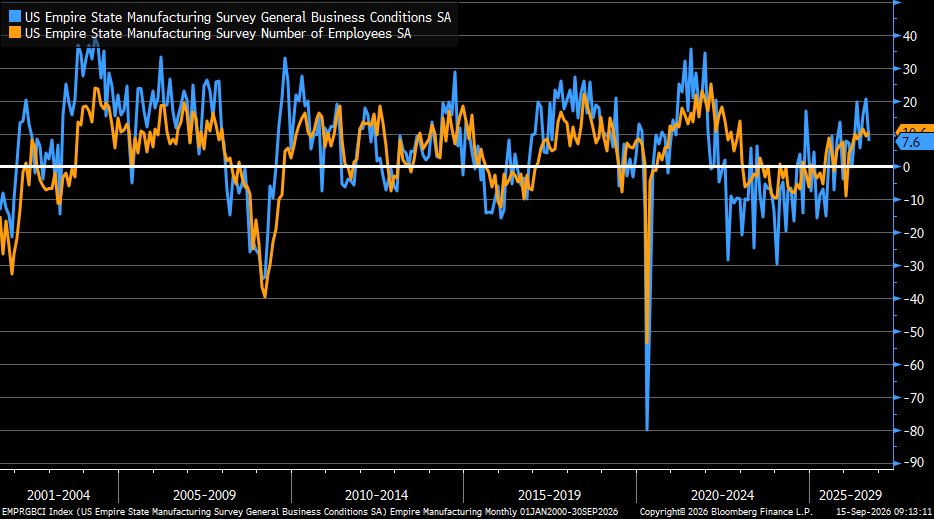
The Empire State Manufacturing Index fell to 7.6 in September from 20.6 previously, below a cited estimate of 15.0. Both Liz Ann Sonders and financial-news site ZeroHedge reported those figures.
Sonders also reported new orders at 2.0 versus 17.3 previously, shipments at -3.2 versus 11.7, prices paid at 63.1 versus 58.6, and employment at 10.6 versus 9.3. These are survey index readings, not percentage changes in output, prices or jobs. The headline remained positive while several components moved in different directions. The following analysis considers what that combination may imply rather than report reactions from unnamed investors or manufacturers.
Common Perspectives
The drop signals weaker momentum
The headline fell by 13 index points. That is a substantial change in the reported gauge, and the lower orders and shipments readings add detail to it. It does not establish that manufacturing output fell by 13%, or that the entire national economy moved in the same way.
Price pressure moved differently from activity
The prices-paid reading increased while the headline and shipments measures fell. That combination is worth watching because weaker activity and lower cost pressure need not arrive together. This single survey cannot establish the direction of broader consumer inflation.
Employment complicates a uniform slowdown story
The employment component rose from 9.3 to 10.6 in Sonders's account. It therefore points in a different direction from orders and shipments. That contrast supports a mixed reading of the survey rather than a claim that every aspect of manufacturing weakened.
A Different View
The most useful information may be the divergence between components. A single headline hides the fact that orders, shipments, prices and employment are not moving together. Comparing later readings and other surveys would help distinguish a temporary mismatch from a more persistent change, without assigning causes that these figures alone cannot establish.
Conclusion
September's reported gauge is weaker but still positive. Further data are needed before treating it as a national turning point.
Sources and discussion
These public posts were collected while researching this story. They provide context and reactions, but may not independently verify every claim.
View the original topic on XLiz Ann Sonders
@LizAnnSonders
September Empire Manufacturing Index fell to 7.6 vs. 15.0 est. & 20.6 prior … new orders down to 2.0 vs. 17.3 prior; shipments down to -3.2 vs. 11.7 prior; prices paid up to 63.1 vs. 58.6 prior; employment up to 10.6 vs. 9.3 prior
Sep 15, 2026131 likes28 repostszerohedge
@zerohedge
NY Empire Manufacturing Index 7.6, Exp. 15.0, Last 20.6
Sep 15, 2026175 likes17 reposts