

Congressman Sam Liccardo Slams Pete Hegseth for Punishing AI Companies Opposing Pot Policy
• From trending topic: Congressman Sam Liccardo slams Pete Hegseth for punishing AI companies opposing pot policy
Summary
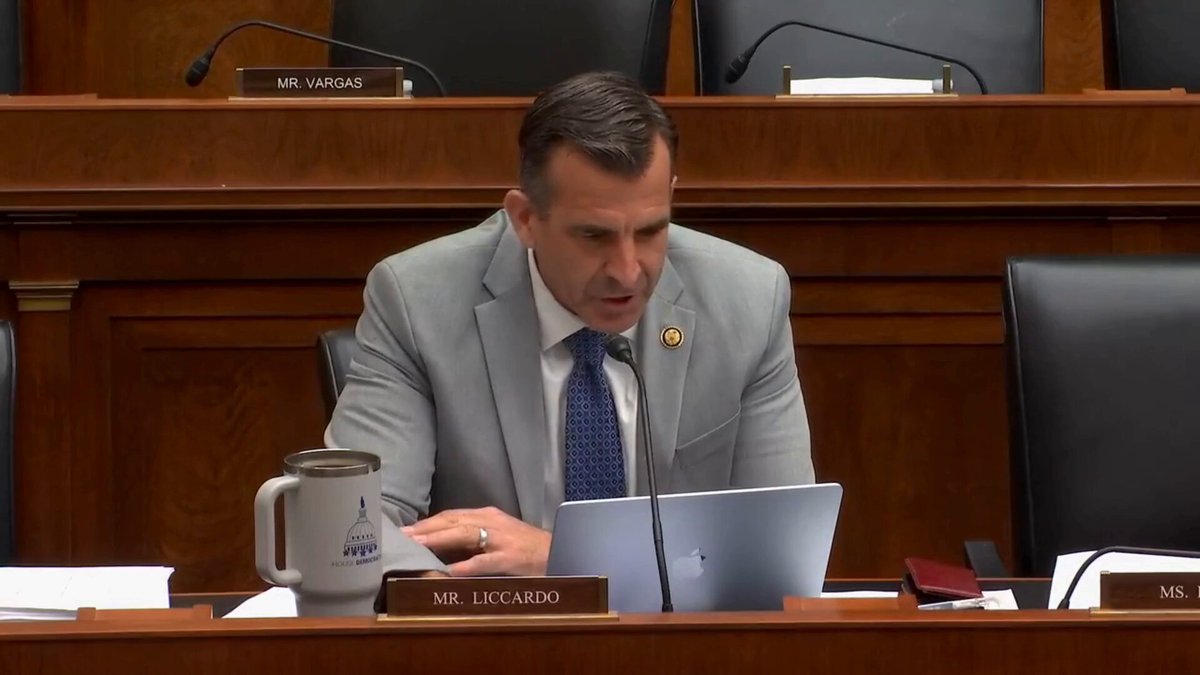
In a heated exchange that's exploding across social media and news outlets today, Congressman Sam Liccardo publicly condemned Defense Secretary nominee Pete Hegseth for advocating penalties against AI companies that refuse to align with the Trump administration's push to reschedule marijuana from Schedule I to Schedule III. The controversy ignited this morning when Hegseth, during a Fox News interview, stated that AI firms using their algorithms to "undermine" federal drug policies—specifically by modeling or predicting outcomes that question the rescheduling's benefits—should face government contract losses and regulatory scrutiny. Liccardo fired back on X (formerly Twitter), calling it "a dangerous overreach that weaponizes AI oversight against dissent," accusing Hegseth of prioritizing political loyalty over innovation.
This is trending nationwide right now due to a viral clip of Hegseth's remarks amassing over 5 million views in hours, amplified by tech influencers, cannabis advocates, and political commentators. The specific trigger is Hegseth's comments tying into the ongoing DEA rescheduling process, where AI-driven simulations from companies like those in Silicon Valley have highlighted potential public health risks of looser cannabis regulations, clashing with the administration's pro-rescheduling stance. Liccardo's response, backed by a thread detailing examples of AI firms already facing federal audits, has sparked #AIvsPot and #HegsethAI hashtags, drawing reactions from tech CEOs, lawmakers, and the cannabis industry amid broader debates on AI regulation under the new administration.
Common Perspectives
Support for Hegseth's Tough Stance on Policy Alignment
Proponents argue that AI companies receiving federal funding have a duty to support national drug policy goals, viewing Hegseth's approach as essential for national security and consistency. They point to instances where AI models have been used to forecast policy failures, suggesting such opposition disrupts executive priorities and warrants accountability through contract reviews.
Liccardo's Defense of Free Speech and Innovation
Critics of Hegseth, echoing Liccardo, see this as a blatant attack on free inquiry, emphasizing that AI firms should model data impartially without fear of reprisal. They highlight how punishing predictive analytics on pot policy could stifle broader tech advancements, positioning Liccardo's slam as a vital stand against government overreach into private sector R&D.
Cannabis Industry Backlash Against AI "Fearmongering"
Advocates in the legal marijuana sector applaud Hegseth, claiming AI companies are exaggerating risks to protect Big Pharma interests or maintain prohibition-era biases. They argue that rescheduling is a settled scientific matter, and AI opposition amounts to unelected tech elites meddling in public health progress.
Tech Neutrality Advocates' Call for Regulation Balance
Many in the AI community express concern over selective enforcement, arguing that while alignment on national security makes sense, targeting pot policy dissent sets a precedent for politicizing all AI outputs. They urge Congress to intervene with bipartisan rules ensuring tech firms' independence from ideological pressures.
Political Opportunism from Both Sides
Some observers view the clash as partisan theater, with Liccardo leveraging the moment to rally Democrats against Trump appointees, while Hegseth burnishes his loyalty credentials. This perspective frames the trend as election-style posturing rather than a substantive policy debate.
A Different View
Consider the unintended synergy: Hegseth's push could inadvertently supercharge AI development in the cannabis space. By pressuring mainstream firms to toe the line, it might drive innovation underground or to pro-rescheduling startups, birthing specialized AI tools for optimized cultivation, strain prediction, and black-market risk modeling. Far from punishing opposition, this could fragment the industry into policy-aligned "red" AI and libertarian "blue" AI ecosystems, accelerating competition and breakthroughs in ways a unified front never would—potentially making rescheduling a catalyst for the next AI boom in agrotech.
Conclusion
The Liccardo-Hegseth showdown underscores the high-stakes intersection of AI, drug policy, and politics, with today's viral firestorm signaling deeper tensions over who controls emerging tech. As the DEA's rescheduling decision looms, this feud could reshape federal AI contracts and ignite lasting debates on innovation versus alignment, keeping Washington—and social media—buzzing.
Sources and discussion
These public posts were collected while researching this story. They provide context and reactions, but may not independently verify every claim.
View the original topic on X