

Adoorable Thursday Is a Habit, Not a Headline
• From trending topic: #AdoorableThursday
Summary
There is no breaking story behind #AdoorableThursday. What appeared in recent posts on X is the weekly ritual itself: people photographing doors and tagging them on a Thursday.
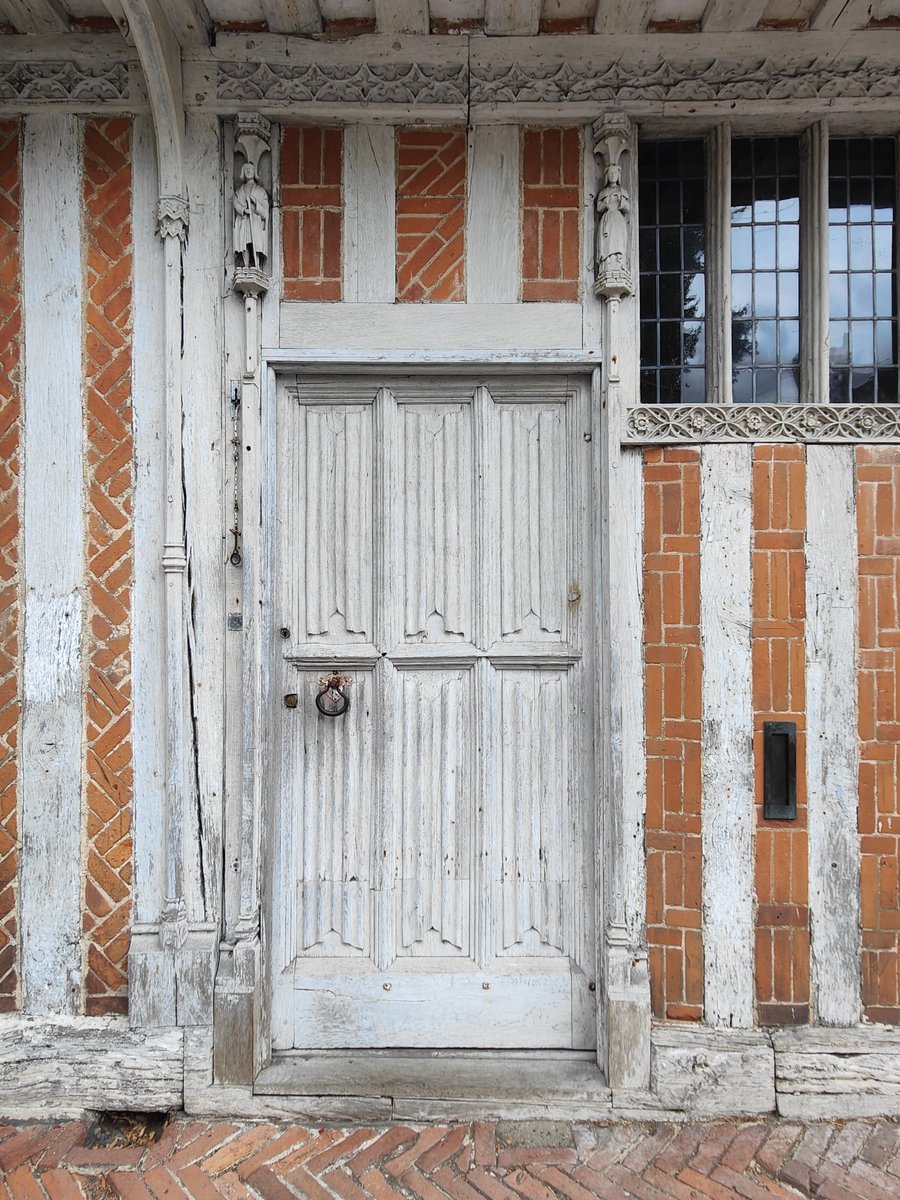
The images in circulation are mostly British and mostly historic or picturesque. One returning poster offered Paycocke’s House in Coggeshall, Essex, and noted a fear of having “fallen off the algorithms” after an absence. Others put up a 15th-century building in Saffron Walden; Pretors House and Bow House in Sherborne, Dorset, the latter described as sitting on land once tied to the abbey and now part of a school; the west-tower doorway of St Mary and St Bartholomew’s Church at Cranborne; St Lawrence’s Church in Morland; Anglesey Abbey in Cambridgeshire; a sea-green beach hut credited to Brighton and then corrected to Hove; and colourful London corners. A smaller set reached further: painted doors in Funchal’s Old Town, a doorway at Reptiland in Riva del Garda, a medieval cellar tagged with stonework as well as doors.
Engagement on the sampled posts was modest, from the low twenties to around 160 likes. The tone was local, punning, and lightly communal — knock-knock jokes, “knockers,” companion tags such as #NoContextDoors and #Thursgate — not the language of a news spike. The honest reading of the material is that a niche photography custom is doing what it does every week, and that the platform still surfaces it enough for a handful of doors to travel.
Common Perspectives
A small, repeatable pleasure
People who post and like these images tend to treat Thursday as an excuse to notice thresholds: church portals, timber houses, beach huts, painted street doors. The appeal is concrete and low-cost. You walk a familiar place, frame a doorway, and join a thread that does not require an argument. The assumption is that shared looking is enough, and that a hashtag can still gather strangers around a subject as ordinary as a door. The trade-off is scale. A returning user already treated invisibility as the likely price of absence, which is a fragile basis for a community.
Heritage, reduced to a facade
Local-history and architecture enthusiasts can read the same feed as a casual inventory of listed and loved buildings — National Trust properties, parish churches, former abbey land, medieval fabric. That view is attractive because it keeps specific places in circulation without a guidebook. It also flattens them. A doorway tagged as adorable is easy to admire and hard to explain: who maintains it, who may enter, what was lost when abbey land became a school, why one Essex house is photographed and the next street is not. Beauty does the selecting.
Hashtag labour, not a news cycle
Another reading, common among people who watch platforms more than buildings, is that #AdoorableThursday is calendar infrastructure. Recurring tags exist to give regular posters a reason to publish and a hope of being found. That is why a user coming back from a break talks about algorithms before architecture. The appeal is practical: habits beat virality if you want to keep sharing. The cost is that “trending” gets confused with “it is Thursday,” and a quiet hobby is mistaken for an event.
Why this, when the feed is full
Readers who come to social media for politics, war, or markets will see a church door in Dorset and ask what it is doing in a news wrap. For them, the hashtag is padding: harmless, optional, and beside the point. That scepticism is coherent if the standard for attention is consequence. It also assumes that only consequence is culture. The posts themselves suggest a different use of the same network — people choosing a subject that will not escalate.
A Different View
The more useful frame is selection, not sweetness. Across the recent posts, “adoorable” almost always means ornate, old, colourful, or in on the joke. Paycocke’s, Cranborne, Anglesey Abbey, and a corrected Hove hut are public-facing surfaces already prepared to be looked at. The Funchal portraits belong to a tourist street-art economy; the Italian reptile-park door is a gag. What the tag does not collect is the ordinary door: the security shutter, the inaccessible entrance, the replacement uPVC on a terrace that will never be tagged. As an unofficial visual record of the built environment, the hashtag is busy and biased. It preserves charm in the timeline and leaves the rest of the street unphotographed.
Conclusion
Nothing in the sampled discussion indicates a new campaign, a controversy, or a sudden surge beyond the weekly custom. What to watch is smaller and more structural: whether these low-engagement architecture threads remain findable on X, and whether the doors that keep appearing are only the ones already designed to please the eye.
Sources and discussion
These public posts were collected while researching this story. They provide context and reactions, but may not independently verify every claim.
View the original topic on XMatt Edwards
@Matedwards7
Door of the Day. Paycockes House, Coggeshall, Essex. I've probably fallen off the algorithms in my absence but if you do see this, I'm now back! #AdoorableThursday
Sep 24, 2026160 likes14 repostsLorraine Inglis
@LorraineInglisD
Colourful corners of London 🚪🩷🖤 #photography #AdoorableThursday #london #NoContextDoors
Sep 17, 2026123 likes11 repostsMargaret Gray
@graysing
#AdoorableThursday Chichester, West Sussex
Sep 17, 202654 likes4 repostsStephen Royle
@Steveontour2
A sea green #Brighton beach hut ( Hove actually ) for #AdoorableThursday @DoorsNo3828 #Doors
Sep 24, 202648 likes1 repostsGretel Le Maître
@GretelleMaitre
Pretors House, Sherborne, Dorset. #AdoorableThursday
Sep 17, 202643 likesGretel Le Maître
@GretelleMaitre
Bow House, Sherborne: bows round the east part of the lands once owned by the Abbey; now a part of the school. #AdoorableThursday
Sep 17, 202640 likes2 reposts