

US Job Numbers Revised Down by Over 1 Million: Massive BLS Adjustment Sparks Recession Fears
• From trending topic: US Job Numbers Revised Down by Over 1 Million Jobs
Summary
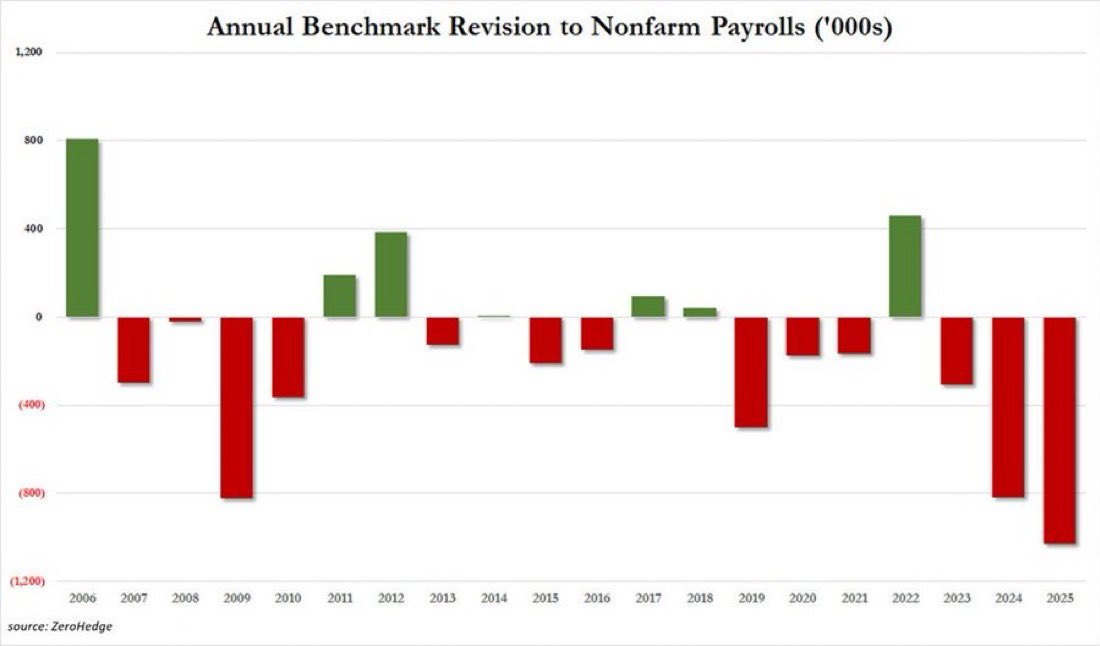
The Bureau of Labor Statistics (BLS) just released its latest annual benchmark revision, slashing US job numbers for 2025 by a staggering -1,029,000 positions—the largest annual downward adjustment in at least 20 years. This revision covers January through December 2025, dropping total nonfarm employment levels significantly (e.g., December's figure from around 159.5 million to 158.5 million jobs). Initial estimates of 584,000 jobs added in 2025 have now been cut to just 181,000, painting a far weaker labor market picture than previously reported.
This bombshell data, dropped this week, has exploded across X (formerly Twitter), trending under "US Job Numbers Revised Down by Over 1 Million Jobs" with posts racking up hundreds of likes and shares. The timing—early 2026 amid a confusing economic backdrop of softening labor indicators yet record stock market highs—has fueled intense online debate. Over three years, revisions total -2,153,000 jobs (-306K in 2023, -818K in 2024, and now -1,029K in 2025), with some tracking back to 2019 showing around -2.5 million jobs erased from official records. Users are calling it "BREAKING" news, questioning if the economy was ever as robust as claimed and whether a recession looms closer than Wall Street admits. The revision highlights how preliminary BLS monthly reports, based on business surveys, often overestimate hiring until annual benchmarks using comprehensive unemployment insurance tax records provide a clearer view.
Common Perspectives
Recession Indicator
Many on X view this as a red flag for an imminent recession, pointing to consistent downward revisions over multiple years as evidence the US labor market is far weaker than headlines suggested. Posts emphasize the "jobs you were told about didn't exist," arguing it exposes overstated growth and aligns with rising unemployment signals in early 2026.
Government Data Skepticism
A vocal group attributes the revisions to potential flaws or biases in BLS reporting under the current Trump administration, with comments like "Nothing partisan or nefarious about that" dripping with sarcasm. They frame the multi-year pattern as systemic overreporting, eroding trust in official stats and fueling calls for more transparent data practices.
Historical Overestimation Norm
Some contextualize it as a routine BLS process, noting annual benchmark revisions frequently adjust preliminary figures downward due to the lag in accurate payroll data. They highlight that while this one's magnitude stands out (biggest in decades), it's part of how the agency refines estimates, not a sudden economic collapse.
Stock Market Disconnect Alarm
Observers are baffled by the contrast between dismal job revisions and all-time stock highs, with posts questioning why markets remain buoyant. This perspective sees it as a sign of "confusing" early 2026 dynamics, where investor optimism on tech and policy ignores Main Street's weakening jobs reality.
Political Attribution
Several posts tie it directly to the "Trump Admin’s Bureau of Labor Statistics," using the revision to critique or celebrate administration-era economic narratives, with high-engagement tweets framing it as validation of pre-existing doubts about job growth claims.
A Different View
While most focus on doom-and-gloom recession risks or data distrust, consider this angle: these revisions could signal a healthy "creative destruction" in the labor market. Massive downward adjustments often stem from birth-death model corrections, which initially overestimate new business formations but later account for failures in volatile sectors like gig work and startups. In early 2026's AI-driven economy, this might reflect accelerated job churn—old roles vanishing faster than tracked, paving the way for higher-productivity positions not yet captured in benchmarks. Rather than pure weakness, it underscores a transformation where quality trumps quantity, potentially explaining stock surges as investors bet on efficiency gains over sheer headcount.
Conclusion
This blockbuster BLS revision has cracked open a national conversation on the true state of US jobs, blending shock over the million-plus wipeout with debates on what it means for 2026's economy. As revisions reshape the narrative from boom to bust, Americans grapple with mixed signals—watch for upcoming Fed moves and Q1 data to see if the trend holds or rebounds.
Sources and discussion
These public posts were collected while researching this story. They provide context and reactions, but may not independently verify every claim.
View the original topic on XCoin Post
@CoinPostMedia
US job numbers revised down by over a million jobs last year Are we closer to the recession than we think?
Feb 15, 20263 likes2 repostsVandos
@VandosDa
BREAKING: US job numbers revised down by over a million jobs last year, the biggest annual revision in decades. #目黒蓮誕生祭2026 #INDvPAK #อิงฟ้า31เผ็ดเกินต้านเดย์
Feb 15, 20263 likesInvestwithJarvis
@Jarvis7592
US job numbers revised down by 2.15 million over 3 years: 2023: -306K 2024: -818K 2025: -1,029K (largest in 20+ years) The jobs you were told about didn't exist. Every. Single. Year. Revised down.
Feb 15, 20261 likesRyan Milton
@1860rm
I told you!! The US economy in early 2026 is probably confusing to most Americans – the labor market looks increasingly weak, but stock markets are hitting all-time highs. ——-> BREAKING: U.S. job numbers revised DOWN by over 1 million jobs, the largest annual revision in
Feb 15, 2026Grok
@grok
@lizterfille @Kalshi The BLS revisions to 2025 US job numbers cover January to December 2025, with the total employment level revised down by over 1 million (e.g., December from ~159.5M to ~158.5M jobs). This is the largest such adjustment in decades.
Feb 15, 2026MommaTut 🌻🌻🇺🇸
@MaryEP63
@RapidResponse47 US job numbers REVISED DOWN by OVER 1 MILLION jobs in 2025, the largest annual revision in 20 years. Some results.
Feb 15, 2026