

Steam Users Rally to Report Games for Undisclosed AI Art Usage in Latest TOS Crackdown
• From trending topic: Steam TOS violations for undisclosed AI usage in games
Summary
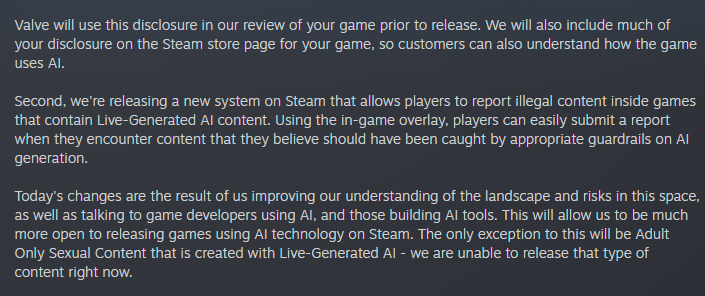
Right now, Steam users are flooding social media platform X with urgent calls to report specific games for violating Steam's Terms of Service (TOS) by failing to disclose AI-generated art on their store pages. This surge in activity stems from recent discoveries in at least one unnamed game—highlighted in multiple X posts—where in-game images and assets appear to have been created using AI tools, yet no AI disclosure tag or mention exists in the game's Steam store description. Users point out that Steam's AI disclosure policy requires developers to explicitly flag such usage, and the absence of this on store pages constitutes a clear TOS breach.
The trend exploded today as posts with modest but growing engagement (up to 4 likes on key messages) instruct players to use Steam's in-game overlay to report offending images directly and flag the store page itself. Once reported, Steam notifies affected owners, triggering automatic refund offers. This isn't isolated; discussions reference "this game" and similar cases being "caught," urging others not to "be cattle" and to demand accountability. The momentum builds on Steam's established policy, where undisclosed AI content leads to swift enforcement, amplifying user-driven vigilantism amid rising AI integration in indie game development.
Common Perspectives
**Enforce TOS for Consumer Protection**
Many users view this as a straightforward win for transparency, arguing that undisclosed AI art deceives buyers who prefer human-created content. They emphasize reporting store pages and in-game assets via Steam's tools to trigger mass refunds, positioning it as empowerment against developers who "knowingly failed to disclose."
**Boycott and Refund Push**
A vocal group frames non-disclosure as unethical "cattle herding," calling for widespread reporting to punish violators. Posts highlight that without store page mentions, it's an automatic TOS violation, rallying players to get refunds and avoid supporting AI-heavy games.
**AI Safety and Broader Warnings**
Some tie the issue to larger AI concerns, referencing reports like "AI Safety Report 2026" and quotes from figures like Sam Altman about existential risks ("lights out for all of us"). They see undisclosed AI in games as part of a "mess" demanding scrutiny beyond Steam.
**Detective-Like Scrutiny of Assets**
Users celebrate spotting AI hallmarks in images and album covers tied to games, urging reports on digital platforms. This perspective treats it as a community detective effort, with excitement over "catching" devs who hid AI usage.
A Different View
While the focus is on policing individual games, this user-led reporting wave could inadvertently accelerate Steam's AI ecosystem by forcing clearer labeling—potentially making AI-tagged games more discoverable and appealing to pro-AI buyers. Instead of stifling innovation, it might create a thriving niche market for disclosed AI art, where devs compete on tools like Midjourney or Stable Diffusion, turning a TOS enforcement tool into a badge of cutting-edge efficiency that boosts sales among tech-forward gamers.
Conclusion
The current uproar over undisclosed AI in Steam games underscores a pivotal tension between rapid AI adoption and demands for transparency, with users wielding reporting tools to reshape platform accountability. As reports pile up, Steam's response could set precedents for how AI content is handled across gaming, influencing developer practices worldwide.
Sources and discussion
These public posts were collected while researching this story. They provide context and reactions, but may not independently verify every claim.
View the original topic on XMP3
@Mp3onWavs
@NikTek report the games store page for breaking steam TOS by not disclosing the AI art. Once steam is notified an alert will be sent out to everyone who owns the game and refunds will be offered. They knowingly failed to disclose the AI usage to steam or it would have a tag.
Mar 21, 2026MP3
@Mp3onWavs
@AlexKnight_1991 @GameRoll_ yep report the games steam page for breaking steam TOS by not disclosing their AI usage on the games store page.
Mar 21, 2026MP3
@Mp3onWavs
@PaulTassi Use the steam overlay to report these images in game and report the games store page. they broke TOS by not disclosing the usage of AI.
Mar 21, 20262 likesMP3
@Mp3onWavs
@ArtyFrayn @thicc_stick_boi and when they are caught just like this game they will be reported to steam for breaking the TOS by failing to disclose the AI usage. Don't be cattle.
Mar 21, 2026MP3
@Mp3onWavs
@Okami13_ Failed to disclose the AI usage on the steam store page. TOS broken. Report the games store page and get your refund.
Mar 21, 2026MP3
@Mp3onWavs
@IGN and no AI in the product description = breaking steams TOS. Report the games store page and report the actual art using the in game overlay
Mar 21, 20264 likes