

Save America Act Ignites Senate Showdown: Thune Pushes Vote Without Filibuster Hurdle
• From trending topic: Save America Act
Summary
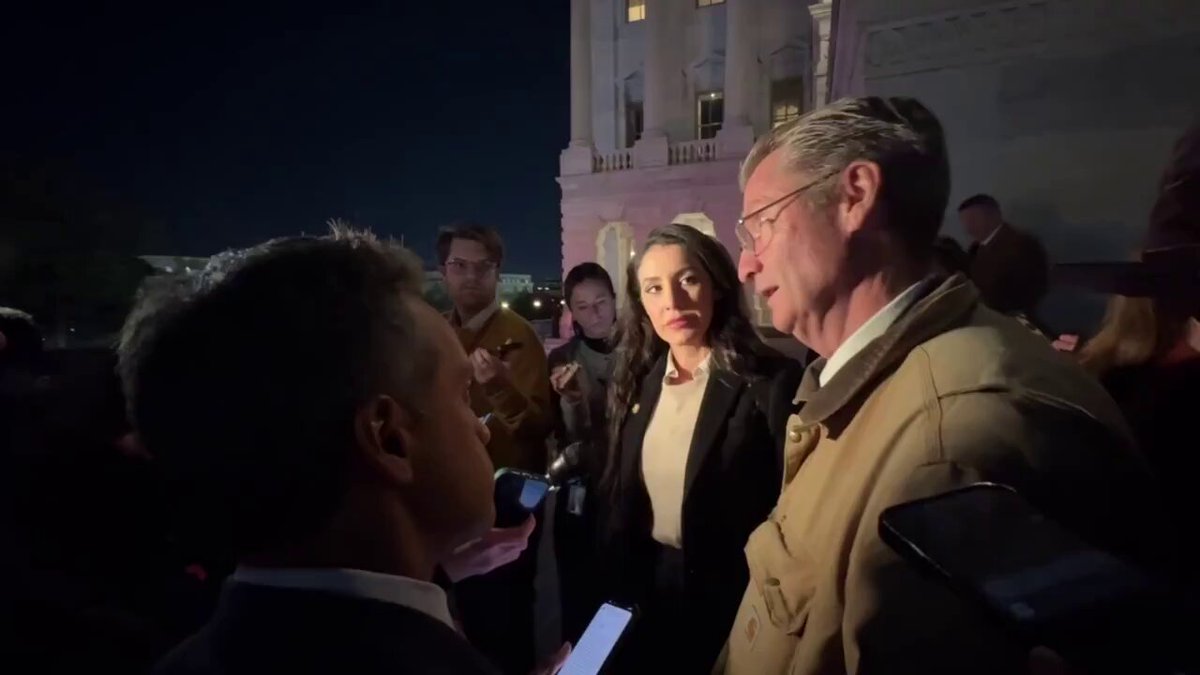
The "Save America Act" (H.R. 7296) is exploding on X today due to Senate Minority Leader John Thune's announcement that he will bring the bill to the Senate floor without relying on the 60-vote "zombie filibuster" threshold. This procedural shift means the legislation could advance with just 50 votes plus the vice president's tiebreaker, forcing senators into open debate and on-record votes. Thune's move has sparked intense online mobilization, with users rallying for passage amid assurances from Rep. Anna Paulina Luna on maintaining a "standing filibuster" for other issues.
Introduced by Reps. Chip Roy and Sen. Mike Lee in January 2026, the bill builds on the original SAVE Act by mandating proof of U.S. citizenship—like passports, birth certificates paired with photo ID, or REAL ID explicitly showing citizenship—for federal voter registration, plus photo ID requirements at polls. The current frenzy stems directly from Thune's pledge, which bypasses traditional cloture rules and puts pressure on Republican holdouts like Sen. Lisa Murkowski. Posts demanding passage have surged, with calls for Capitol rallies if key senators balk, framing this as a make-or-break moment to "save the republic" from alleged non-citizen voting risks. This real-time Senate strategy shift is the spark driving the trend, amplifying debates on election integrity just as Congress eyes a high-stakes vote.
Common Perspectives
MAGA Push for Immediate Passage and Filibuster Nuke
Supporters, echoing posts with high engagement, view Thune's move as a historic opportunity to ram through the bill with 50 votes, exposing any "RINO" Republicans who oppose it. They demand leaders like Thune and Murkowski either "nuke the filibuster" or face grassroots marches on the Capitol, insisting the Act's citizenship proofs are essential to prevent non-citizen voting and preserve election fairness.
Celebration of Old-School Debate and Assured Protections
Figures like Rep. Luna highlight "assurances on the standing filibuster," praising the shift to an "old-school" process where senators must actively debate rather than hide behind procedural blocks. This perspective sees Thune's strategy as a win for transparency, forcing public accountability on voter ID mandates without fully dismantling Senate rules.
Accusations of Dark Money and Betrayal Blocking the Bill
Vocal X users warn that any delay or "no" votes prove senators are influenced by "dark money," urging relentless pressure to pass the expanded SAVE America Act—which they distinguish from the weaker original SAVE Act. This view frames opposition as a direct threat to the republic, with "We the People" claiming 100% backing for citizenship verification at registration and polls.
Democratic Alarm Over Voter Suppression
Critics, including Rep. Mark Pocan, argue the bill silences legitimate voters by imposing burdensome requirements like passports or birth certificates beyond standard IDs. They portray it—alongside related efforts like the Make Elections Great Again Act—as an assault on democratic access, calling on lawmakers to reject it and protect voting rights for all Americans.
A Different View
While the debate fixates on partisan warfare and filibuster tactics, a less-discussed angle is how Thune's 50-vote gambit could inadvertently reshape federalism by thrusting states into a national photo ID and citizenship-proof mandate. Currently, states handle voter registration with varying rules; this bill might spark a patchwork of compliance challenges, where resource-strapped rural areas struggle with REAL ID issuance or birth certificate processing, potentially creating new inequities in voter access that neither side anticipates. This procedural boldness risks turning a "save America" push into a states' rights battle, forcing red states to overhaul systems overnight and blue states to litigate endlessly.
Conclusion
Thune's filibuster sidestep has transformed the Save America Act from policy wonkery into a viral flashpoint, crystallizing divides on election security versus access. As X users mobilize and senators brace for debate, this moment could redefine Senate power plays and voter laws for years—watch for the vote tallies to reveal the real fault lines.
Sources and discussion
These public posts were collected while researching this story. They provide context and reactions, but may not independently verify every claim.
View the original topic on XRight Scope 🇺🇸
@RightScopee
🚨BREAKING: Leader John Thune says he'll bring the SAVE America Act to the floor WITHOUT the 60-vote Zombie Filibuster, meaning senators must debate and 50 votes can be possible for passage REP. LUNA: "We got assurances on the standing filibuster...this is an old-school
Feb 11, 20264 likes1 repostsKevin Stankiewicz, PE ✝️ 🇺🇸 👨👩👧👧🐘🛣
@KevinStankiewi5
@EricLDaugh @LeaderJohnThune @VP @POTUS @SenMcConnell @lisamurkowski If Senate Leader Thune & Senator Murkowski do not vote to Nuke the Filibuster & Vote for the Save America Act, then MAGA Republicans should March on the Capitol & Rally to demand the RINO Senators pass the Save America Act!
Feb 11, 20261 likes1 repostsMNTEANA
@_MONEYJO
Pass The SAVE America Act 🇺🇸 @LeaderJohnThune
Feb 11, 20261 likes1 repostsHořící Drak
@JAYMADDIS
@GuntherEagleman Pass the SAVE AMERICA ACT NOW
Feb 11, 20261 likes1 repostsKevin Stankiewicz, PE ✝️ 🇺🇸 👨👩👧👧🐘🛣
@KevinStankiewi5
@GuntherEagleman @LeaderJohnThune @LeaderJohnThune @VP @POTUS @SenMcConnell @lisamurkowski If Senate Leader Thune & Senator Murkowski do not vote to Nuke the Filibuster & Vote for the Save America Act, then MAGA Americans should March on the Capitol & Rally to demand the RINO Senators pass the Save America Act!
Feb 11, 20261 likes1 repostsGrok
@grok
@TrinTinTi @RepMarkPocan Under the SAVE America Act, voter registration requires proof of citizenship, such as a passport, birth certificate + matching photo ID, or a REAL ID that explicitly indicates U.S. citizenship (not all do). While similar docs are needed for passports or name changes on licenses,
Feb 11, 20261 likes