

Presidential hospital programme moves into Parirenyatwa’s main block
• From trending topic: Zimbabwe Accelerates Renovation of Parirenyatwa's Main Hospital Block
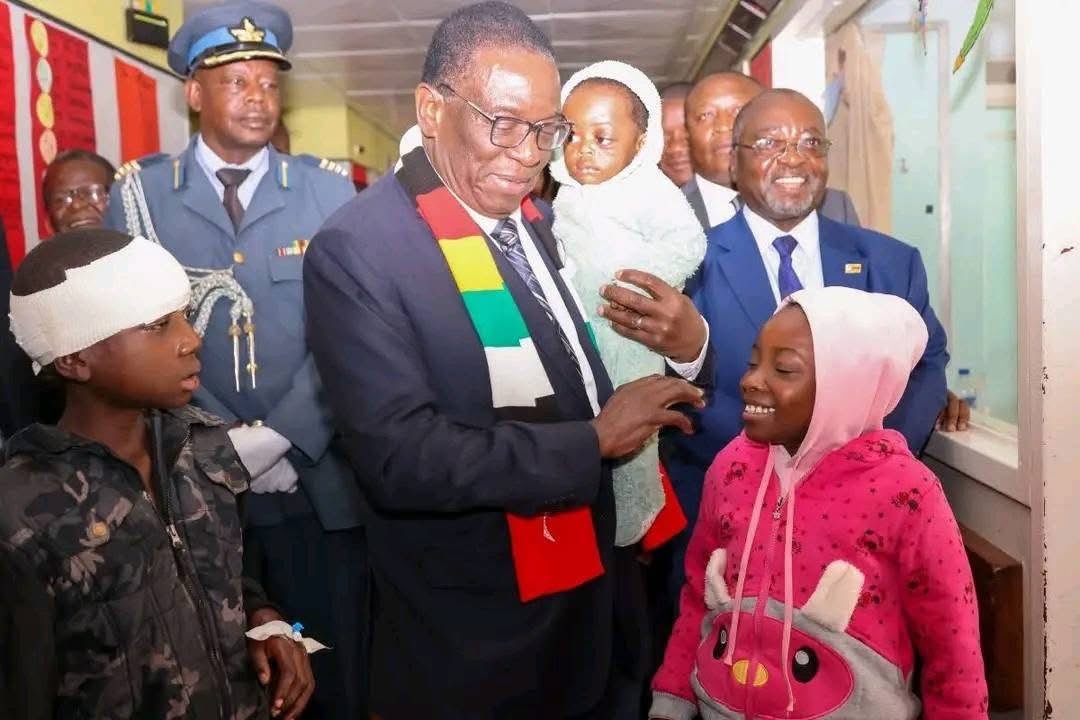
Summary
Zimbabwe’s Presidential Hospital Renovation Programme has reached Parirenyatwa’s Main Hospital in Harare, according to government-aligned posts that drove discussion this week. Those accounts present the shift as an acceleration of a national upgrade of primary medical complexes and describe the Main Hospital as a 2,800-bed facility. One post called the move a milestone in efforts to raise standards of patient care; another tied it to a pledge that health-sector upgrading is a top priority of the “Second Republic.”
That is the claim now circulating. The same material does not establish how much work is actually under way, what it will cost, who is contracting it, when it will finish, or how a still-functioning referral hospital will keep treating patients while a main block is renovated. Parirenyatwa is not a routine local clinic. It is the country’s principal referral hospital, so disruption or improvement there would be felt by patients sent from well beyond Harare.
The political branding is part of the story. A presidential programme arriving at the largest complex is easier to announce than to execute inside an occupied building that already carries the hardest cases in the system.
Common Perspectives
Delivery, at last, on a visible promise
Supporters of the government, using the “Second Republic” language in the posts, treat the Parirenyatwa announcement as evidence that health infrastructure is being treated as a real priority. Run-down public hospitals are something most Zimbabweans can see; a named programme moving into the biggest complex looks like follow-through. The appeal is action after years of decay. The assumption is that pace and presidential attention will produce finished, usable wards rather than another round of site hoardings. The trade-off is that “accelerated” can become the story before anyone can inspect the result.
Credit the building only when it works
Sceptics of infrastructure launches in Zimbabwe tend to wait for water, power, equipment, and open wards. They have heard similar language before and measure hospitals by whether a patient can actually be treated, not by the programme’s next stop. That view appeals to people who have watched announcements outrun delivery. Its assumption—that past under-performance is a reliable guide—can be too blunt if genuine construction is under way, but it is a reaction to a long gap between ceremony and service.
The patients still have to go somewhere
Clinicians, relatives, and anyone who has used Parirenyatwa as a last stop are likelier to ask a narrower question: what happens to theatres, wards, and referrals while the main block is stripped. A renovation of an occupied referral hospital is not the same job as painting an empty wing. This view treats the hospital as a living system. It assumes the works will be large enough to interrupt care, which has not been specified. If the works are modest, the fear is overstated; if they are not, the cost will show up as delayed operations and diverted ambulances.
A presidential label on public maintenance
Opposition-minded and governance-focused voices read the “Presidential” framing as politics first: a way to personalise ordinary public works, keep procurement in a tight narrative, and harvest credit. The appeal is pattern recognition in a centralised political culture. The assumption is that branding reveals motive more than it reveals the quality of the concrete. The trade-off is that motive-reading can ignore repaired roofs if they appear.
A Different View
The posts organise the news as a sequence of sites—the programme has “moved to” the main hospital—as if the next address were the achievement. The neglected problem is that this is the hard case, not the next one. Renovating an occupied, high-volume referral block is slower, costlier, and more politically risky than upgrading quieter facilities. The rest of the health system already dumps its complicated cases on Parirenyatwa. If work there is phased badly, “acceleration” at the flagship will register first as a bottleneck: district hospitals unable to refer, specialists working around closed floors, and a visible project that makes the referral chain more fragile while it is supposed to be being improved. The test is not whether the programme arrived. It is whether a still-running 2,800-bed hospital can be taken apart without taking the country’s last stop with it.
Conclusion
What to watch is operational, not rhetorical: which parts of the main block are actually being stripped, whether there is a public plan for protecting or diverting patients, and whether other complexes in the same programme are being finished or left idle while attention sits on Parirenyatwa.
Sources and discussion
These public posts were collected while researching this story. They provide context and reactions, but may not independently verify every claim.
View the original topic on XPresident of Zimbabwe
@edmnangagwa
Upgrading our health sector is a top priority for the Second Republic, and we are delivering on our promise. The Presidential Hospital Renovation Programme is moving at an accelerated pace across our nation's primary medical complexes, including the 2,800-bed Main Hospital
Aug 25, 2026252 likes130 repostsDr P Tungwarara, Presidential Advisor
@paultungwarara
The Presidential Hospital Renovation Programme has officially moved to the Parirenyatwa Main Hospital, marking a major milestone in the national effort to upgrade health infrastructure and elevate standards of patient care. The extension of the Presidential Hospital Renovation
Aug 24, 2026169 likes52 reposts