

NHS Pharmacy First Will Cover 12 Conditions From This Autumn
• From trending topic: NHS Expands Pharmacy First to Treat 12 Common Conditions
Summary
Participating pharmacies will be able to assess and treat five additional common conditions from this autumn, according to the UK Department of Health and Social Care. BBC Breakfast reported that the change would bring the total to 12 conditions that can be treated without a prior GP visit.
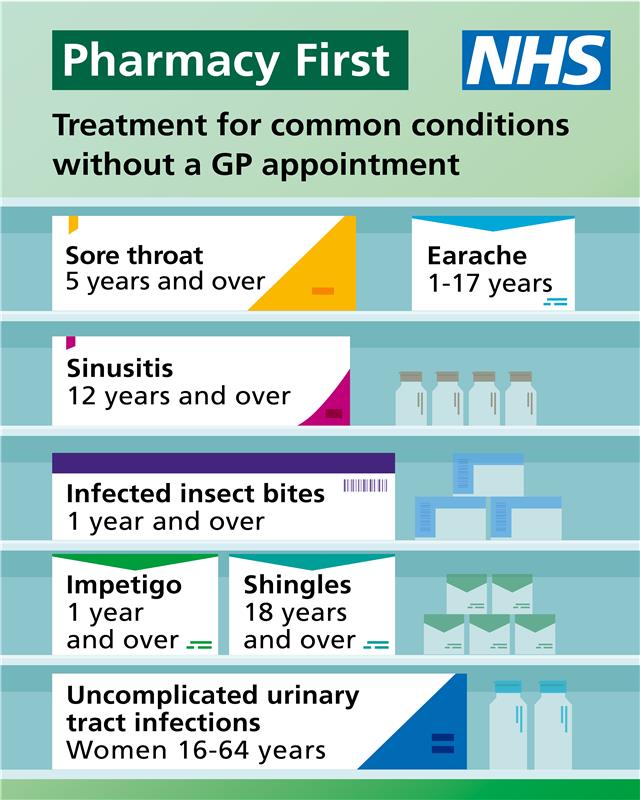
An NHS post accompanying the coverage said more than 14 million patients had been treated for the existing seven conditions. The retained BBC post names sore throat, earache, sinusitis, shingles, impetigo and infected bites before its text cuts off during the final item. The retained material does not name the five additions or set out their eligibility rules. Readers should check the published NHS guidance and their participating pharmacy rather than assume every symptom qualifies.
The government presents the expansion as quicker care closer to home. The analysis below considers implementation questions, not documented reactions from doctors or pharmacists.
Common Perspectives
A more direct route to care
The department’s stated aim is to make care quicker and easier to obtain near home. Adding conditions could provide another route for eligible patients, subject to the scheme’s assessment rules and local participation.
Capacity beyond general practice
Treatment without a prior GP visit could reduce some demand on general practice. The consultation and patient counts in the available posts do not show how many GP visits were avoided or whether patients needed further care.
Clinical boundaries and delivery
The additional conditions, staffing arrangements and referral rules will determine what the expansion can deliver. The retained announcement does not establish those details or provide evidence of a new safety problem.
A Different View
Counting people treated measures activity, not the complete effect on access or health outcomes. An evaluation would also ask about repeat visits, appropriate referrals and availability across areas. Those are questions for implementation data, not conclusions that can be drawn from this announcement.
Conclusion
The next useful details are the five additional conditions, eligibility criteria and participating services.
Sources and discussion
These public posts were collected while researching this story. They provide context and reactions, but may not independently verify every claim.
View the original topic on XNHS
@NHSuk
Over 14 million patients have been treated for these seven common conditions by their pharmacist. If you have any of these conditions, think pharmacy first. Get seen and treated by your local community pharmacist. – without seeing a GP. ➡️
Sep 10, 202617 likes27 repostsBBC Breakfast
@BBCBreakfast
Chemists will be able to give on-the-spot treatment for 12 common conditions without going to people going to their GP first. Pharmacists can already prescribe medication for seven conditions - sore throat, earache, sinusitis, shingles, impetigo, infected bites and urinary tract
Sep 10, 202620 likes5 repostsDepartment of Health and Social Care
@DHSCgovuk
We're making it quicker and easier for people to get the care they need, closer to home. From this autumn, participating pharmacies will be able to assess and treat five additional common conditions. Find out more:
Sep 10, 202615 likes9 reposts