

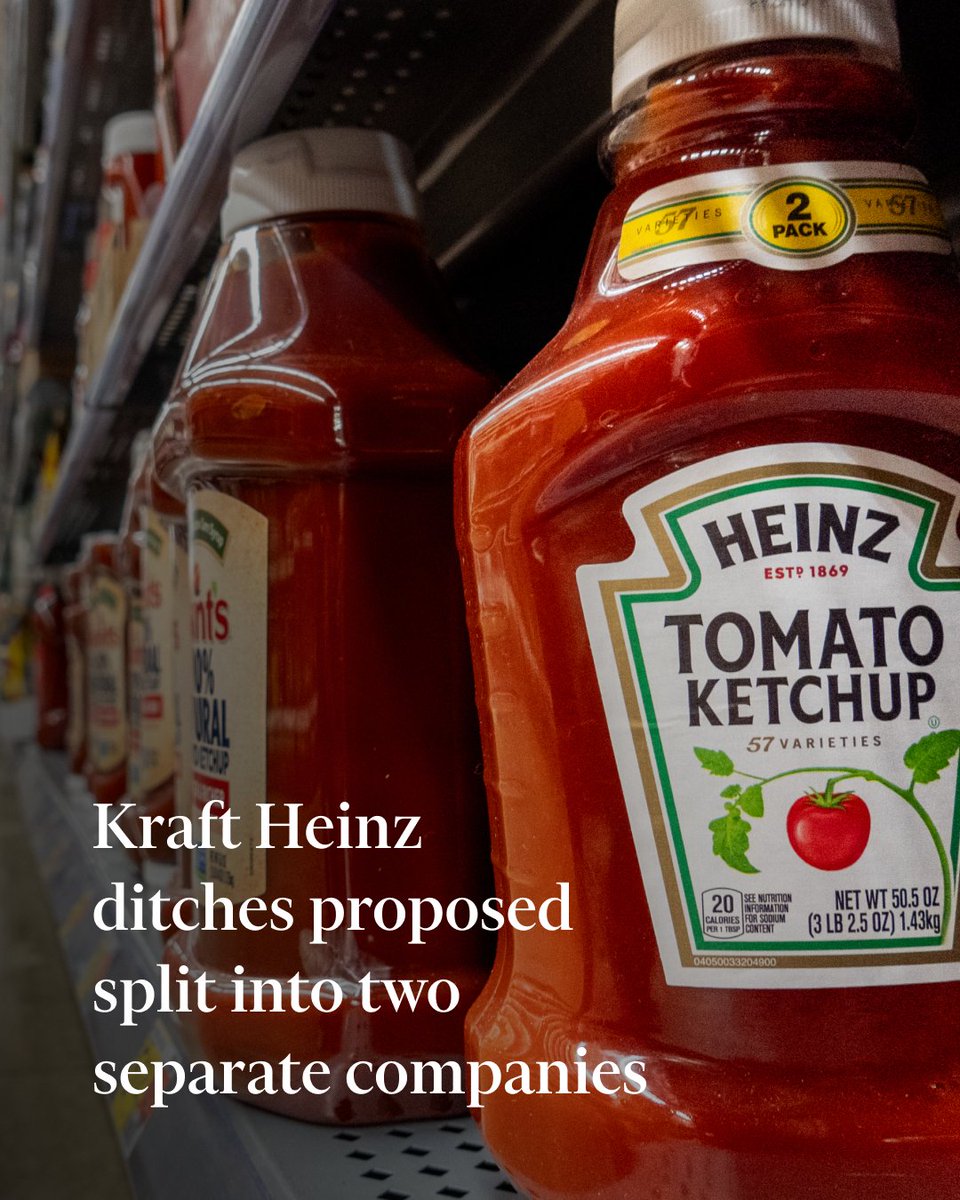
Kraft Heinz Pauses Ambitious Split into Two Separate Companies Amid Shifting Market Dynamics
• From trending topic: business
Summary
Kraft Heinz, the iconic American food giant behind brands like Heinz ketchup, Kraft Mac & Cheese, and Oscar Mayer, has abruptly paused its high-profile plans to divide into two independent companies—one focused on North American grocery and another on global icons and emerging markets. This decision, announced today by CEO Carlos Abrams-Rivera, comes just months after the company teased the potential split as a strategy to unlock shareholder value and streamline operations. The pause is attributed to volatile market conditions, including rising input costs, softening consumer demand in key categories, and macroeconomic headwinds like inflation and supply chain disruptions that have intensified in recent weeks.
The news broke via an official company statement and earnings call snippet that's exploding across financial news wires and X (formerly Twitter), propelling "Kraft Heinz Pauses Plans to Split into Two Companies" into trending status. It's gaining traction today amid broader "business" conversations on X, where users are dissecting corporate pivots, earnings surprises (like Watts Water's Q4 metrics), and real estate liquidity in business districts—highlighting a zeitgeist of caution in deal-making and restructuring. Investors reacted swiftly, with KHN stock dipping 3% in after-hours trading, as analysts parse whether this signals deeper troubles or prudent restraint. Key context: The split idea surfaced in mid-2024 amid pressure from activist investors seeking to separate the slower-growth North American staples from higher-margin international bets, but executives now cite "evolving external factors" as forcing a strategic rethink, with no firm timeline for revival. This real-time pivot underscores how giants like Kraft Heinz are navigating a tough 2025 landscape where bold breakups are on hold.
Common Perspectives
Shareholder Disappointment and Short-Term Stock Pressure
Many investors and analysts view the pause as a letdown, arguing it dashes hopes for immediate value creation through a clean separation of assets. On X and financial forums, sentiments echo concerns over delayed upside, with KHN shares already reflecting the hit—some predict further downside if restructuring momentum stalls entirely.
Prudent Risk Management in Uncertain Times
Business watchers praising the move see it as smart caution amid economic volatility, pointing to recent X buzz on mortgage liquidity slowdowns and oversupply risks as microcosms of broader market jitters. They argue pausing now avoids a messy split during high costs and weak demand, preserving cash for organic growth instead.
Sign of Deeper Operational Challenges
Critics frame this as a red flag for underlying issues, like stagnant sales in core categories and competition from private-label brands. Discussions tie it to X threads on business survival tactics, suggesting Kraft Heinz's "stupidity" in pursuing the split earlier exposed weaknesses, potentially eroding confidence in leadership's vision.
Activist Investor Frustration and Future Pressure
Activist shareholders, who pushed the original idea, express dismay, viewing the pause as a retreat that could invite renewed campaigns. X chatter compares it to other corporate flip-flops, warning of governance battles if the board doesn't deliver alternatives soon.
Neutral Market Adjustment
Some observers dismiss the hype, calling it a routine recalibration in a sector prone to pivots. Linking to X posts on earnings metrics and business savvy, they note companies like Watts Water adapting to estimates—positioning Kraft Heinz's move as business-as-usual flexibility rather than drama.
A Different View
While most focus on financials and strategy, consider the ripple effects on Kraft Heinz's vast supplier and farmer networks in the American heartland. Pausing the split keeps integrated supply chains intact, potentially stabilizing prices for commodities like tomatoes and cheese amid X-highlighted local business strains (e.g., Abuja-style local SEO survival tips mirroring U.S. small agribusiness woes). This could quietly bolster rural economies dependent on Kraft's scale, turning a corporate about-face into an unintended lifeline for the "real" business backbone—far beyond Wall Street's gaze.
Conclusion
Kraft Heinz's split pause captures a pivotal moment in corporate America, where bold plans yield to gritty realities. As X's business discourse amplifies the debate—from earnings deep-dives to survival stories—this development invites scrutiny on whether it's a temporary breather or a sign of sector-wide recalibration, with investors and observers watching closely for the next move.
Sources and discussion
These public posts were collected while researching this story. They provide context and reactions, but may not independently verify every claim.
View the original topic on XMustapha Emmanuel
@seomustapha
Websites are great. But Google My Business pays bills faster. Local SEO > everything else right now. #AbujaEntrepreneurs #LocalSEO #SmallBusinessTips #SEOMustapha
Feb 12, 20261 likesKen Okel
@KenOkel
Three simple questions can transform your business. Ask away! #HR #business #leadership #podcast
Feb 12, 20261 likesYoyo
@YoyoParlays
Grateful for another solid night 🙏 🎯 6-Leg SGP+ 📈 25% Profit Boost 💵 $500 ➡️ $2,511.53 Everything lined up and the guys handled business. Love when the reads translate to the court. If you want to ride with us: 🔗
Feb 12, 20261 likesEstateEdge
@EstateEdgeUAE
Mortgage availability: Bank appetite for specific areas Supply ≠ liquidity. Oversupply can kill velocity. Time-to-sale patterns by area type: High liquidity zones: 25-40 days average (Marina, Downtown, Business Bay) Medium: 45-65 days (JVC, JLT, Sports City) 🧵
Feb 12, 20261 likesXilumani
@kingkenzo015
@CaylinWard34949 @tumisole Just watch and see, many people have lost jobs and businesses because of this kind of stupidity. No one wants to do business with a racist
Feb 12, 2026WIN_TRADE
@ANKITSH85153215
Compared to Estimates, $WTS Q4 Earnings: A Look at Key Metrics While the top- and bottom-line numbers for Watts Water (WTS) give a sense of how the business performed in the quarter ended December 2025, it could be worth looking at how some of its key
Feb 12, 2026