

Iran Warns of Prolonged War with US and Israel That Could Destroy World Economy as Trump Vows to Finish the Job
• From trending topic: Iran warns of prolonged war with US and Israel that could destroy world economy
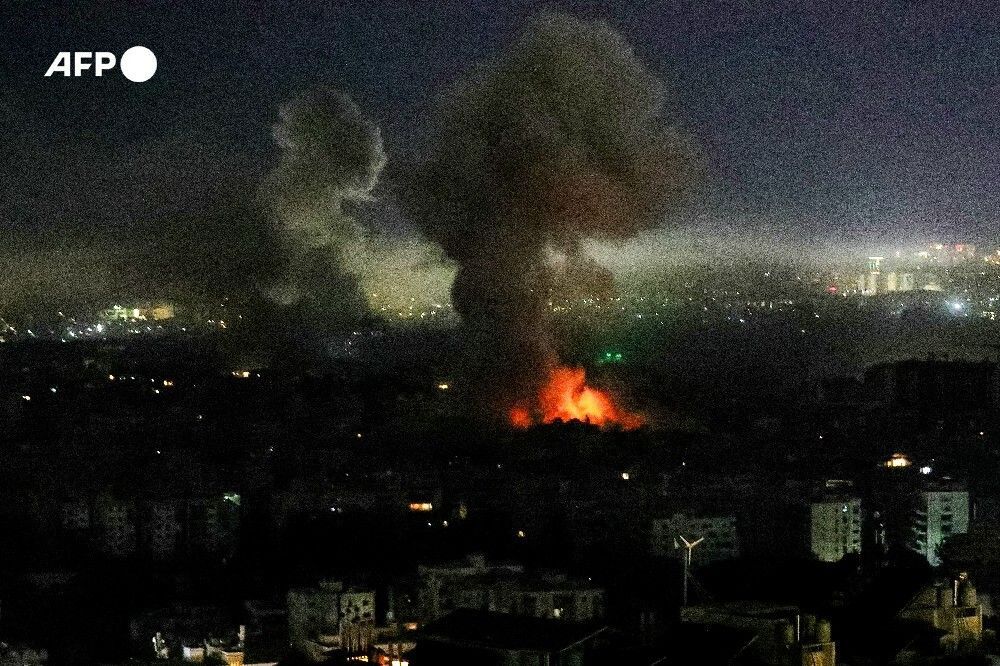
Summary
Iran has issued a stark warning of a prolonged war against the United States and Israel, claiming it could "destroy" the global economy, amid escalating military tensions in the Middle East. This statement is trending heavily on X today due to fresh reports highlighting Iranian strikes that have nearly halted shipping through the Strait of Hormuz—a critical chokepoint for 20% of the world's oil supply. The disruption has forced governments worldwide to scramble for contingency plans, spiking oil prices and rattling markets.
The trend exploded with viral posts citing Iranian officials' threats of extended conflict, even as US President Donald Trump declared Iran "near defeat" and vowed to "finish the job," stating there's "little left" for American forces to strike. These posts, amassing hundreds of likes, tie directly into real-time updates from sources like AFP on the Hormuz blockade's fallout, including supply chain chaos and economic panic. Key details include halted tanker traffic, emergency diplomatic scrambles by oil-dependent nations like China and India, and Trump's provocative rhetoric signaling potential US escalation, all converging to make this the top global discussion right now.
Common Perspectives
Iran's Defiant Stance as Economic Warfare
Many users on X frame Iran's warning as a calculated threat of asymmetric warfare, emphasizing how control over the Strait of Hormuz could cripple global energy markets. Supporters of this view highlight the near-halt in shipping as proof of Iran's leverage, arguing it forces the US and Israel to reconsider strikes amid rising fuel costs worldwide.
Trump's Confidence Signals Imminent Victory
A prominent opinion celebrates Trump's vow to "finish the job," portraying Iran as weakened with "little left to strike." Trending posts like those with 133 likes depict this as bullish for the US, suggesting the prolonged war threat is bluff from a cornered regime, potentially leading to swift capitulation and restored shipping lanes.
Global Economic Catastrophe Looms for All
Observers warn of universal fallout, focusing on the Hormuz disruption's immediate effects like scrambling governments and oil price surges. This perspective, seen in posts with 113 likes, stresses how a drawn-out conflict would devastate economies from Europe to Asia, regardless of who "wins," urging de-escalation to prevent recession.
Israel's Security Justifies the Risks
Some voices prioritize Israel's defense, viewing Iran's threats and strikes as existential aggression tied to broader conflicts like Lebanon. They argue enduring economic pain is a necessary cost for neutralizing Iran's capabilities, with Trump's support amplifying calls for decisive action over prolonged stalemate.
US Overreach Could Backfire Spectacularly
Critics contend Trump's "finish the job" bravado risks provoking Iran into fully blockading Hormuz, turning a contained conflict into global chaos. X discussions point to halted shipping as early evidence, warning that underestimating Iran's resolve could lead to unintended worldwide economic collapse.
A Different View
While most focus on military and economic fronts, an overlooked angle is the cyber dimension: Iran's Hormuz strikes coincide with unprecedented cyberattacks on shipping trackers and oil infrastructure, potentially orchestrated via proxies. This hybrid warfare could extend the "prolonged war" beyond physical blockades, quietly eroding global trade networks without full-scale invasion—prompting tech firms and insurers to covertly pivot toward blockchain-secured logistics, reshaping supply chains long before battlefields cool.
Conclusion
As Iranian warnings clash with Trump's defiance and Hormuz shipping grinds to a halt, the world watches a high-stakes standoff with economy-shattering potential. Balancing these perspectives underscores the urgency for diplomatic off-ramps amid the chaos, with today's trends reflecting fears that could redefine global stability.
Sources and discussion
These public posts were collected while researching this story. They provide context and reactions, but may not independently verify every claim.
View the original topic on XAFP News Agency
@AFP
Iran warns it could wage a prolonged war with the United States and Israel that would 'destroy' the world economy, even as US President Donald Trump vows to 'finish the job,' saying there was little left for American forces to strike
Mar 11, 2026133 likes56 repostsAFP News Agency
@AFP
Iran warns it could wage a prolonged war with the US and Israel that would "destroy" the world economy, even as Trump says it is near defeat. Iranian strikes have brought shipping through the Strait of Hormuz almost to a halt, forcing governments to scramble to contain the
Mar 12, 2026113 likes54 repostsLetts TV
@letts_tv
Iran warns it could wage a prolonged war with the United States and Israel that would 'destroy' the world economy, even as US President Donald Trump vows to 'finish the job,' saying there was little left for American forces to strike #Iran #Trump #Israel #Lebanon #IranWar #US
Mar 12, 20261 likesKenya News Centre🇰🇪
@KenyaNewsCentre
Iran warns it could wage a prolonged war with the US and Israel that would "destroy" the world economy, even as Trump says it is near defeat. Iranian strikes have brought shipping through Strait of Hormuz almost to a halt, forcing govts to scramble to contain the fallout. AFP
Mar 12, 2026