

Iran Strait of Hormuz Closure Sparks Oil Price Surge to $120 Amid U.S.-Iran Conflict Escalation
• From trending topic: Iran Strait of Hormuz closure and surging oil prices
Summary
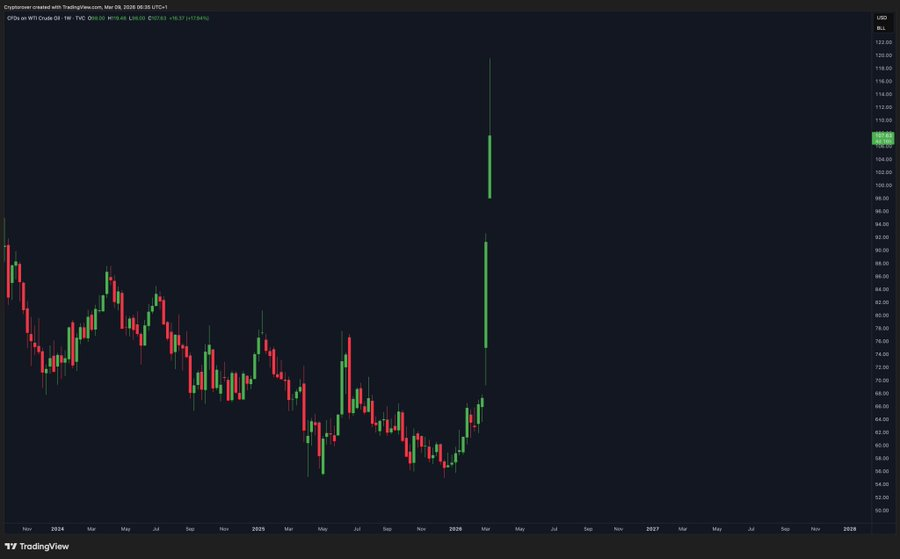
The trending topic "Iran Strait of Hormuz closure and surging oil prices" exploded on X due to viral posts detailing a dramatic spike in crude oil prices to nearly $120 per barrel—up 30% in a single day—triggered by Iran's parliament approving the closure of the Strait of Hormuz amid escalating U.S.-Iran conflict. This chokepoint, through which 20% of global oil flows, saw reports of de facto shutdowns from military disruptions, sending Brent crude soaring to $119.50 and WTI toward $110 before partial reversals. Key sparks include an IRGC official's warning of $200 oil if fully closed (a potential 173% jump from pre-conflict levels), President Trump's comments that rising prices benefit the U.S. economy and hints at U.S. forces securing the strait, plus reports of ships resuming passage after his assurance the conflict is "very complete" and ahead of schedule. Volatility peaked with a 32% plunge on March 9 after intraday highs, fueled by G7 talks on strategic reserves and Putin's alert on production halts. Social buzz amplified unverified claims like Barron Trump insider trading oil stocks pre-strikes, a mysterious wallet's $130k bet on closure by March 31 yielding $61k profit (46/100 insider score), and regional fallout like Balochistan school closures. This mix of geopolitical brinkmanship, price chaos, and speculation drove thousands of engagements TODAY.
Common Perspectives
Economic Boom for Oil Producers
Many view the surge as a windfall for U.S. energy firms and Trump allies, echoing his statement: "When oil prices rise, we make a lot of money." Posts highlight top energy stocks rallying 25%+ and Russia positioning to capitalize, with Putin warning of Hormuz-dependent production risks while boosting its own output.
Global Energy Crisis and Consumer Pain
Users emphasize immediate fallout like U.S. gasoline averaging $3.45/gallon (with more hikes expected) and UK reliance on imports fueling shortages. The 20% supply disruption is seen as risking a worldwide fuel crisis, with Balochistan's school shutdowns signaling broader regional instability.
Geopolitical Escalation and War Risks
Posts frame Iran's parliamentary approval and IRGC threats as direct retaliation to U.S.-Israel strikes, predicting $200 oil and full Hormuz blockade. Trump's talk of U.S. takeover and "quick end" to the war is cited as easing tensions temporarily, but many see it as heightening confrontation.
Speculative Betting and Insider Whispers
Trending claims spotlight a 13-day-old wallet's profitable $130k prediction market bet on closure by March 31 (57% win rate) and Barron Trump's alleged $50M oil stock buy two days pre-escalation, fueling talk of insider knowledge amid the chaos.
Quick Reversal and De-escalation Hopes
Some focus on the post-spike crash—oil down 32% after peaking—attributed to Trump's updates on ships moving freely, U.S. military superiority, and G7 reserve releases, portraying the closure as short-lived rather than permanent.
A Different View
While most fixate on oil prices and military moves, consider the environmental undercurrent: Hormuz disruptions could accelerate a forced global pivot to renewables. With 20% of oil stalled, surging prices might inadvertently supercharge investments in solar, wind, and EVs—already straining fossil infrastructure—potentially reshaping energy geopolitics faster than any war, as nations like the UK confront import vulnerabilities and fast-track green transitions amid the volatility.
Conclusion
From parliament votes to presidential quips, the Hormuz crisis blends real-time supply shocks with speculative frenzy, leaving oil markets in whiplash and the world bracing for aftershocks. As ships navigate tense waters, the true cost—economic, geopolitical, or otherwise—remains fluid.
Sources and discussion
These public posts were collected while researching this story. They provide context and reactions, but may not independently verify every claim.
View the original topic on XPi News
@PiNewsMedia
💥BREAKING:🛢️The closure of the Strait of Hormuz has triggered a global energy shock, sending oil prices surging nearly 30% toward $120 per barrel amid the escalating U.S.–Iran conflict.
Mar 9, 202652 likes5 repostsDebb Propes
@DebbPropes
@Bricktop_NAFO That’s not what @gork says… - The post accuses Barron Trump of insider trading by purchasing $50 million in oil stocks two days before U.S. strikes on Iran escalated into war, leading to Strait of Hormuz closure and crude oil prices surging to 2008 levels. - Fact-checks from
Mar 10, 20263 likesPROlymarket Trading Bot
@prolymarketapp
👀 Something doesn't add up... A wallet dropped $130,625 on "Will Iran close the Strait of Hormuz by March 31?" — 57% win rate. 🧠 Insider Score: 46/100 💵 PnL: $61,187 ⏱️ Account: 13 days old With Iran's parliament approving the closure and crude oil prices surging,
Mar 7, 20263 likesMichael Hughes
@MH_Analytics
Oil Shock: 5 Top Energy Stocks The de facto closure of the Strait of Hormuz amid the Iran conflict sent oil prices surging, before a dramatic reversal when President Donald Trump said the conflict might end.
Mar 10, 20262 likesAngeL Maisha🫶
@Arushi_1997
@RupertLowe10 The situation is indeed dire, with oil prices surging over 25% to their highest levels since mid-2022, touching $119.50 per barrel. This spike is largely driven by the Iran war and the closure of the Strait of Hormuz, a critical oil shipping route. The UK, being heavily reliant
Mar 9, 20262 likesCrypto Analyst
@shuklarewa9082
#Trump on Surging Oil Prices Amid Iran Strait Closure: “When oil prices rise, we make a lot of money. President Trump just dropped this bombshell take as Brent crude hovers near $100+ (after spiking to $120+ peaks) due to Iran's effective shutdown of the Strait of Hormuz under
Mar 12, 20261 likes